
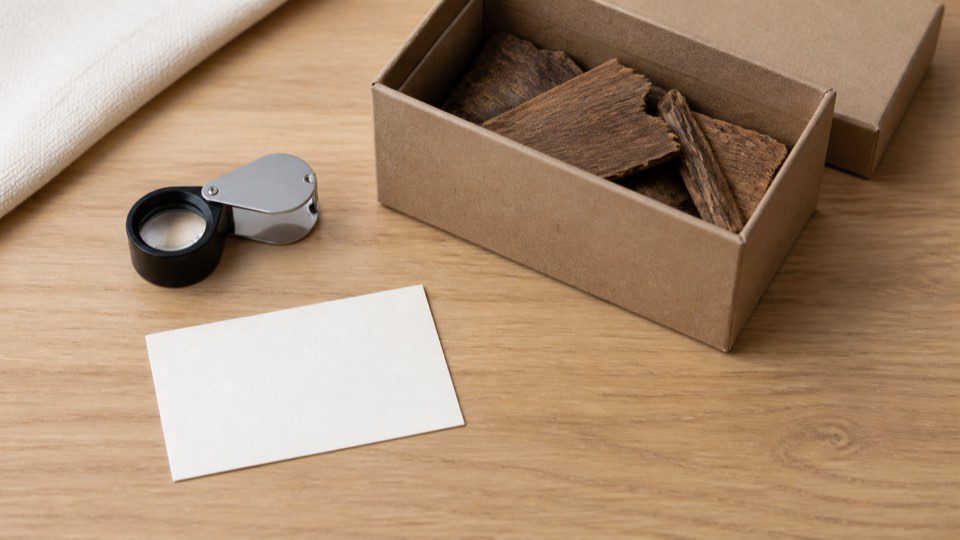
You can buy agarwood online from a specialist retailer, a documented producer, a regulated marketplace seller or a business-to-business supplier—but the channel does not prove authenticity. Choose the product form first, verify the exact seller and lot, check whether the shipment is legal for its origin and destination, and use payment and return terms that protect you if the delivered item differs from the listing.
Table of Contents
ToggleThis guide is written for English-speaking and U.S. buyers. It does not rank outside retailers or promise that a seller, certificate, marketplace badge or country name is trustworthy. Availability, laws and platform protections change; assess the exact listing at the time of purchase.
Last reviewed: August 13, 2026. Evidence boundary: Oudgo has not independently inspected every seller or lot on the internet. The steps below combine official trade/import guidance with an editorial product-evidence checklist.
Where Is the Best Place to Buy Agarwood Online?
The best place is a seller that accurately defines the product, provides exact-lot evidence, explains legal origin and shipping requirements, and offers written inspection, return and payment protection. A specialist website may provide better product detail; a marketplace may provide stronger dispute tools. Compare the protections, not just the storefront.
| Online channel | Useful for | Evidence to require | Main risk |
|---|---|---|---|
| Specialist agarwood retailer | Chips, incense, oil, bracelets and accessories | Exact product form, net amount, origin claim, treatment/ingredient disclosure, batch or item photos, returns | Expert-looking copy can still repeat unsupported grades or origin claims |
| Producer or plantation | Documented lots or propagation material | Legal business identity, taxon, source records, harvest/plantation evidence, permits, product specification | “Direct” does not prove legal acquisition, quality or export eligibility |
| Large marketplace | Discovery and small retail purchases | Individual seller history, actual-item photos, platform payment, return deadline and listing archive | Copied photos, manipulated reviews and payment requests outside the platform |
| Social-commerce seller | Initial contact or local discovery | Verifiable identity, invoice, exact-lot evidence, protected payment and written terms | Weak dispute protection and rapidly changing accounts |
| B2B supplier or broker | Commercial documented lots | Business registration, representative sample, contract, inspection, legal route, proof of funds and delivery terms | Advance-fee fraud, regrading, layered commissions and document mismatch |
For a wider comparison of retail, wholesale, brokered and auction channels, use Oudgo’s agarwood market buyer-and-seller checklist.
What Type of Agarwood Are You Buying?
Choose the material form before choosing the seller because each form needs different evidence, safety guidance and import checks. The word “oud” alone may describe resin-associated wood, distilled oil, a finished perfume or a reconstructed fragrance accord.
| Product form | Listing should state | What does not prove quality or authenticity |
|---|---|---|
| Raw wood or chips | Net weight, dimensions, condition/moisture, exact-lot photos, origin/source claim, treatment and grade method | Dark color, sinking, a country name or a strong unheated scent |
| Powder or incense | Complete ingredients, agarwood proportion or honest blend statement, binder/core, added fragrance and net amount | “Natural,” smoke intensity or “made with oud” |
| Agarwood or oud oil | Ingredient and dilution statement, extraction term, batch, volume, origin claim, intended use and safety directions | Color, viscosity, bubbles, freezing, longevity or the word “pure” without evidence |
| Bracelet or beads | Exact item photos, bead count/diameter, bracelet length, weight, drill-hole/end-grain views, treatment and cord disclosure | Surface shine, uniform color, wrist scent, soaking or a destructive burn test |
| Seeds or live seedlings | Scientific name, batch/nursery record, origin, collection or propagation date, viability/health terms and shipping documents | “Kynam seed,” future value, leaf photo or a common name alone |
| Finished oud perfume | Product identity, ingredients as required, concentration terminology, volume, intended use, warnings and responsible business | The word “oud,” luxury packaging or price as proof of natural agarwood oil |
Use the agarwood terminology glossary when a listing mixes oud, oudh, agar wood, gaharu, kynam, kyara, oil, perfume and incense. A precise product name reduces the risk of comparing unlike goods.
How Can You Check an Online Agarwood Listing Before Paying?
Save the listing, identify every material claim and ask the seller for evidence tied to the exact item or batch. Treat authenticity, quality, provenance, legality and scent preference as separate questions.
- Archive the offer. Save the URL, date, title, description, photos, price, quantity, seller identity, messages and stated returns before the listing changes.
- Define the product. Record whether it is raw wood, chips, powder, incense, oil, perfume, jewelry, seeds or a living plant. Do not let one listing switch between these terms.
- Separate claims by evidence level. Mark species, origin, wild/plantation source, grade, treatment, purity and age as verified, seller-stated or unknown.
- Request exact-item or exact-lot records. Stock photography and a certificate for another batch do not describe the goods you will receive.
- Check the seller independently. Match the business name, address, contact, invoice and payment recipient. Search for recent complaints beyond the seller’s own site.
- Verify documents against the goods. Taxon, product term, quantity, unit, source, origin, holder, dates and shipment route should agree across permits, invoice and packing list.
- Write acceptance terms. Define the inspection period, condition, measurements, sampling, return address, refund method and who pays for failed documents or customs refusal.
The U.S. Federal Trade Commission advises marketplace buyers to review seller terms, shipping and returns; inspect actual-item photos; consider recent reviews across sources; use protected payments; and keep messages and deadlines. It also warns that HTTPS encryption does not prove that a seller is legitimate.
How Do You Verify Real Agarwood Without Damaging It?
No single home test proves agarwood identity, origin or quality. Start with documented product form and provenance, inspect whether the physical features match the claim, compare aroma only under a repeatable and safe method, and reserve qualified laboratory testing for high-value purchases or disputes.
- Do not accept “every real piece sinks.” Genuine lower-resin wood may float, while treated or dense substitutes may sink.
- Do not burn, puncture or soak a bracelet, finished object or the only evidence in a dispute.
- Do not infer exact country or species from grain, color or scent alone.
- Do not treat a seller-issued authenticity card as a CITES permit or laboratory result.
- For expensive material, ask a suitable laboratory what sample, reference collection, method and chain of custody are needed before collecting a sample.
Follow the complete real-versus-fake agarwood evidence checks and separate them from the seven-factor quality and grading framework. Authentic material can still be low grade, and a preferred aroma is not proof of identity.
Can Agarwood Be Shipped to the United States?
Some agarwood products may be imported, but admissibility depends on the taxon, product form, source, origin, quantity, purpose, CITES annotation and current U.S. plant-product rules. Do not pay until the seller and buyer have checked the exact shipment.
Aquilaria and Gyrinops taxa are covered by CITES listings. The listing annotation determines which parts and derivatives require CITES documents; product form matters. The U.S. Fish & Wildlife Service tells timber buyers and traders to search Species+ using the scientific name and examine the annotation rather than relying on a common name.
USDA APHIS regulates plant and plant-product imports, including live plants, seeds, wood products and related items. Its Agricultural Commodity Import Requirements database is the starting point for the exact commodity and country of origin. APHIS also states that a person receiving an overseas agricultural e-commerce shipment may be the importer of record and responsible for compliance.
- Ask for the scientific name, source country and exact product form.
- Check the current CITES listing and annotation in Species+ and the origin country’s export requirements.
- Check APHIS ACIR for the commodity-country combination and whether a permit, phytosanitary certificate, treatment or designated route applies.
- Check U.S. Fish & Wildlife Service, CBP, Lacey Act declaration and designated-port requirements as applicable.
- Make the invoice, permit, packing list, labels, quantity and shipment agree before dispatch.
- Keep the endorsed/canceled documents and receiving records after clearance.
Small quantity, finished form or personal use does not automatically mean “no documents.” Conversely, not every product form has the same requirement. Use the current agarwood import and CITES trade checklist and legal decision guide; confirm the final decision with the competent authorities.
How Should You Compare Agarwood Prices Online?
Normalize product form, net quantity, condition, evidence, trade level and delivery terms before comparing price. A curated 5 g chip pack, a heterogeneous kilogram lot, 3 ml of diluted fragrance, 3 ml of distilled oil and a finished bracelet are not comparable by a simple unit conversion.
| Price field | Record before comparing |
|---|---|
| Goods | Exact form, net amount, condition, grade method and treatment disclosure |
| Evidence | Origin/source status, lot records, analysis and applicable trade documents |
| Commercial level | Retail, wholesale, auction, brokered or delivered |
| Delivery | Currency/date, packing, freight, insurance, duties, tax and payment fees |
| Risk allocation | Inspection, rejection, return, customs refusal, loss and dispute terms |
A low price can reflect a different product or missing evidence; a high price does not prove rarity. Use the agarwood price-comparison method rather than an unsupported universal price range.
Which Payment and Delivery Terms Reduce Online-Buying Risk?
Use a payment method with a documented dispute process, keep the transaction inside the marketplace when applicable, and know every deadline before paying. Avoid a seller who moves payment to an unrelated person or asks for wire transfer, gift card or cryptocurrency as the only option.
- Confirm the legal seller and payment recipient are the same or that the relationship is documented.
- Pay against an invoice that matches the listing, lot, amount, currency and delivery terms.
- Do not accept false customs descriptions, lower invoice values or hidden plant material.
- Use tracked shipping suitable for the product and preserve package/label photos at receipt.
- Inspect within the written window and document opening, weight, damage, contents and lot codes.
- Keep the listing, messages, invoice, payment record, permits, packing list, tracking and dispute deadline together.
Where Can You Shop by Agarwood Product Form on Oudgo?
Oudgo organizes current listings by material form so buyers can compare exact products rather than treating every “oud” item as interchangeable. Browse agarwood chips, agarwood incense, agarwood oil or agarwood bracelets. Check the title, attributes, quantity, intended use and delivery information on the exact product page.
These links disclose Oudgo’s commercial relationship: they lead to Oudgo collections. This guide does not claim that every item suits every buyer or import route. For chips, follow the controlled-heating and smoke-safety guide; for jewelry, follow the bracelet care guide.
Online Agarwood Buying Checklist
- The product form and intended use are explicit.
- Net weight, volume, dimensions, count and condition are stated as applicable.
- Photos and documents match the exact item or batch.
- Species, origin, source, grade, treatment and purity claims are labeled verified, seller-stated or unknown.
- The seller’s legal identity, contact and payment recipient can be checked.
- CITES, APHIS, FWS, CBP and origin-country requirements have been checked for the exact route.
- Inspection, return, refund, customs-failure and dispute terms are written.
- Payment remains within a protected method and every deadline is saved.
- No destructive home test, medical promise or guaranteed future value is used to close the sale.
Frequently Asked Questions
Where can I buy real agarwood online?
Use a specialist retailer, documented producer or protected marketplace seller that identifies the exact product, lot, quantity, origin/source claim, treatments, return terms and legal shipping route. The type of storefront does not prove authenticity.
Is it legal to buy agarwood online in the United States?
It depends on the taxon, product form, source, origin and shipment. Check the current CITES annotation, APHIS ACIR requirements, FWS and CBP procedures, and any Lacey Act declaration requirement before the seller dispatches the goods.
Does real agarwood sink in water?
Not always. Density depends on resin distribution, moisture and sample conditions. Genuine lower-resin material may float, while treated or dense substitutes may sink. Sinking is not proof of identity, origin, legality or overall grade.
What should I ask an online agarwood seller?
Ask for seller identity, exact-item or batch photos, product form, net amount, species/origin/source claims, treatment or ingredient disclosure, grade method, legal documents, shipping terms, inspection window and written return/refund process.
Are marketplace reviews enough to trust an agarwood seller?
No. Review recent comments across sources, check the reviewer’s context when possible, inspect actual-item photos, verify seller contact information and keep payment inside the protected system. Ratings can be fake or misleading.
Can I buy agarwood directly from Cambodia, Dubai or India?
A location does not decide legality or quality. Verify the individual seller and lot, the export rules at origin, the destination’s import requirements, the product-specific CITES annotation, documents, payment protection and landed cost before ordering.
Editorial Method and Limitations
Oudgo Editorial Team rebuilt this page for the retained online-buying intent after reviewing its Search Console query signal and the site’s market, authenticity, grading, price, legal and trade clusters. We removed undated retailer endorsements, city rankings, national scent stereotypes, universal sink tests and therapeutic claims. The guide does not represent a laboratory test, customs ruling, legal opinion or independent verification of every Oudgo or third-party product.
Primary Sources
- CITES and Timber: A Guide to CITES-listed Tree Species (2023)
- CITES CoP19 Inf. 12 (Rev. 1): Review of Aquilaria and Gyrinops
- U.S. Fish & Wildlife Service: Wood, timber and other tree products
- USDA APHIS: How to import plants and plant products
- USDA APHIS: How to buy plants and seeds online
- U.S. Federal Trade Commission: Buying from an online marketplace
Author

Oudgo Editorial Team collectively researches, edits, reviews, and maintains content on oudgo.com. For privacy and operational security, individual team members are not publicly identified. Read our Editorial Policy for sourcing, review, corrections, and AI-use standards.