

Agarwood Harvesting and Sustainability: What Buyers Can Verify
Sustainable agarwood is not a single label. It is a supply-chain question that starts with the tree and continues through harvest, processing, documentation and sale. A plantation claim, a permit or a conservation image can all be relevant, but none proves the full environmental and social story on its own.
For buyers, the practical goal is not to demand an impossible perfect record. It is to ask for evidence proportionate to the claim and price, and to distinguish what a seller can document from what remains unknown. This guide turns broad sustainability language into questions that can be answered about a real batch.
What sustainable agarwood harvesting should address
A responsible harvesting claim should address more than whether a tree was cut. It should consider source type, species context, the condition and management of the growing area, how harvest decisions were made, whether material can be traced, and how the product entered trade. These are connected but not interchangeable questions.
A plantation can create a managed supply, while a wild source may involve local knowledge and a different set of risks. In either case, the customer benefits when the seller says what they know about the specific material rather than relying on a general statement about a country or product category. Sustainability is strongest when it is tied to the material being offered.
Wild population pressure and conservation status
Wild agarwood has long been associated with rarity and cultural value, but scarcity can create pressure on populations. That is why source claims should never be romanticized without considering conservation and legality. A buyer does not need to make a scientific assessment of a forest; they do need to recognise that “wild” is not automatically an ethical or legally straightforward label.
Ask where the material was said to originate, whether the seller can describe the chain of custody, and whether any relevant trade documentation exists. If the seller cannot provide a complete answer, the fair response is to treat the origin claim as limited—not to assume the most attractive interpretation. The guide to CITES, trade documents and agarwood provenance explains why legal context has boundaries.

Plantation sourcing and its own tradeoffs
Plantation sourcing may improve supply continuity and can make grower or processor records more feasible. It does not automatically prove low impact, legal compliance or excellent working conditions. Site selection, planting stock, cultivation practices, induction methods, harvest decisions and business relationships all influence the broader picture.
The useful question is not “plantation or wild: which is always better?” It is “what can this supplier show about this material?” A seller may be able to identify a grower, batch or process stage. Another may know only that the material came through a plantation-oriented supply chain. Both answers can be honest; the difference should be visible in the description and price.
For a balanced source comparison, see Cultivated vs Wild Agarwood. It explains why cultivation can improve traceability without becoming a universal quality grade.
Harvest timing, yield incentives and traceability
Harvest timing affects both economic incentives and the information that can follow a batch. A rushed harvest claim may promise a fast return, while a delayed harvest claim may be used to imply superior quality without supporting evidence. In reality, resin-associated material is variable and harvest decisions depend on tree condition, management goals, market demand, processing capacity and local practice.
Traceability is the bridge between a general sustainability story and a product. Useful records may include supplier or grower details, batch identifiers, harvest or processing notes, invoices, shipment records where appropriate, and current photographs. Not every product will carry every document, but a premium claim should come with a correspondingly stronger evidence package.
CITES documents versus broader sustainability evidence
Trade documents can be important, especially where they apply to species, source or movement across borders. But a permit or shipment document is not a complete sustainability report. It may address a defined legal requirement without documenting land management, harvest methods, labor conditions, long-term regeneration or the later handling of a retail item.
Conversely, a plantation story or a supplier’s conservation statement does not replace documentation where trade rules apply. A responsible description keeps these layers distinct: legal compliance, ecological management, commercial traceability and buyer-facing disclosure. The buyer can then understand what each document supports and what it does not.
Questions buyers can ask suppliers
Ask for the source type and the basis for that statement. Ask whether the item can be connected to a grower, processor or batch. Ask what is known about harvest and post-harvest processing. Ask whether the seller has documents that apply to the actual lot rather than only to a broad product category. Ask about returns if the material is materially different from the description.
Questions should be calm and specific. A seller may not know every fact, especially for older material or a complex chain. What matters is whether they separate verified information from seller statements and whether they avoid making a stronger claim than their records allow. The Where to Buy Agarwood guide can help turn these questions into a practical buying checklist.
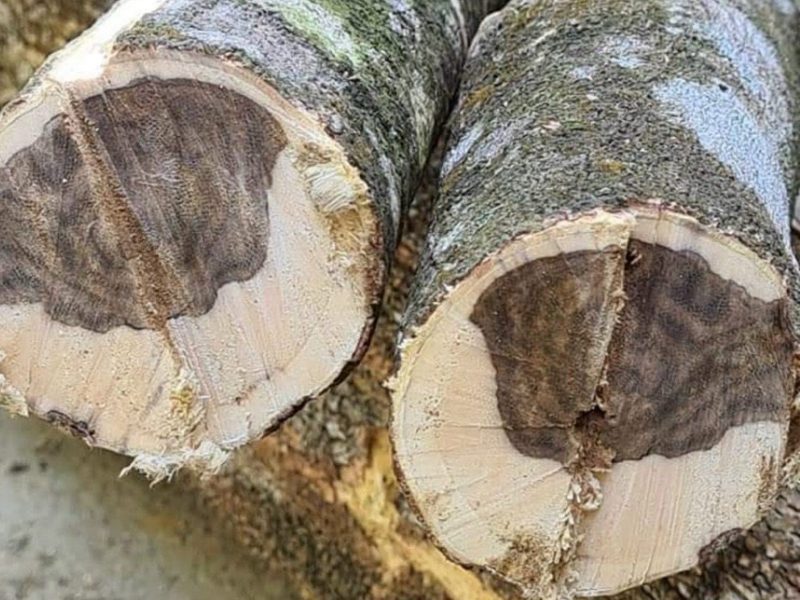
A supply-chain verification diagram
| Stage | Useful evidence | What it cannot establish alone |
|---|---|---|
| Source | Grower/supplier identity and source statement | Exact quality of every finished item |
| Management | Plantation or harvest practice information | Full legal and social performance |
| Harvest and processing | Batch notes, dates, handling disclosure | Uniform resin or aroma |
| Trade | Relevant invoices and documents | Complete sustainability story |
| Retail sale | Current images, condition and clear description | Earlier facts that were never recorded |
Think of this as a chain rather than a badge. The more links that can be supported for the exact batch, the more meaningful a sustainability claim becomes.
Claims that should trigger extra scrutiny
Pause when a listing calls material “ethical,” “wild,” “certified,” “ancient,” or “sustainable” without explaining what the word refers to. Also ask more when a high price depends on a broad origin story, when documents are shown without a connection to the offered lot, or when the seller cannot state whether finishing, fragrance additions or blending occurred after harvest.
Extra scrutiny is not an accusation. It is a proportionate response to a claim that affects environmental, legal or financial judgment. The best outcome is simple: buy material whose description, documentation and price align, and preserve those records with the purchase.
What a clear supplier answer looks like
A useful answer is specific about its source. “We bought this from a processor in a named region” is different from “we grow this ourselves,” and both are different from “the supplier describes it as plantation material.” The seller should not be punished for a limited record; they should be expected to state the record’s limit. This lets the customer decide whether that level of traceability is appropriate for the price.
Clear answers also distinguish harvest from processing. A tree may have been plantation-grown, then the wood may have been sorted, cleaned, cut, polished or converted into another form. If fragrance, dye, coatings or blending are involved, those are material facts. Sustainable sourcing language should not hide post-harvest interventions that change what the buyer receives.
Evidence that follows the batch
Documents are most persuasive when they follow a material path. A grower record may support planting or management. A processor record may support intake and handling. An invoice may support a transaction. Current product photographs may support the condition of the item offered today. Each piece is useful, but none can be silently expanded beyond its scope.
For example, a broad export document may support movement of a shipment but not establish the exact source of every small retail item divided from it later. A plantation photograph may illustrate a growing area but not prove the origin of a particular bracelet. The responsible claim says what document relates to which stage and keeps those boundaries visible.
Why return policies and product care are part of responsible selling
Responsible trade is not only about the earlier supply chain. It includes the retail experience. A customer should be able to see current images, receive a description of material and condition, understand basic care requirements, and know what happens if the item is materially different from the listing. These practices do not prove an environmental claim, but they reduce waste and give the customer a meaningful way to assess the purchase.
For aromatic wood or incense, clear guidance about intended use can also prevent misuse. For jewellery, disclose finishing and advise appropriate care. For oils, distinguish pure oil from blends and identify relevant composition information. Careful retail detail is a sign that the seller understands the product as more than a source-story headline.
Comparing two sustainability claims
Suppose one seller offers a plantation claim with batch information and a candid note that full grower records are unavailable. Another offers a wild claim with a higher price but no item-specific documents. Neither comparison can be settled by the word “plantation” or “wild.” Compare source clarity, processing disclosure, trade information, current product evidence and return terms. The first may provide stronger practical confidence even if its story sounds less romantic.
Conversely, a well-documented wild-origin item may deserve careful consideration if its chain of custody, legal context and condition are genuinely supported. The goal is not to create a ranking between source categories. It is to make sure that the evidence and price are consistent with the claim.
Preserve the record after purchase
Keep invoices, seller messages, product photographs and any supplied documents together. Note the weight, format and condition at the time of purchase. This simple record protects the buyer and helps prevent source claims from becoming more dramatic with every later retelling. It also respects the work of growers and suppliers who have taken care to keep their information accurate.
If you gift or resell the material, pass the same disclosures along. Do not turn “seller-stated plantation source” into “certified sustainable wild agarwood,” and do not omit a treatment note simply because it is less appealing. Honest continuity is one of the most practical forms of responsible sourcing.
Questions for a high-value or bulk order
The higher the consequence of a mistake, the more important it is to seek material-specific support. Before placing a large order, ask whether the seller can identify the lot, whether the material is drawn from one source or several, and whether the description applies across the full quantity. Ask how the product was stored and whether samples, recent photographs or an inspection process are available. These details matter because natural materials can vary even within a well-described batch.
If the purchase is intended for resale, collection or export, record what the seller actually represents in writing. Confirm the product format, quantity, source claim, processing disclosure and any documents provided. Seek independent professional advice where legal or commercial circumstances require it. A retail article cannot determine the rules for a particular shipment, but it can make clear that a broad sustainability statement is not a substitute for appropriate documentation.
What sustainability language should avoid
Avoid absolute promises such as “completely sustainable,” “zero impact,” or “guaranteed ethical” unless a defined, independently supported standard truly applies to the exact claim. Avoid using conservation imagery to imply a source record that does not exist. Avoid treating a permit, a plantation photograph or a supplier story as proof of every social and environmental outcome. These shortcuts can mislead customers and make careful suppliers harder to recognise.
Prefer plain language: “plantation-sourced according to supplier records,” “batch information available on request,” “processing disclosed below,” or “source documentation is limited.” Such phrasing may sound less dramatic, but it gives the buyer an accurate basis for a decision and lets the product stand on the evidence it actually has.
A final buying decision
A responsible choice is not necessarily the product with the longest story. It is the product whose claims are clear, whose evidence is proportionate, whose processing is disclosed and whose price fits the remaining uncertainty. If the story, document and item do not line up, pause. If they do, keep the record and enjoy the material with a clearer understanding of where its value comes from.
One last check can be valuable before purchase: compare the exact photographs, material form and stated source with the documents that are offered. If the documents speak only to a broader shipment or a different material form, record that limitation. A careful seller will welcome the distinction because it prevents the product from being represented more strongly than the evidence allows. This simple discipline supports better conservation decisions, more transparent commerce and more satisfying ownership over time.
When transparency is treated as part of the product, the buyer, seller and the living resource are better served.
It encourages decisions grounded in evidence, care, accountability, and realistic expectations for every stage of the supply chain.
