
Is Agarwood Legal? CITES, Trade Documents and Provenance
The short answer is: it depends. Whether an agarwood product can be sold, carried, exported or imported depends on the taxon involved, its source, the product form, the countries concerned, the date, the transaction route and the documents required at that time. A product being offered online does not by itself establish that every movement of it is lawful.
This is general educational information, not legal advice for a specific shipment. Rules change and national implementation differs. Before a cross-border purchase or movement, check the current requirements with the relevant CITES Management Authority, customs authority or qualified trade professional in the countries involved.
The short answer: legality depends on species, origin and movement
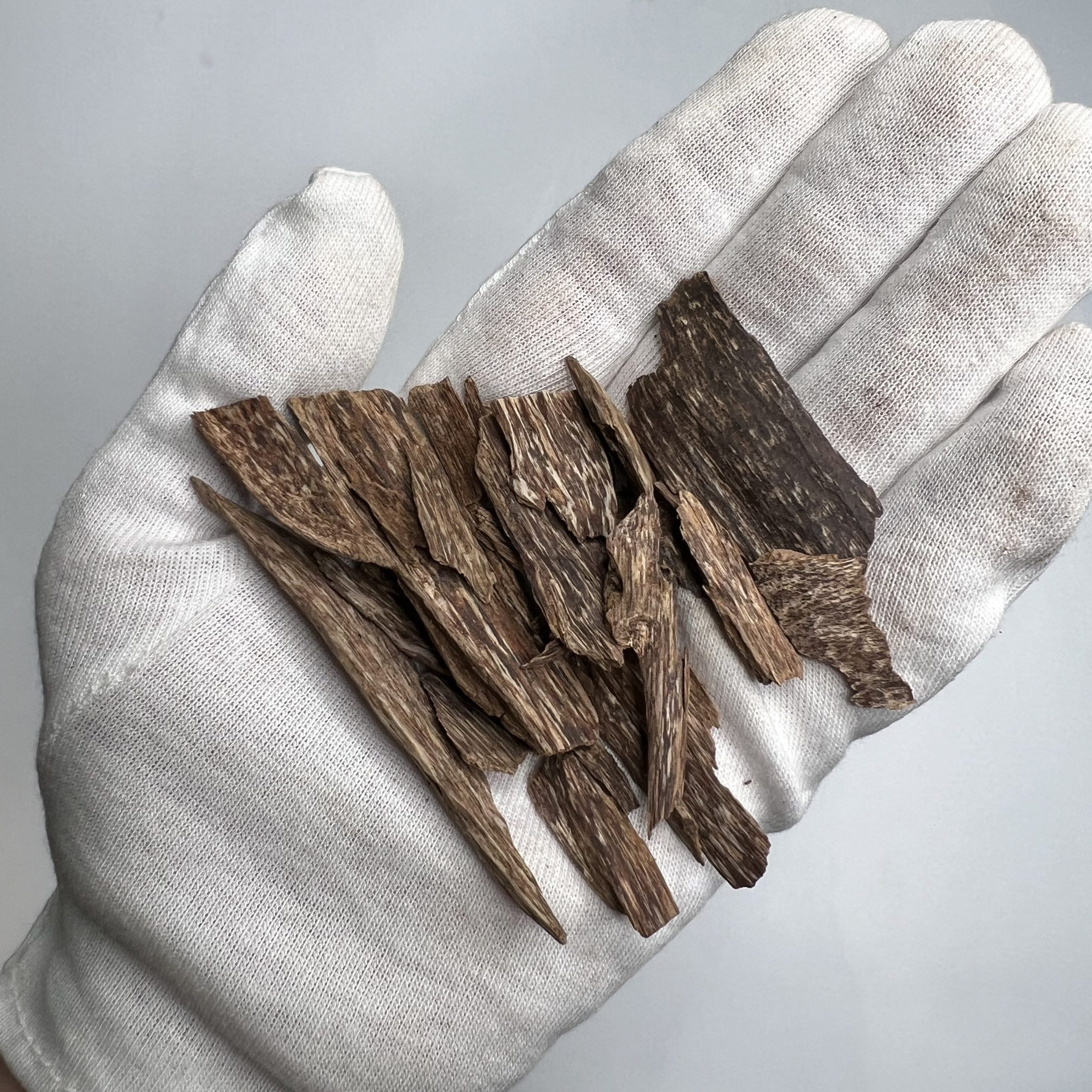
Legality begins with identifying what is being moved. “Agarwood” may be a chip, a raw piece, powder, a carving, beads, prayer beads, oil, incense or a finished product. The form matters because different rules and annotations can apply to different specimens. The source matters because wild, cultivated, pre-existing stock and other source descriptions may carry different records or requirements. The route matters because domestic sale, export, import and transit are not the same legal question.
A buyer should therefore avoid asking only “Is this legal?” Ask: What is the stated species or genus? What is the source basis? Where is it currently located? Where will it be sent? Is it a raw material or finished retail product? Which document, if any, supports this specific movement? These questions create a record that can be reviewed by the proper authorities.
Why CITES applies to Aquilaria and Gyrinops trade
CITES is an international convention that regulates certain cross-border trade in listed species. Agarwood-producing taxa in the genera Aquilaria and Gyrinops are listed in Appendix II, with an annotation that sets out exclusions for some parts and derivatives. The details of the annotation matter. Finished retail products can be treated differently from wood chips, beads, prayer beads and carvings, so it is unsafe to assume that every item described as “finished” is automatically exempt.
Appendix II does not mean a product is universally prohibited. It means international trade is regulated under the Convention’s framework, subject to the applicable listing, annotation and national implementation. A buyer or seller should not turn the phrase “CITES listed” into an automatic marketing reassurance. The real question is what documents and conditions apply to the particular specimen and route.
Taxonomy also matters. A trade name such as oud, aloeswood or agarwood is not a substitute for accurate species information when a document requires it. If the exact species is not documented, state that limitation rather than assigning one from an image or an assumption.
Domestic sale, export and import are different questions
A domestic sale may be governed by national, state or local rules that differ from the rules for an international shipment. Export can involve the exporting country’s CITES process and other controls. Import can involve the destination country’s customs, wildlife, plant-health or consumer rules. Transit through another country may add another layer. A product may be lawfully sold in one place yet still require further paperwork before it can cross a border.
Do not rely on another customer’s experience, a social-media post or a seller’s general claim that “we ship worldwide.” Policies can change, and individual facts can differ. Confirm the exact route, product form, quantity, description and current authority guidance before sending payment or arranging travel with the item.

Documents a legitimate shipment may require
The documents needed for a legitimate shipment depend on the facts. They can include commercial invoices, packing information, species/source declarations, CITES permits or certificates where applicable, and country-specific customs or plant-health documents. A seller should be able to explain which document is supplied, what it covers and whether it is intended for domestic sale or an export transaction.
Documents should be read for scope. Does the document name the correct exporter and destination? Does it describe the form and quantity? Does it identify a species, genus, source code or batch? Does it apply to the exact shipment, or only to a prior bulk lot? A document can be genuine and still not establish every claim made in a retail listing.
For a buyer-oriented sourcing framework, see Where to Buy Agarwood. It helps separate a good sales process from a legal determination reserved for the relevant authorities.
Personal quantities, finished products and exemptions
Personal use does not automatically answer the legal question. A small item can still be subject to rules depending on taxon, form, origin, route and the countries involved. Likewise, a finished retail product may fall within an exclusion in a particular annotation, while certain categories—such as chips, beads, prayer beads and carvings—may be treated differently. Never infer an exemption solely from an item’s size, packaging or a seller’s label.
Ask the authority or a qualified professional about the exact facts before travel or shipment. Describe the item accurately; do not call raw chips “incense” or a bead bracelet “jewellery” simply to make a form sound easier. Accurate descriptions protect the buyer, seller and the conservation purpose of trade controls.
How buyers can check provenance without acting as customs experts
Buyers do not need to become customs officers. They can ask focused, non-accusatory questions: What is the stated source? Is the material cultivated or wild according to the supplier? What product form is this? Is it intended only for domestic sale, or does the seller provide export paperwork where required? Which records travel with the exact purchase? Has any processing, blending or treatment occurred after harvest?
Keep invoices, product photographs, messages and documents together. Record the date, quantity, description and seller. This does not create legality by itself, but it preserves the facts that an authority or future buyer may need. For a broader sustainability context, read Agarwood Harvesting and Sustainability: What Buyers Can Verify.

Jurisdiction caveats and where to verify current rules
For a current answer, contact the relevant CITES Management Authority and customs or wildlife authority in the country of export and destination. Use official sources for the precise listing, annotation and national rules, and provide them with the species/genus, source statement, form, quantity, origin, destination and planned route. If the transaction is valuable or complicated, seek qualified legal or trade advice.
Be especially cautious with claims that equate a permit with authenticity, a plantation label with unrestricted movement, or an old document with permanent permission. Legality and authenticity are different questions. A product can be genuine yet lack the documents needed for a specific route; a document can exist yet not prove the product’s grade or scent. For evidence limits in product claims, see How to Tell if Agarwood Is Real: Evidence, Tests and Myths.
A practical document flow before an international purchase
Start with the product description. Ask the seller to identify the material form, quantity, source statement, current location and proposed destination. Next, ask whether the seller has experience with that exact route or whether the sale is domestic only. If the seller says a CITES document is available, ask which authority issued it, which shipment it covers and whether it can be supplied with your item. Do not ask a seller to alter a description or divide an item merely to fit an assumed exemption.
Then check the information with the current official authority. Authorities need facts, not marketing terms. A clear inquiry might state: “I am considering importing a retail package of agarwood chips, seller-stated as [source], from [country] to [country], quantity [x]. Which current documents or restrictions apply?” Keep the response with the purchase record. Rules can change, so a past answer should not be treated as permanent advice for a later route.
What provenance can and cannot prove
Provenance describes a history of the material: who supplied it, where it was acquired, how it moved, and which records travel with it. It can support an origin or source statement when the chain is credible and connected to the exact batch. It cannot, by itself, prove aroma, resin content, market grade or a universal right to export. Each conclusion needs its own basis.
This distinction is useful when reading a certificate or invoice. A document may confirm that a transaction occurred; it may not verify a seller’s entire story. A laboratory result may describe a sample; it may not establish the chain of custody of every product in a store. Keep documents paired with their stated scope and resist the urge to turn a partial record into a complete endorsement.
Why finished-product labels need careful reading
Retail packaging is helpful because it can identify an item, quantity and seller. It is not a substitute for checking whether a particular exemption or document applies. In the agarwood context, the detail of product form can be decisive. A finished item that appears similar to another product may not be treated the same way under the annotation or a national rule. Chips, beads, prayer beads and carvings should be described accurately rather than grouped into a vague “souvenir” category.
If an item is a fragrance product, distinguish a perfume blend from pure agarwood oil. If it is incense, distinguish manufactured incense from raw wood chips. If it is jewellery, identify whether it contains beads or another relevant material. Accurate language helps an authority provide an accurate response and prevents a buyer from relying on a category that does not match the object.
Seller practices that build confidence
Responsible sellers state whether an item is sold for domestic delivery only, what source information they have, and whether any document is tied to a particular export route. They do not promise that a customer will clear customs in every country. They provide current product photographs, clear invoices and truthful descriptions of quantity and form. When an answer is uncertain, they say so and refer customers to the appropriate authority.
These practices also protect conservation goals. CITES is designed to regulate international trade in listed species; it works best when descriptions and records are accurate. Customers who value agarwood can support that aim by declining requests to misdescribe products, keeping records and choosing suppliers who do not treat documentation as an inconvenience.
Red flags that call for a pause
Pause when a seller says permits are “never needed” without asking the destination, promises customs clearance regardless of facts, provides a document that does not match the item, or tells you to declare the material as something else. Also pause if the claimed species, quantity, route or source changes between the listing and the invoice. These are not minor details; they are the facts on which an authority may rely.
Do not try to solve an uncertain situation by hiding the product, splitting a shipment, or relying on an informal assurance. The safer choice is to wait for a clear current answer from the relevant authority or choose a product and route whose documentation is straightforward.
A calm checklist before you move agarwood
Confirm the product form and quantity. Preserve the seller’s source statement. Check current official rules for the export and destination countries. Ask which documents apply to the exact item and route. Keep invoice, photographs and relevant documents with the product. If the facts are unclear or the stakes are high, obtain professional advice before arranging the movement.
This is not bureaucracy for its own sake. It is the practical way to respect legal rules, protect a purchase and avoid turning a meaningful material into a customs problem. The most reliable answer to “Is agarwood legal?” is always the one that matches the exact specimen, route and current authority guidance.
Do not confuse compliance with product quality
Compliance documents and product quality serve different purposes. A permit or certificate can be relevant to a particular movement, but it does not tell a buyer whether a chip will smell a certain way, whether an oil is pure, or whether a bead is well made. Conversely, an attractive and authentic product may still need documentation before a particular cross-border route is lawful. Keeping these questions separate produces better buying decisions and more accurate conversations with sellers.
Before payment, decide which question matters most to you: domestic delivery, travel, export, authenticity, source or sustainability. Then ask for the evidence that answers that question. Do not let a document intended for one purpose be used to answer every other question. This is especially important for high-value purchases, gifts and products that may later be resold or moved internationally.
Review the current position, not an old promise
Listings, policies and regulations can change. Recheck the current position immediately before an international movement, even if a similar shipment was allowed previously. Retaining this habit is the best way to remain careful without becoming overwhelmed.
Always.
