
How to Tell If Agarwood Is Real: Evidence, Tests and Myths
Authenticity is not one yes-or-no home test. It is a question about a particular object: what it is, what it is claimed to be, how it was sourced, what has been done to it, and what evidence follows it. A dark colour, pleasant aroma, floating or sinking behavior, bubbles, flame or seller confidence can all be observations. None alone proves species, origin, age, treatment status or market grade.
This guide replaces shortcut real-versus-fake tips with an evidence ladder. It helps buyers make safe observations, preserve the item, ask a seller better questions and recognise when a high-value claim needs independent help rather than a destructive test.
Define the object before testing authenticity
Agarwood can be sold as raw wood, chips, powder, incense, beads, a carving, oil or a fragrance product. These formats cannot be tested in the same way. A finished bracelet may contain finishing materials; oil may be a pure distillation, a blend or a perfume composition; incense may contain binders and other ingredients. The first job is to identify the actual product form and the claim made for it.
Then separate authenticity from quality. A genuine item can be modest in aroma or condition. A visually impressive item can still have an uncertain source story. The seven-factor quality and grading framework helps keep product quality separate from the evidence required for identity and origin.
Evidence ladder: provenance, documentation and expert analysis
The strongest evidence follows the material. At the first level are current photographs, an invoice, a consistent product description and the seller’s written source statement. At the next level are batch identifiers, grower or processor records, chain-of-custody information and documents that can be connected to the exact lot. At a higher level, a qualified independent assessment or an appropriately scoped laboratory method may be useful for a specific question.
No rung of the ladder should be made to prove more than it can. A laboratory result may describe the sample and method, not reconstruct its entire history. An expert opinion should say what was examined and the limits of the conclusion. A document may cover a shipment without proving the origin of every later retail item. The purpose of the ladder is to make those boundaries visible.
Visual and tactile checks that support—but do not prove
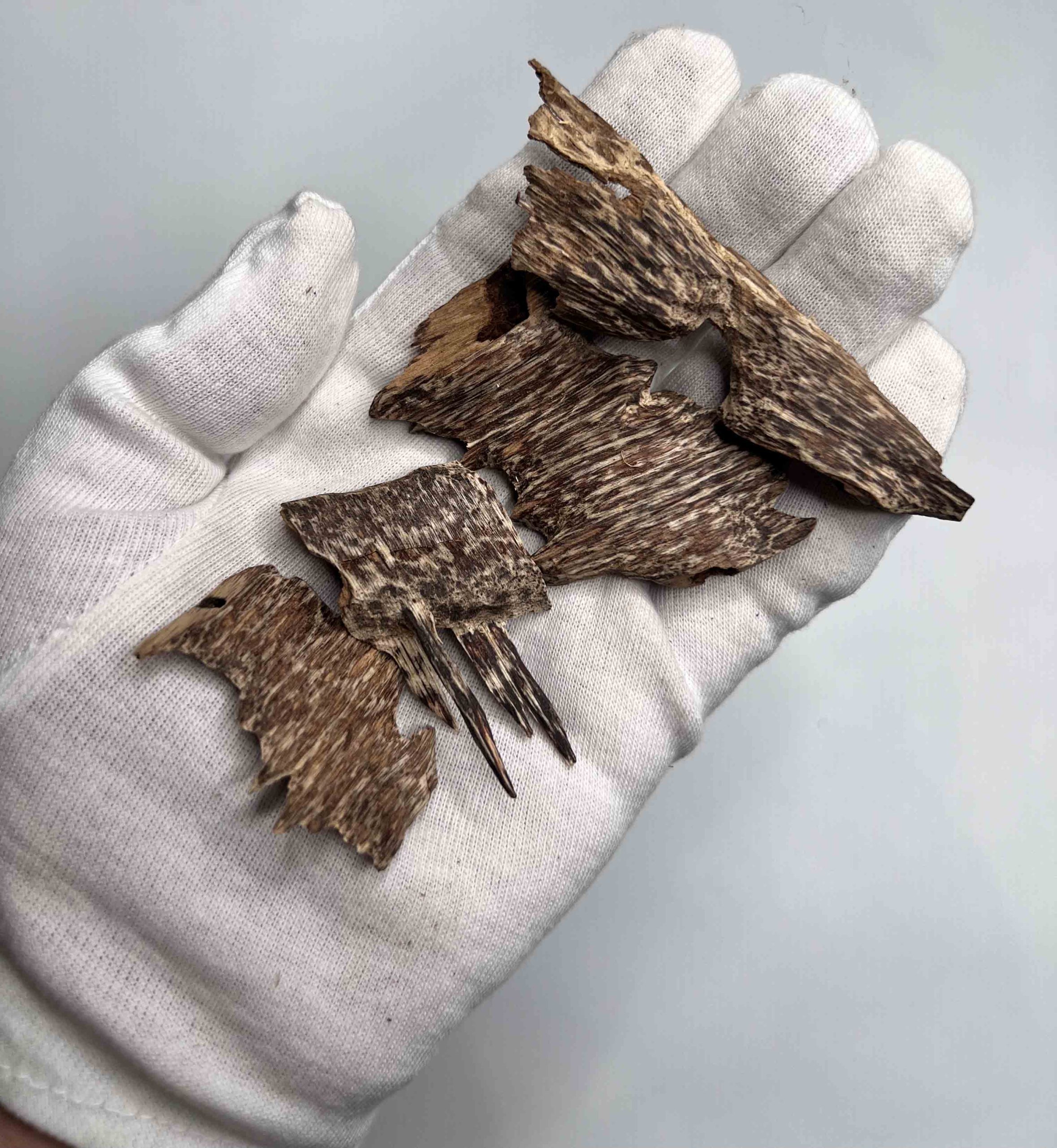
Look at the object under neutral light. Record visible grain, colour variation, fractures, residue, drilling, finish and condition. Feel the weight and surface without scratching or cutting the item. These observations can help compare a product with its listing and can reveal obvious inconsistencies, but they cannot confirm a rare species or source claim.
Be cautious with unusually uniform colour, heavily perfumed surfaces, visible coating, fresh-looking dye or a story that conflicts with the physical condition. These are reasons to ask questions, not proof of deception. A safe check protects the item and the evidence. Destructive tests often damage the product while still leaving the buyer without a conclusive answer.
Smell and controlled heating tests
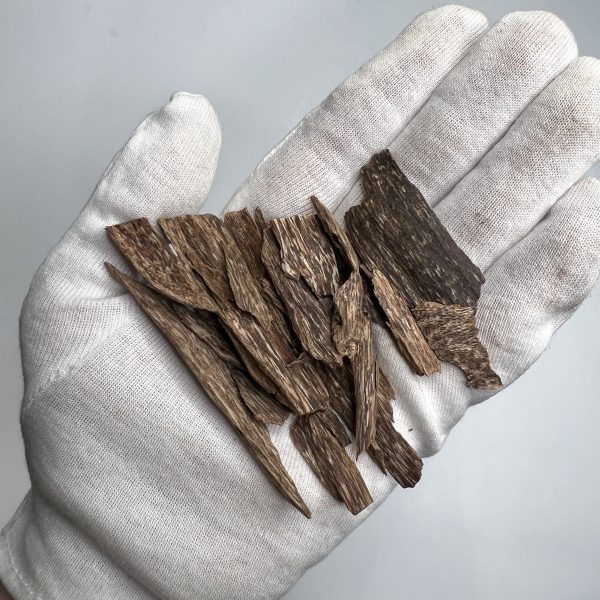
Aroma is important, especially for chips and raw material intended for heating. If you assess it, use a small amount, a clean and appropriate burner, and a consistent heat level. Note the material format, amount, method, temperature and room conditions. This produces a useful personal observation without pretending that scent alone proves identity.
Avoid using a powerful flame as an authentication tool. Heat can alter a sample, and fragrance additions or surface treatments can create misleading first impressions. A pleasant aroma may indicate that a product is enjoyable; it does not prove wild origin, age, species or lack of treatment. For a high-value claim, preserve the item and seek stronger evidence.
Sink tests, burn tests and other popular myths
Sinking is often treated as a verdict. It is not. Whether a piece sinks can be influenced by shape, size, moisture, density distribution and how the test is performed. It does not prove a species, a source, a particular resin content or authenticity. The same caution applies to bubbles, flame behavior and surface oil. These may be observations under narrow conditions; they are not universal tests.
Read Sinking Agarwood: What Density Can and Cannot Prove before relying on water behavior. Do not soak, burn or cut a valuable item merely to follow a video demonstration. A test that destroys condition without answering the actual claim is not a good test.
Common treatments, composites and lookalikes
Some products may be cleaned, polished or stabilized as normal handling. Others may involve dyes, coatings, added fragrance, composite material, substituted wood or blends. The key question is disclosure. A treatment is not automatically a problem; undisclosed treatment can materially change a purchase decision, especially when the listing promises natural, untreated or pure material.
Lookalikes can resemble agarwood in colour or grain, and a composite can be made to feel convincing. That is why provenance, product form and seller consistency are more useful than a single visual rule. If oil is involved, ask whether it is pure oil, a blend or a fragrance product and request composition information appropriate to the claim.

A safe home-check sequence and escalation point
| Step | Safe action | What it can tell you |
|---|---|---|
| 1. Define | Record product form and exact seller claim | Which evidence is relevant |
| 2. Preserve | Keep listing, invoice, photos and messages | What the seller represented |
| 3. Observe | Inspect under neutral light; note weight and condition | Whether the item matches its description |
| 4. Ask | Request source, batch and treatment disclosure | Evidence boundaries |
| 5. Escalate | Seek qualified assessment for a high-value dispute | A scoped expert or analytical answer |
Escalate when a premium depends on a claim that cannot be supported by ordinary records, when a dispute is material, or when the item will be resold, insured or moved internationally. The Where to Buy Agarwood guide helps buyers evaluate seller practices before a problem arises.
How to preserve useful evidence
Take your own photographs when the item arrives and keep them with the original listing and invoice. Record weight, dimensions, condition and any batch mark. If you test aroma, note the method and amount used. Do not change or discard packaging and documents if the source claim is important to the price. These simple steps do not prove authenticity, but they create a reliable record of what was represented and received.
Ask the seller to clarify any contradiction before using the item. A seller may have an honest explanation for a changed image, a missing batch number or a difference in colour. What matters is whether the explanation remains consistent and is given in writing. If an issue is unresolved, preserve the item rather than performing an irreversible test.
When expert or laboratory help is proportionate
Independent help is most useful when a decision is high value, a dispute is material, an insurance or resale claim is involved, or a legal or commercial question depends on a specific identity. Start by defining the question: species, material composition, treatment, origin evidence or condition. An expert or laboratory cannot answer a vague demand to prove that an item is “the best.” They need a representative sample, a method and a stated scope.
Ask what the assessment can and cannot establish before paying for it. A chemical profile may compare a sample under a defined method but may not determine the entire history of a finished object. DNA work, microscopy or other analysis may have sample and reference limitations. The value of expert help is its clarity about those boundaries.
Questions that reveal the quality of a claim
Questions should be specific and calm. What does the item claim to be? What source or batch information is available? Has any finishing, scenting, blending or repair occurred? Which images show the actual item? Which documents travel with it? Is the seller describing personal observation, a supplier statement or an independently verified fact? The answer to these questions often reveals more than another home test.
Be cautious when a seller refuses ordinary questions, changes the story between the listing and a message, or asks you to rely on a private “test” with no explanation. These are not proof that an item is misrepresented. They are evidence that the claim has not earned a strong conclusion. The correct response is to reduce the value placed on the claim, request better information or choose another product.
Examples of proportionate decisions
A modest chip purchased for personal aromatic use may not need a laboratory analysis. If the seller shows current photographs, states the form and weight, describes storage and provides a fair price, a buyer may decide the experience is worth the uncertainty. A rare-name wood, a large quantity, a collector object or a product intended for resale deserves a stronger standard: item-specific records, treatment disclosure, clear source information and potentially independent assessment.
The same principle applies to oil and jewellery. A gift bracelet can be valued for workmanship and material appearance even if its source claim is limited. A bottle called pure oud oil should carry a clearer composition statement than a perfume product. Authenticity is not a prize awarded by a label; it is a conclusion proportionate to the available evidence.
What not to do
Do not drill, split, sand, soak, burn heavily or chemically treat a valuable item in pursuit of an online tip. Do not rely on a single water test or flame demonstration. Do not assume that an old-looking surface proves age, or that a strong scent proves natural origin. Do not misdescribe a product to a customs authority or a future buyer in order to make the claim fit a desired story.
These actions either destroy evidence, create misleading observations or pass uncertainty to someone else. A better approach is to preserve the item, record the facts, ask questions and choose a qualified escalation path only when the consequence warrants it.
How authenticity and trust work together
Trust is not blind acceptance of a seller’s confidence. It is the result of clear claims, consistent records, current images, honest disclosure and an appropriate response when information is incomplete. A seller who says they do not know the exact species but can provide the supplier statement and batch record is giving a buyer more useful information than one who promises certainty without showing how it was obtained.
Buyers can reward this honesty by reading descriptions carefully and not demanding impossible proof for a low-stakes item. At the same time, they should not pay a premium for certainty that the evidence does not support. This balance gives responsible sellers room to describe real material faithfully while protecting buyers from exaggerated claims.
A final evidence ladder
At the bottom of the ladder are appearance, feel and aroma notes: useful for description, weak for proof. Above them are a consistent listing, current images, invoice and seller explanation. Above that are batch-linked provenance, source and processing records. At the top are qualified independent assessments or tests that answer a specific question under a stated method. Move upward only when the price, risk or dispute justifies it.
The central lesson is simple. Do not ask one home test to do the work of an evidence chain. Define the claim, preserve the product, compare the records, make safe observations and escalate only when it matters. That is the most reliable way to decide what an agarwood item can honestly be said to be.
After you have reached a conclusion
Write down the conclusion in the language the evidence supports. You may conclude that an item is accurately described for personal use, that a source claim remains unverified, that a treatment disclosure is adequate, or that a further assessment is justified. Avoid turning a screening observation into a categorical statement that later buyers may rely on.
If you gift or resell the item, pass along the invoice, images, seller description and any assessment with the same limits. Do not strengthen a claim merely because the product has changed hands. Careful language protects the next owner and gives genuine documentation the value it deserves.
Choose clarity over drama
The most persuasive authenticity story is not usually the most dramatic one. It is the one that identifies the object, names the evidence, acknowledges uncertainty and offers a fair price for what can be shown. That is how a buyer can enjoy agarwood without asking a single myth or shortcut to carry the whole decision.
When the evidence is sufficient for the intended purchase, proceed with a preserved record. When it is not, asking for clarification or declining the offer is a sensible, respectful outcome.
This method protects the material, buyer and seller. It keeps interest in agarwood grounded in evidence rather than a performance of certainty.
It remains a calm, practical and fair buying practice.
Choose wisely.
