

Cultivated vs Wild Agarwood
“Wild agarwood” and “cultivated agarwood” are often presented as opposites in a simple quality story: wild is assumed to be rare and therefore superior, while plantation material is assumed to be ordinary. The real comparison is more demanding. Source affects conservation, traceability, availability and legal risk, but it does not determine aroma, resin distribution or value on its own.
A useful buying decision starts with definitions, then looks at the evidence attached to the exact material. This guide compares the two source categories without turning either one into a shortcut for authenticity or quality.
Define wild and cultivated agarwood precisely
Wild should describe material originating from trees growing outside a deliberately managed plantation system. In practice, a retail claim may be based on direct harvest knowledge, a local supply network, inherited stock or an older trade narrative. These situations do not carry the same evidentiary weight, so the seller should state the basis for the claim.
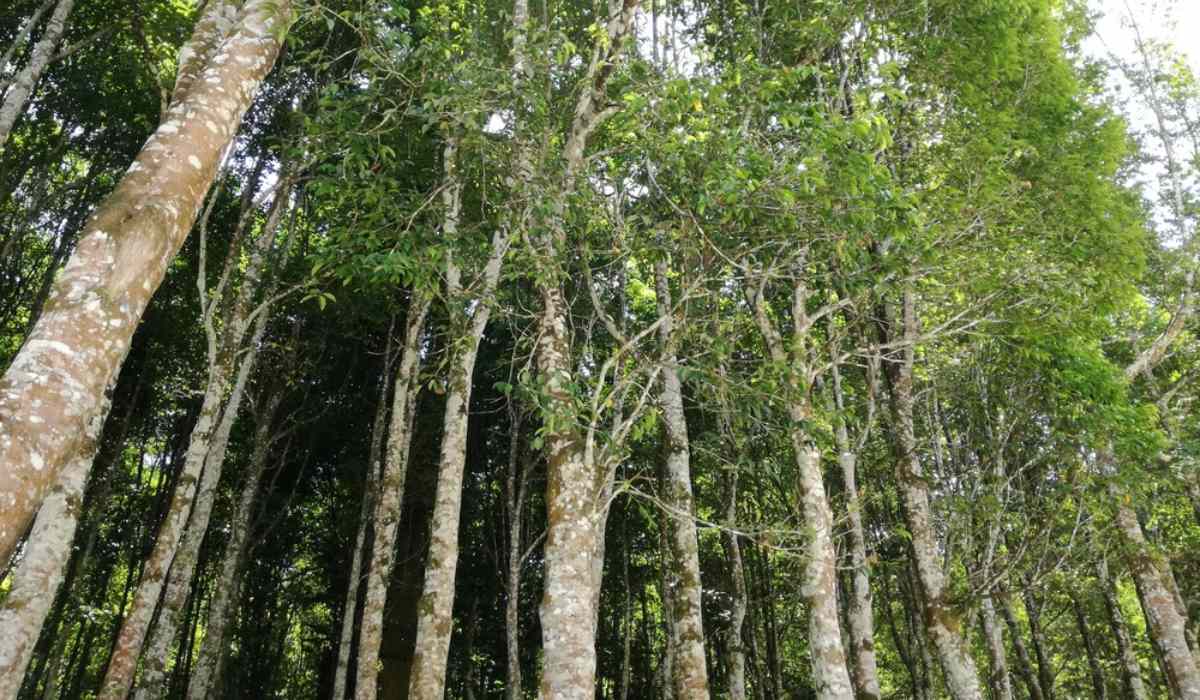
Cultivated generally describes trees grown under active human management. That can include smallholder plots, mixed agroforestry systems or larger plantations. The label says something about the setting in which the tree grew; it does not, by itself, say whether resin formation was spontaneous or induced, how long the process lasted, whether the batch is traceable, or what aroma a particular piece will offer.
Do not confuse source with post-harvest treatment. A plantation chip can be untreated; a wild-origin piece can be polished, coated or scented after harvest. The questions are separate, and a good description answers them separately.
Formation biology shared by both sources
Agarwood is associated with a tree response and localized changes in wood chemistry. Source setting influences the conditions around that process, but cultivated and wild trees share the basic biological reality that resin-associated material is variable. It can differ from branch to branch, from one section of a trunk to another and over time.
In managed settings, growers may use inoculation or other induction approaches intended to encourage the relevant response. In a wild setting, injury, environment and biological interactions can be part of the story, although a buyer should avoid reducing a complex process to a single “infection” explanation. Neither setting guarantees a uniform result.
Understanding the formation process makes quality claims easier to evaluate. Read how agarwood forms in trees for a deeper explanation of injury, induction, time and resin response. The important practical point is that the item’s condition and evidence matter more than a romantic source label.

Variation in age, induction and harvest practices
Age is often discussed as if older always means better. It can be relevant, but only alongside species, growing conditions, formation history and the wood section sampled. A young plantation tree can yield material suitable for a particular use, while an older tree may still contain highly uneven resin distribution. A precise seller will distinguish an approximate tree age from the age of the finished item and from the time since induction.
Induction practices also vary. Some growers may keep records of timing and treatment; others may have only broad harvest information. For buyers, these records are valuable because they describe a known history, not because they guarantee an aromatic result. Ask what is documented and what is only estimated.
Harvest and sorting matter as well. Two chips from the same source can look and smell very different after cutting, storage and grading. When comparing listings, request current images, the material format, weight, condition and intended use. These specifics are more useful than a blanket claim that a whole source category has one predictable character.
Quality evidence without romanticizing wild material
Wild material can be scarce and can carry cultural or collector interest. Scarcity, however, is not an authentication method. A dark surface, a dense feel, a high price or a dramatic origin story may be reasons to ask better questions; they are not proof that a piece is wild or of exceptional quality. The same caution applies to a fragrant first impression, which can be affected by preparation and handling.
Cultivated material should not be dismissed because it is more available. A clear production story, consistent batch information and candid processing disclosure may give a buyer more confidence than an unsupported wild claim. Quality can include aroma, visual character, resin distribution, craftsmanship, condition and the suitability of the item for burning, wear or collection.
Use evidence proportionately. A small chip for personal enjoyment may only need an accurate description and a fair price. A high-value carving, large lot or rare-name offer deserves item-specific provenance, careful images and potentially independent assessment. The right response to uncertainty is not to invent certainty; it is to price and describe the material honestly.
Conservation, legality and supply-chain tradeoffs
Wild harvesting can place pressure on vulnerable populations when it is not managed responsibly. Cultivation can help create a more predictable supply and may reduce reliance on wild material, but cultivation is not an automatic sustainability certificate. Site management, species choice, traceability, harvest timing and compliance all matter.
Legal trade is also separate from quality. A seller should not suggest that “wild” proves legality, or that “plantation” removes every documentation obligation. Rules can depend on source, species, country, date and the form of material. The useful question is whether the seller can explain the relevant path of the batch and provide appropriate documentation where it applies.
For a buyer-facing explanation of trade and documentation boundaries, see Is Agarwood Legal? CITES, Trade Documents and Provenance. When information is incomplete, do not treat that as automatic wrongdoing; simply do not pay for a level of certainty the records cannot support.
What provenance records can support
Provenance records are strongest when they travel with the exact lot or item. Depending on the material, useful support can include grower or supplier information, harvest or processing notes, batch numbers, dated invoices, export or import records where relevant, and clear photographs taken before retail handling. The record should state what it covers and what it does not.
Documents that apply to a broad shipment do not necessarily prove the history of a specific bracelet, chip or bottle after it was divided and processed. That does not make them useless; it means their scope should be described honestly. Keep invoices and photographs with your purchase, particularly when origin is a meaningful part of the price.
Source, formation and treatment should remain separate in the paperwork as well as in the description. The guide to natural, cultivated and treated agarwood claims offers a practical way to keep those dimensions distinct.
A buyer-facing cultivated-versus-wild matrix
| Question | Wild-source claim | Cultivated-source claim |
|---|---|---|
| What can be attractive? | Rarity, history and collector interest | Availability, potential traceability and supply continuity |
| What must still be checked? | Chain of custody, legality, condition and item-specific evidence | Species, grower/process details, induction and post-harvest disclosure |
| What does the label not prove? | Aroma, untreated status or universal grade | Low quality, sustainability or automatic legality |
| Best buyer request | Clear origin basis and documents tied to the lot | Clear production and batch history tied to the lot |
Choose the material that has a story proportionate to its price and purpose. A transparent cultivated piece can be the sensible choice for regular use; a well-documented older piece may appeal to a collector. What matters is that the claim, evidence and value agree.
Before you decide
Ask the seller to explain the source in plain language, share current photographs and identify any processing or additives. Record the answer with the invoice. If the evidence is incomplete, treat the gap as information—not an invitation to fill it with assumptions. That approach is fair to growers, sellers and future buyers, and it leaves room to enjoy agarwood for what the specific piece genuinely offers.
Questions that reveal useful detail
When comparing sellers, questions should be concrete enough that they can be answered without sales language. Ask whether the claim of wild or cultivated origin is based on direct sourcing, a supplied record, or a prior owner’s statement. Ask whether the offered item can be connected to a batch and whether the same answer applies to the exact form you are buying. A piece may begin as a traceable lot of wood and then become harder to follow once it is cut, polished, mixed or redistributed.
For cultivated material, it is reasonable to ask how the trees were managed and whether the seller knows about induction, harvest and processing. For a wild claim, ask what period and region the source story covers, whether the chain is continuous, and which details are inferred rather than documented. The quality of the response is often more informative than its length. A limited but stable answer is preferable to a detailed story that shifts when you ask for ordinary clarification.
Price, purpose and appropriate caution
Price should reflect the product that can be demonstrated, not the most impressive possibility suggested by a label. A buyer who wants chips for occasional aromatic use may choose a cultivated product with a clear, fair description. A collector evaluating a rare source claim should be prepared to request stronger records, to examine condition more carefully and to walk away if the evidence is not commensurate with the premium.
There is also a practical difference between buying a small sample and buying a large quantity. With a sample, you can experience the material while keeping the financial risk modest. With a large lot, a high-value object or a product intended for resale, it is prudent to preserve documentation and seek independent advice where the decision warrants it. These are not rules against either source category; they are methods for matching diligence to consequence.
A more useful way to talk about sustainability
Sustainability claims should be as specific as origin claims. A plantation may provide a managed alternative to wild extraction, yet its environmental value depends on how it is established and operated. A wild-harvest claim may describe traditional knowledge, yet it still needs lawful and responsible sourcing. Rather than treating one word as an environmental verdict, ask about management practices, traceability, compliance and the supplier’s willingness to describe limits.
This approach also makes room for a more honest market. It values growers who keep records, sellers who distinguish fact from tradition, and buyers who choose material without demanding that every piece be called rare. In the long run, those habits support better information and a more responsible relationship with agarwood.
