
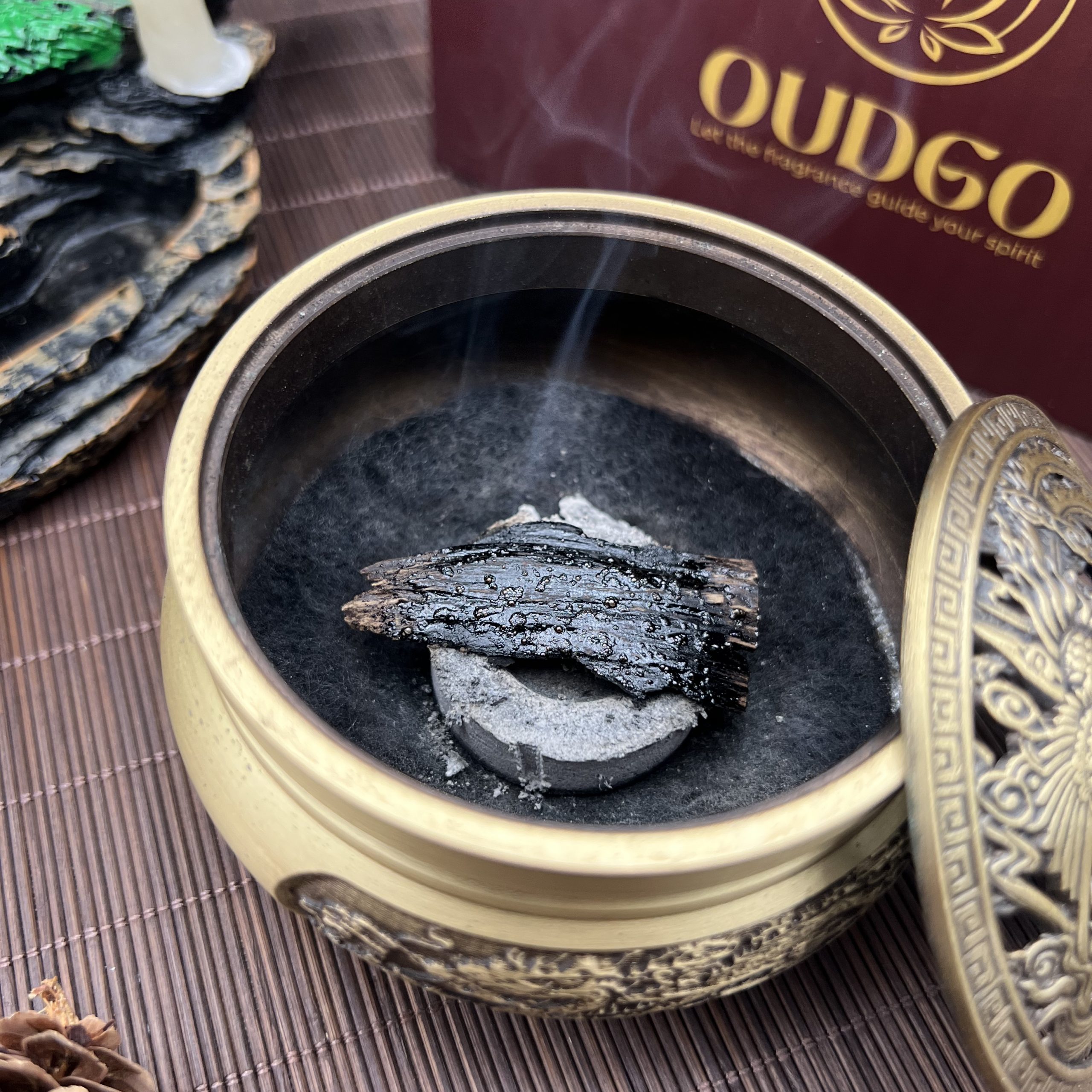
Natural, Cultivated and Treated Agarwood: What Evidence Supports Each Claim
“Natural,” “cultivated” and “treated” are often used as if they answer the same question about agarwood. They do not. One can describe where the tree grew, another can describe how the tree was managed, and another can describe what happened to the material after harvest. A clear listing should separate those facts instead of letting one reassuring word stand in for all of them.
This guide gives buyers a practical way to read source and treatment claims. It does not assume that plantation material is inferior or that a wild-origin statement is automatically stronger. The quality of a claim depends on whether the seller can connect it to the exact wood, chips, beads or oil offered for sale.
Natural, cultivated and treated describe different dimensions
Start by placing every statement in the right category. Natural is sometimes used to mean naturally formed resin, but in casual retail language it can also mean untreated, traditionally processed, or simply “not synthetic.” Cultivated normally refers to trees grown in a managed setting such as a plantation. Treated refers to a post-harvest intervention: for example a fragrance addition, coating, dye, stabilizer, polish or another process applied to the finished material.
Those descriptions can coexist. A plantation-grown tree may develop resin after managed inoculation and yield a genuine, enjoyable agarwood product. A piece described as naturally formed may still be cleaned, polished or treated after harvest. A seller who uses the word “natural” should therefore be able to say natural in what sense.
Separate questions protect both buyers and honest growers. Source asks where the tree came from. Formation asks how resin-associated wood developed. Processing asks what was done to the material afterward. Legality asks whether trade and documentation are appropriate. Quality asks how the particular piece performs for its intended use. None of these is settled by the others.
What wild-origin and plantation-origin claims require
A wild-origin claim deserves a clear chain of custody, especially where the claim changes price. Useful details can include the stated country or region, when and how the material entered commerce, the form in which it was sourced, and any documents that travel with the batch. Evidence will vary by age, location and material type, so a buyer should not demand a fictional level of certainty. But the seller should distinguish first-hand knowledge from a story passed down through several owners.
A plantation-origin claim should be equally specific. Ask whether the seller knows the species, planting area, approximate age of the trees, whether induction was used, and how the raw material was separated from the wider harvest. Plantation sourcing may support continuity and traceability; it does not require the seller to exaggerate a wild narrative. For a fuller comparison, see Cultivated vs Wild Agarwood.
Be careful with broad origin labels. “Vietnamese agarwood,” for example, may identify a traditional association, a seller location, a shipping origin, a claimed tree origin or a production history. Ask which one the seller means. The best answer is often modest and precise: “This batch was purchased from a plantation processor in…,” rather than a dramatic origin claim with no path to verification.
Inoculation is not the same as artificial fragrance treatment
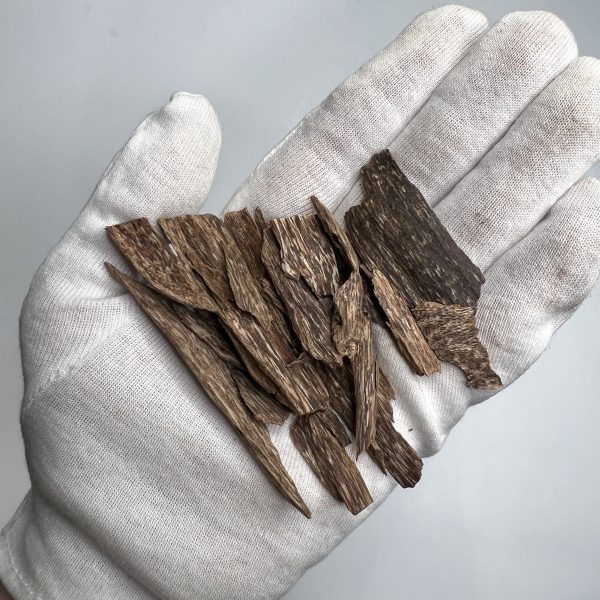
Inoculation is a tree-management or induction practice. Methods vary, but the underlying aim is to encourage a tree response associated with agarwood formation. The result is still wood from a tree; its properties can vary with species, tree condition, method, time, environment and the portion of material sampled. It is not accurate to equate inoculation automatically with artificial fragrance addition.
Fragrance treatment is a different question. It concerns whether a finished chip, bead, carving, powder or oil was exposed to added scent, blended material or a surface application after the relevant raw material was harvested or processed. That distinction matters because a product may smell powerful for reasons that are not visible in a photograph.
Neither category should be used as a shortcut for quality. Some buyers deliberately seek plantation-grown material because it is accessible and traceable. Others seek older pieces with a documented history. The honest description is the one that names the method when known and does not imply that one category is automatically superior in every use.
Common post-harvest treatments and disclosure issues
Post-harvest processing can range from routine and benign to material and undisclosed. Cleaning dust from a raw chip, trimming an edge, or carefully polishing a finished carving may be normal handling. A coating that changes colour, a fragrance application that changes aroma, a dye that changes appearance, or a blend that changes composition are different because they can alter the buying decision.
Disclosure should match the effect. If a bead bracelet has been sealed to improve durability, say so. If chips have been scented, say what has been added and how it affects intended use. If an oil is a blend, name it as a blend rather than presenting it as a pure distillation. The point is not to treat all processing as deception; it is to give the buyer enough information to evaluate the product honestly.
Signals such as an unusually uniform surface, a sharp perfume-like opening, visible residue or a story that changes under basic questions can justify further inquiry, but they are not proof by themselves. Avoid destructive home tests. Instead, ask for a written clarification, request photographs under neutral light, and weigh the seller’s answer alongside price and return terms.
Claim-to-evidence matrix
| Claim | Useful support | What it cannot prove by itself |
|---|---|---|
| Wild origin | Item-specific provenance, dated records, traceable purchase path | Current aroma, lack of treatment or legal status in every market |
| Plantation origin | Grower or processor details, batch information, induction disclosure | Exact resin content or a universal quality grade |
| Naturally formed resin | Clear statement of formation history and its source | That the material was never processed afterward |
| Untreated | Direct written disclosure of finishing and additives | Wild origin or age of the tree |
| Pure oil | Batch, distillation and composition information | That a particular trade name is authentic without further evidence |
Use the matrix as a conversation tool, not as a demand for perfection. A small personal purchase may come with limited records. A high premium should come with stronger, more item-specific support. What matters is that the evidence level is proportionate to the claim.
Quality should not be inferred from a single label
Quality is a combination of factors: material format, aroma, resin distribution, condition, workmanship, provenance, intended use and the limits of what can be verified. A dark surface is not enough. A high price is not enough. A wild-origin statement is not enough. A plantation statement is not a reason to dismiss a piece without smelling, examining or documenting it properly.
This is particularly important for gifts, collector pieces and products bought for burning. A well-described cultivated chip can be an excellent choice for daily aromatic use. A carefully finished bead can be appropriate if its processing is disclosed. A seller should not need to hide behind the word “natural” to explain what a product is. For a broader buyer-friendly assessment, read the seven-factor agarwood quality and grading framework.

When a claim is not fully documented, describe that uncertainty directly. “Seller-stated plantation source; no batch record supplied” is more useful than quietly converting a statement into a fact. It lets the buyer decide whether the price and purpose justify the remaining uncertainty.
Buyer questions for origin, process and treatment
Before buying, ask: What exactly does “natural” mean in this listing? Is the source claim based on first-hand records or a previous owner’s account? Was the tree plantation-grown, and was induction used? What processing, finishing or scent additions have been applied after harvest? Which documents belong to this exact batch, rather than a general product category? Can the seller provide current photographs and a clear return policy?
A strong seller does not need to answer every question with perfect certainty. They do need to distinguish what they know, what a document supports and what remains unknown. Keep the answer with your invoice, especially if origin or treatment is part of the value. If a listing makes a strong authenticity claim, use the agarwood authenticity evidence guide to compare the claim with the available support.
Make a proportionate decision
For a modest purchase, clear photos, a frank description and a reasonable price may be enough. For a rare-name premium, a large quantity or a future resale, ask for a higher standard: written disclosure, batch-level details and, where appropriate, independent assessment. Do not let urgency replace evidence.
How to compare two imperfect listings
It is common to compare two listings where neither has a complete documentary trail. In that situation, do not invent certainty for either one. Put the known facts side by side: format, weight, current condition, origin statement, processing disclosure, batch information, photographs, price and return terms. Prefer the seller who answers plainly and whose claims remain consistent across the listing, messages and paperwork.
Consider the purpose as well. A chip chosen for a short personal burn can be assessed differently from a carved collector object or a bottle purchased as a pure oil. The more the price depends on a claim about history or rarity, the more the evidence should be connected to that particular item. If a seller cannot provide that connection, the fair interpretation is not “proven false”; it is “unverified at this price.”
Use language that preserves the facts
When you later gift, resell or discuss the material, carry the original disclosure forward. Do not turn “seller-stated plantation source” into “certified wild agarwood,” and do not remove a finishing note because it sounds less romantic. Accurate language protects the next buyer and rewards suppliers who take the time to describe their work properly. It also keeps the pleasure of agarwood—its texture, history and aroma—separate from claims that cannot yet be established.
The most useful conclusion is often simple: buy the material that is honestly described and fairly priced for what can be shown. Natural, cultivated and treated are not verdicts. They are separate parts of a story that a good listing should tell clearly.
Final check: if the price rests on a strong source or treatment claim, ask the seller to put the claim and its limits in writing. A transparent answer is part of the product information, not an inconvenience.
That practice keeps future comparison fair, protects trust, and prevents attractive terminology from outgrowing the evidence.
