
Mala Bead Colors: Tradition, Modern Symbolism and Limits
Color can make a mala visually distinctive, but color meaning is rarely universal. A brown wooden strand, a red dyed bead, a blue stone, and a multicolor bracelet may each be described with very different stories by a temple, a teacher, a museum record, a gemstone seller, or a modern wellness chart. The responsible question is not “what does this color always mean?” It is “where does this meaning come from, and does that source apply to this particular mala?”
Why mala color meanings vary by source and market
Color names feel simple, but a bead’s visible color can come from many things. It may be the natural tone of wood, seed, shell, stone, coral, glass, or metal. It may come from a dye, surface treatment, lighting, or photography. It may be linked to a local devotional association, a modern chakra chart, a gemstone tradition, or a seller’s creative description.
These sources do not carry equal authority. A museum record can document the materials and colors of a particular historical object. A teacher can explain a practice in a particular lineage. A gemstone chart can describe a contemporary belief system. A product page may only be making a design choice. The description becomes misleading when it hides those differences and presents a color as a guaranteed spiritual fact.
For the basic structure and meaning limits of a mala, read Mala Beads Meaning: 108 Beads, Guru Bead and Variations. The strand’s context matters more than a color label alone.
Traditional material associations versus modern color charts
A traditional material association begins with a specific object, text, community, or practice. For example, a museum may identify a Tibetan Buddhist mala made from seeds, shell, coral, turquoise, and silver. That evidence supports a statement about the materials in that object. It does not prove that every red, blue, or white bead worldwide carries one fixed Buddhist meaning.
Modern color charts often arrange beads by broad themes such as calm, grounding, energy, or chakra systems. Some people find those charts personally meaningful. They should be described as modern or source-specific when that is what they are. A color chart is not automatically a Buddhist teaching, a Hindu teaching, or a replacement for a lineage’s own explanation.
| Source of a color claim | What it can reasonably support | What it cannot establish alone |
|---|---|---|
| Museum object record | Material/color in a named historical object | Universal religious symbolism |
| Named teacher or tradition | Practice within that community | Rule for every school or region |
| Gemstone guide | That guide’s stone associations | Meaning of all beads with a similar color |
| Modern wellness chart | A contemporary personal framework | Ancient doctrine without evidence |
How white, black, red, blue and green are commonly interpreted
White, black, red, blue, and green are often given broad symbolic descriptions online. White may be called peaceful or clear; black may be called protective or grounding; red may be called energetic; blue may be called calming; green may be called balanced or heart-centered. These are commonly encountered modern associations, not a universal code for malas.
A color may mean something different because of its material. Black can be wood, seed, stone, glass, dye, or a darkened finish. Red can be coral, lacquer, dye, or a particular stone. Blue and green can point to different minerals or colored glass. Before repeating a symbolic claim, identify what the bead actually is and who attributes the meaning.
If a seller says a color guarantees protection, healing, wealth, spiritual advancement, or a precise chakra effect, treat that as a marketing claim unless it is clearly sourced to a named tradition and presented with appropriate limits. Personal resonance is valid; universal certainty is usually not.
When gemstone meaning differs from bead color meaning
A gemstone association belongs first to the specific stone and the source making the association. It should not automatically transfer to any bead that happens to share the same color. A blue dyed glass bead is not the same material as a blue stone; a green wood stain is not a green mineral. Color similarity is not material identity.
Gemstone meaning can also vary across historical lapidary traditions, modern metaphysical systems, and individual sellers. A product page should say whether it is discussing physical material, a contemporary symbolic practice, or a tradition-specific reference. Mixing these together gives readers the impression that a color alone proves a spiritual property.
Ask practical questions before symbolic ones: What is the material? Is it natural, dyed, coated, or synthetic? Is the color stable? Is there a source for the association? This makes the choice more transparent and prevents a decorative feature from becoming a false claim.
A source-labeled color matrix
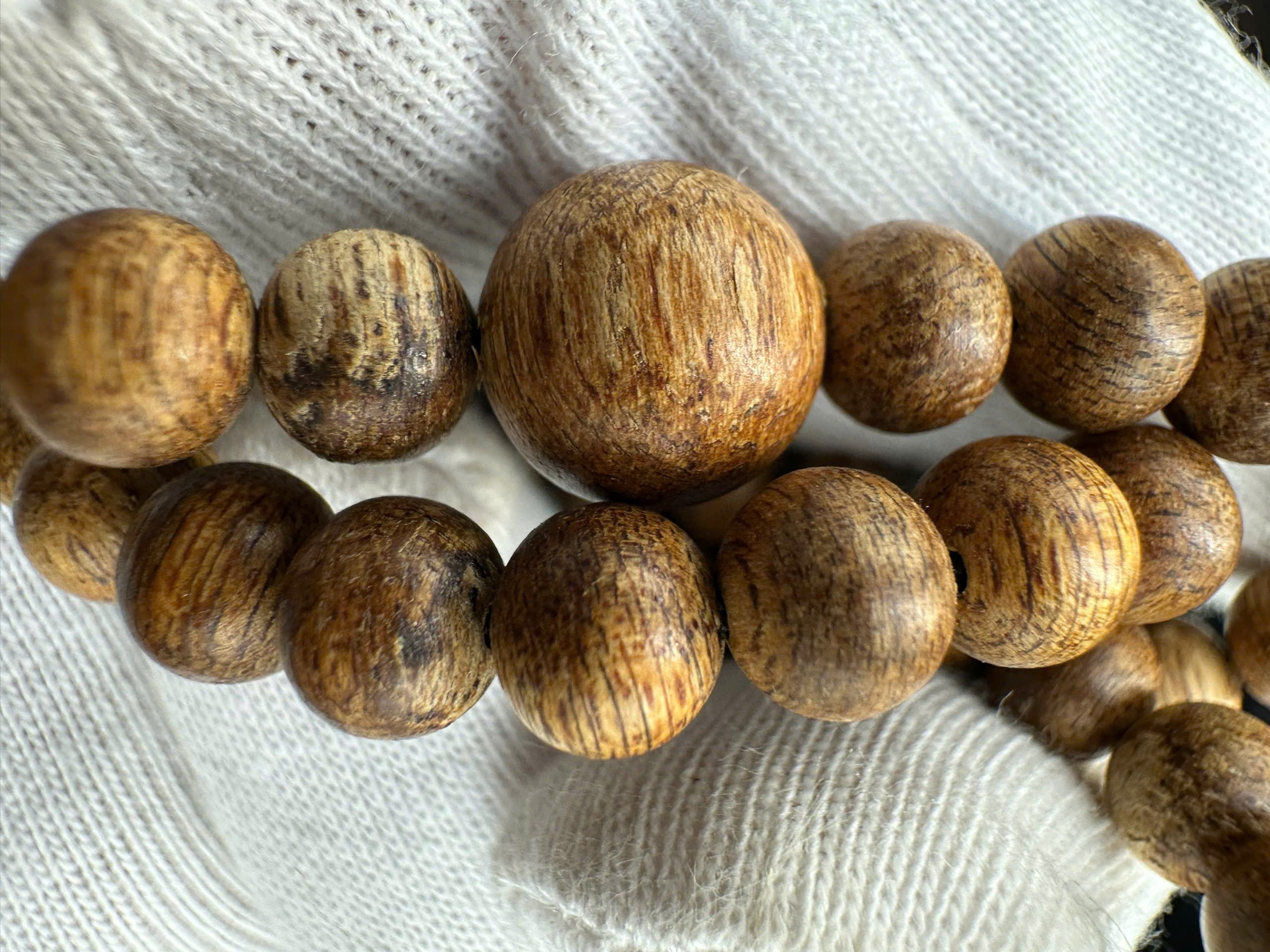
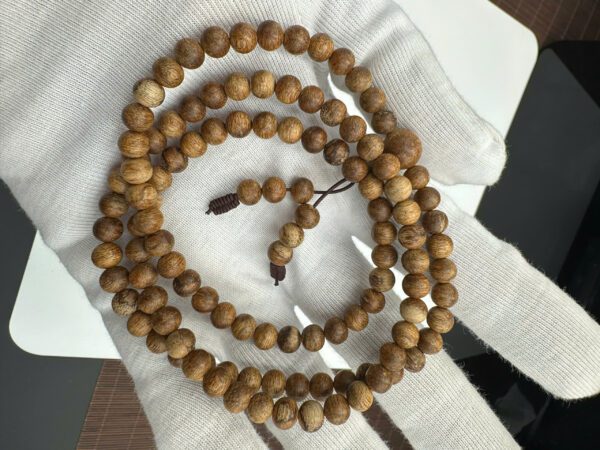
Use a matrix that labels the source rather than pretending to decode every color. A natural brown agarwood bead can be described as brown because of its material; its scent, grain, and care are material facts. A red coral bead in a museum record can be described as coral in that particular historical object. A blue-green bead may be identified as turquoise when a source actually names turquoise. A multicolor modern bracelet can be described as a designed color palette without a claim of ancient doctrine.
The National Museum of Asian Art’s Tibetan mala record gives a useful example: it identifies seeds, shell, coral, turquoise, and silver in a particular object. That source-labeled description is stronger than a generic online chart because it says what was observed and where. It still does not turn every color in the object into a universal rule.
For school and regional limits around Buddhist bead descriptions, see Buddhist Prayer Beads: Meaning, Counts and School Differences.
Marketing claims and universal-symbolism red flags
Be cautious when a page says a color is always sacred, always protective, or always correct for a certain practice without naming a source. Be cautious when it calls a modern chakra chart ancient Buddhist teaching, or when it uses a material name without explaining whether the bead is actually that material. Also question claims that color will produce a medical, emotional, financial, or spiritual result for every buyer.
Red flags do not mean color is meaningless. They mean the claim needs a source. A buyer can choose a color because it is beautiful, comforting, connected to a known material, or recommended within their own community. The problem begins when personal preference is sold as a universal promise.
Choose color by practice, material and personal meaning
Choose a mala color first by the context that matters to you. If you follow a teacher or community, ask whether there is a relevant preference. If you are choosing a material object, prioritize honest disclosure, comfort, size, cord strength, and care. If color has personal meaning, state it as personal rather than as doctrine for others.
An agarwood mala may range from lighter to darker brown based on wood and finish; a stone mala may have a different weight and feel. The material comparison in Agarwood Mala vs Stone Mala can help you choose on practical grounds before attaching symbolism. The color should serve the intended use, not replace the knowledge needed to use a mala respectfully.
Write down the source of a meaning you value
If a color association is important to your practice, note who taught it or where you learned it. This helps you keep personal meaning distinct from broad marketing language.
Let uncertainty remain visible
When the material or origin is unknown, say so. A cautious description is more useful than a confident symbolic story with no evidence behind it.
How to cite color without inventing a legend
When a source shows a colored material, describe exactly what it establishes. The National Museum of Asian Art Tibetan mala record identifies seed, shell, coral, turquoise, and silver in one object. It is appropriate to say that those materials appear in that documented mala. It is not appropriate to turn that one object into a compulsory color guide for all Buddhist practice.
Likewise, a historical image, a family heirloom, or an explanation from a teacher may be meaningful within its own setting. Label the setting before extending the claim. This is how color discussion can remain rich without becoming a collection of unsupported universal stories.
Color, authenticity, and sourcing are different questions
A natural-looking brown bead is not automatically agarwood, and a bright red or blue bead is not automatically a rare stone. Authenticity depends on evidence about material, seller disclosure, provenance, and where appropriate expert assessment. Color may be one visual clue, but it is not a material test.
Ask for clear information when a material claim matters. Do not rely on a filtered photo, a poetic name, or a symbolic color chart as proof of species, mineral, age, or origin. This protects the buyer and makes cultural description more accurate.
A practical color decision routine
First decide whether you need a specific tradition-linked material or simply a color you enjoy. Then verify the material and construction. Next check whether the seller distinguishes natural color, dye, and coating. Finally, keep any symbolic meaning in the category where it belongs: tradition-specific teaching, modern personal framework, or personal preference. This routine gives color a place in the decision without allowing it to do more than the evidence supports.
