
Agarwood Mala vs Stone Mala: Feel, Care and Practical Differences
An agarwood mala and a stone mala can look equally beautiful, but they feel and age very differently. Wood is generally lighter, warmer to the touch, and more sensitive to moisture, oils, and storage conditions. Stone is usually cooler, heavier, and more resistant to casual handling, but it can chip, crack, or strain a cord because of its weight. The best choice comes from intended use, comfort, care habits, and honest material information – not from a claim that one material is automatically more spiritual or powerful.
Quick comparison: agarwood mala and stone mala
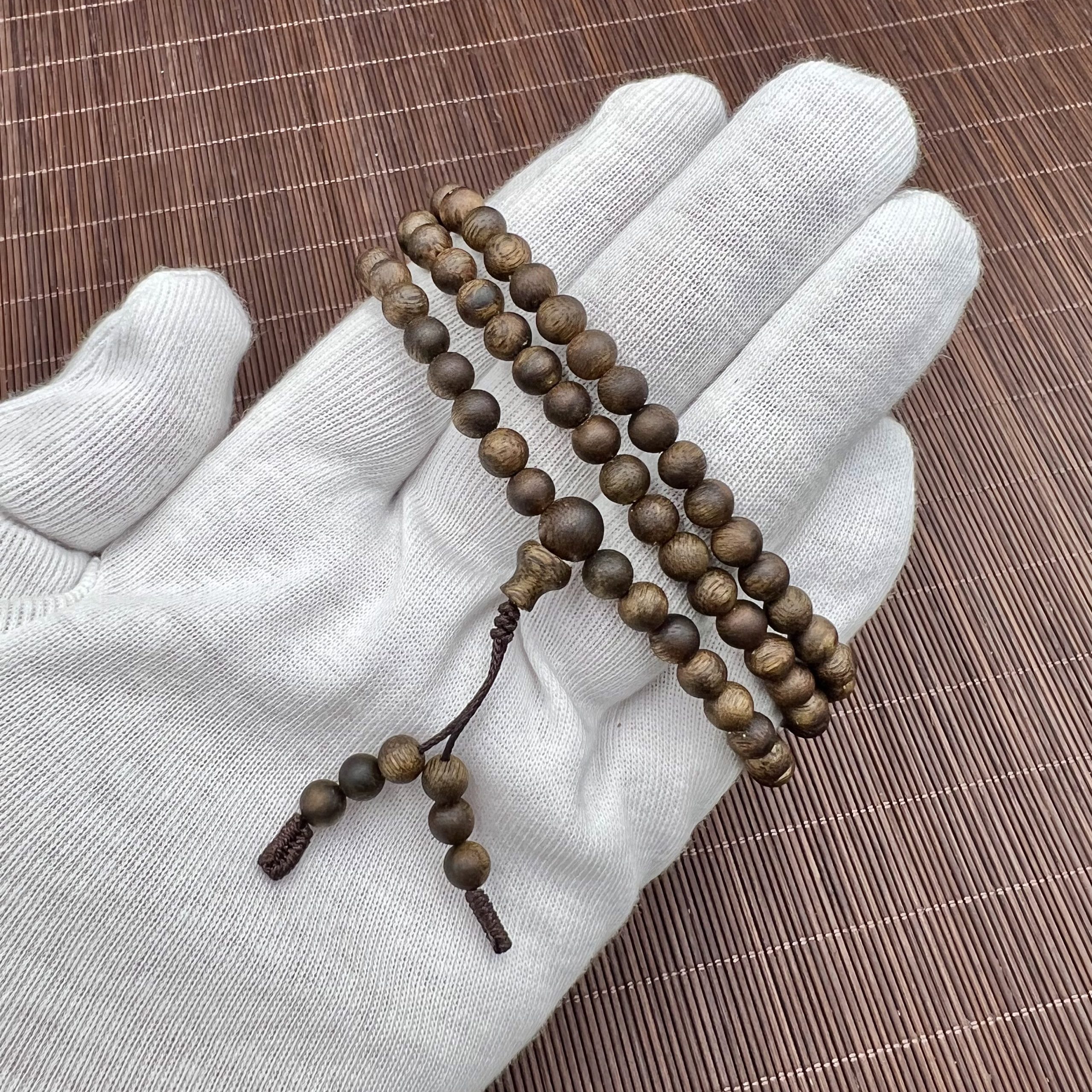
Agarwood is a wood material with visible grain, variable tone, and a surface that can feel light and warm in the hand. Some pieces may carry a subtle natural aroma, especially when handled or warmed, but scent strength varies with material, finish, age, storage, and the individual user. Stone beads are mineral-based or stone-like materials that usually feel denser and cooler. They can offer a substantial, smooth tactile rhythm, depending on polish and bead diameter.
| Question | Agarwood mala | Stone mala |
|---|---|---|
| Weight | Usually lighter at the same bead size | Usually heavier and more substantial |
| Touch | Warmer, often textured by grain | Cooler, often smooth when polished |
| Moisture sensitivity | Needs more care around water and oils | Varies by stone, but many tolerate casual dryness better |
| Wear risk | Can scratch, dry, absorb odor, or change surface | Can chip, crack, or put more load on cord |
| Best starting question | Is the wood honestly described and cared for? | Is the stone identified and the strand comfortable? |
Both materials can be made into a full strand, a shorter wrist form, or another structure. The count and religious context are separate from the material decision. Choose the form appropriate to your practice or gift recipient before deciding whether wood or stone feels better.
Weight, temperature and tactile feedback
Weight changes how a mala moves through the hand. A lighter wooden strand can be easier to hold for an extended period and may be more comfortable for a person who does not want pressure on the wrist or neck. Stone beads add noticeable mass, which some users enjoy because the beads are easy to feel individually. Others find a heavy strand tiring or less convenient to carry.
Temperature is another practical difference. Wood often adjusts more quickly to the warmth of the hand, while stone can feel cool at the start of a session and remain cooler in a cold room. Neither response is a spiritual signal. It is simply a material property that can affect comfort and attention.
Bead diameter matters as much as material. Small stone beads may be manageable, while large stone beads can make a full strand substantially heavier. A larger wood bead may still be light but can feel bulky. Use a bracelet or strand sizing guide, such as the Oudgo bracelet size guide, before assuming a photo shows the real scale.
Aroma and how it changes with handling
Some agarwood beads may have a natural woody aroma that becomes more noticeable with handling, warmth, or gentle friction. Aroma varies considerably and may fade or change with storage, surface finish, contact with perfume, moisture, and oils from the skin. A subtle scent is not proof of authenticity, and a strong scent is not proof that the material is high grade or untreated.
Stone beads do not provide the same wood aroma. They may pick up fragrance from their environment, a storage pouch, or applied products, but that is not a natural stone property to be treated as a quality benefit. If fragrance is part of why you prefer agarwood, protect the beads from perfume, smoke residue, and damp storage rather than trying to intensify the scent with oils or chemicals.
For evidence-based questions about whether agarwood is real, see the Oudgo authenticity evidence guide. A material decision should use multiple sources of evidence, not smell, color, or weight alone.
Durability, water sensitivity and repair
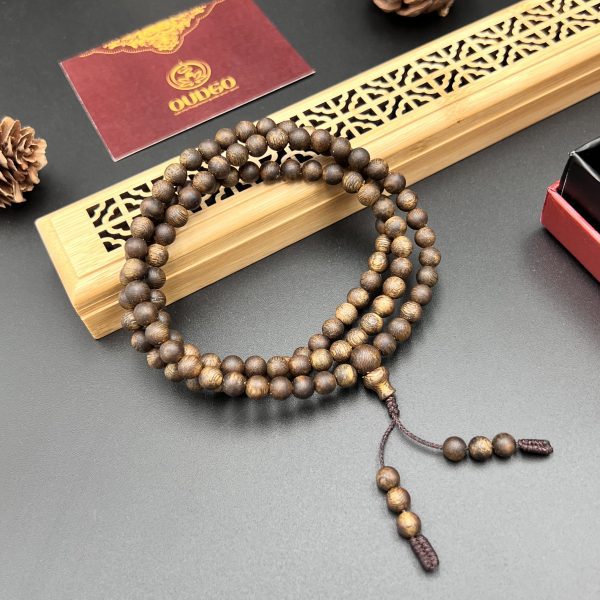
Wood is porous and can be affected by prolonged water exposure, repeated wetting, sweat, perfume, cleaning chemicals, and abrupt changes in humidity. An agarwood mala should be kept dry and wiped gently with a soft dry cloth after normal handling. Do not soak it, coat it with unknown oil, or leave it in a hot car or humid bathroom.
Stone is often harder at the surface, but it is not indestructible. A hard impact can chip or crack a bead, and some stones are more sensitive to water, cleaners, heat, or light than others. Heavy beads also place more tension on the cord and knots. Inspect the strand regularly, especially if it is worn daily or carried in a bag.
Repair is a material and construction question, not a spiritual failure. A frayed cord, loose knot, cracked bead, or damaged clasp deserves attention before the strand breaks. Use a qualified maker or the seller’s care guidance where possible; do not force a damaged bead back onto a cord just to keep using it.
Meditation use versus everyday wear
For quiet seated practice, a full agarwood or stone mala can be chosen mainly for hand comfort and bead movement. A lighter wooden strand may be easier for longer sessions; a heavier stone strand may give more pronounced tactile feedback. Either can work if the count, structure, and community context fit the intended use.
For daily wear, think about impact, water, cosmetics, work conditions, and storage. A stone bracelet may resist some surface wear yet be vulnerable to chipping on a hard edge. A wooden bracelet may feel light but can absorb moisture and odors. Remove either material before swimming, showering, exercise that causes heavy sweat, cleaning, or tasks that risk abrasion.
Do not confuse wearing a mala with a requirement of practice. Some people reserve it for prayer or meditation, while others have different habits. Follow personal or community guidance rather than copying an online image.
Price drivers and authenticity questions
Price can reflect material type, bead diameter, quantity of usable material, craftsmanship, cord and finishing work, sourcing claims, and seller reputation. A high price by itself does not establish that a wood is agarwood or that a stone is correctly identified. Conversely, a simple strand may be appropriate for a user’s needs even if it is not a luxury item.
Ask for clear descriptions. For agarwood, ask what evidence supports the material claim, whether it is natural wood or finished/treated material, and how the seller describes origin without overstating certainty. For stone, ask for the actual stone name, whether color is dyed or treated, and what care the material needs. Do not accept a mystical story as a substitute for physical disclosure.
Decision matrix by feel, care and purpose
Choose agarwood if you prefer a light, warm, grain-based feel and are willing to keep the strand dry, away from fragrance products, and carefully stored. Choose stone if you prefer more weight, a cool polished feel, and are prepared to protect it from impact and check the cord under the added load. Choose either only when the material is described clearly and the strand fits the intended practice or gift context.
When in doubt, try a comparable bead diameter in your hand before buying. Comfort over a few minutes may be more informative than a product photo. For ongoing maintenance, read How to Care for Agarwood Prayer Beads and Bracelets.
Do not use symbolism as a material test
A story about energy, protection, rarity, or sacred origin cannot verify what a bead is made of. Keep symbolism, personal preference, and material evidence in their proper categories.
Choose the strand you can care for
The more suitable mala is not the one with the grandest claim. It is the one that feels comfortable, is honestly described, and fits the care routine you can realistically maintain.
Test comfort before committing to a full strand
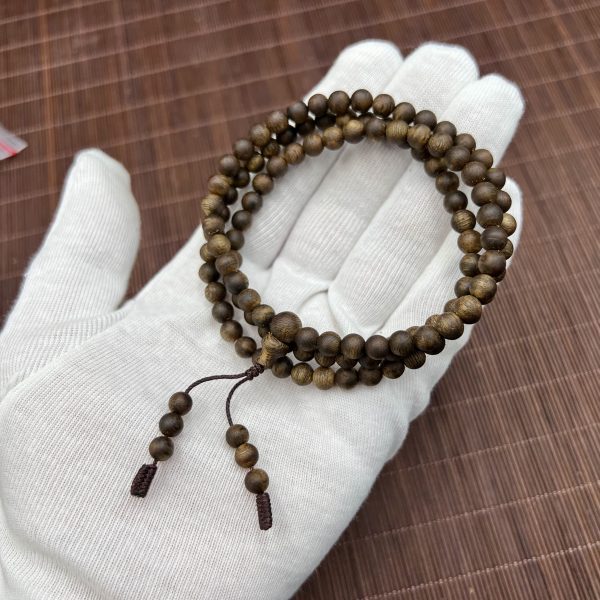
If possible, compare a similar bead size and material in person. Let the strand rest in your hand, move a few beads, and notice whether the weight and surface feel support the intended use. A choice that feels good in a photograph may be awkward during a longer practice or inconvenient for everyday wear.
When buying online, use dimensions, strand length, and material disclosure as primary information. Ask the seller for clarification when photos hide scale or when a material name is vague. A careful question before purchase is more useful than trying to infer everything from color or a product story afterward.
Keep expectations proportional
Both wood and stone can make beautiful, meaningful prayer-bead strands. Neither material guarantees a particular experience. Good fit, honest evidence, and respectful use are the qualities that remain useful across different personal preferences.
