
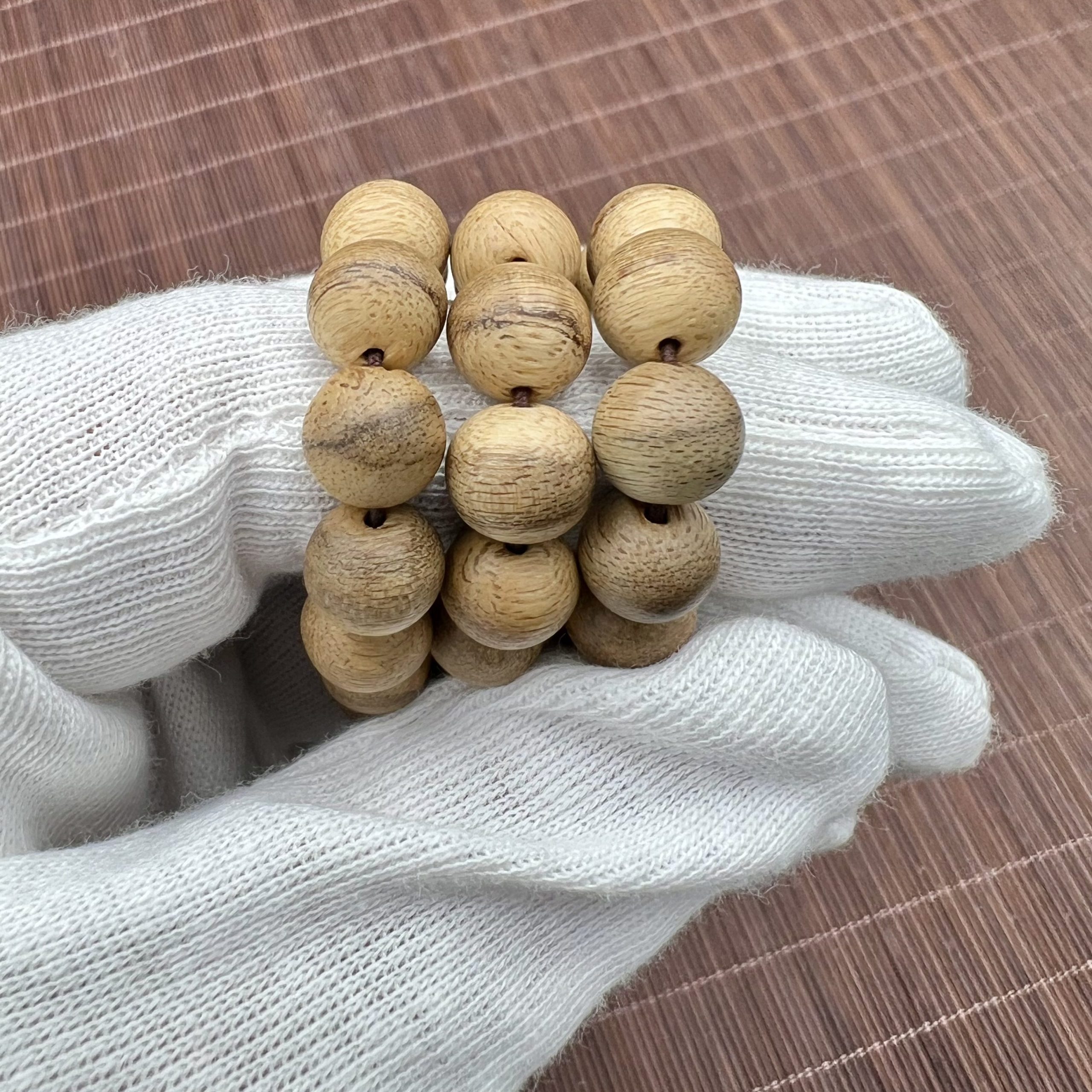
Mala Beads Meaning: 108 Beads, Guru Bead and Variations
A mala is a strand of beads used in several Hindu and Buddhist contexts to support repeated recitation, mantra practice, or meditation. The object is simple in form, but its history and meaning are not one-size-fits-all. Different traditions use different materials, counts, markers, and ways of relating to the strand. A responsible explanation can describe common forms such as 108 beads and a guru bead without claiming that every mala has the same origin, symbolism, or required use.
What mala beads mean in their historical contexts
The word mala is commonly used for a string of prayer beads in South Asian and Himalayan religious contexts. The National Museum of Asian Art defines a mala as a string of prayer beads used when reciting mantras, and its collection includes a Tibetan Buddhist mala made with seed, cord, shell, coral, turquoise, and silver elements. Such objects show that mala practice has material histories as well as living religious meaning.
In Hindu traditions, images of deities and teachers may include a mala in connection with mantra recitation. In Buddhist traditions, malas also appear in many different settings, including Tibetan and other Asian practices. These shared features do not erase the differences between traditions. A product description should name the context it can support rather than presenting a single generic story for every strand.
The National Museum of Asian Art’s discussion of Shiva as teacher notes a mala as an aid in mantra recitation. This is useful evidence for one historical-religious context, not a rule for every present-day user.
The anatomy of a mala: beads, guru bead and tassel
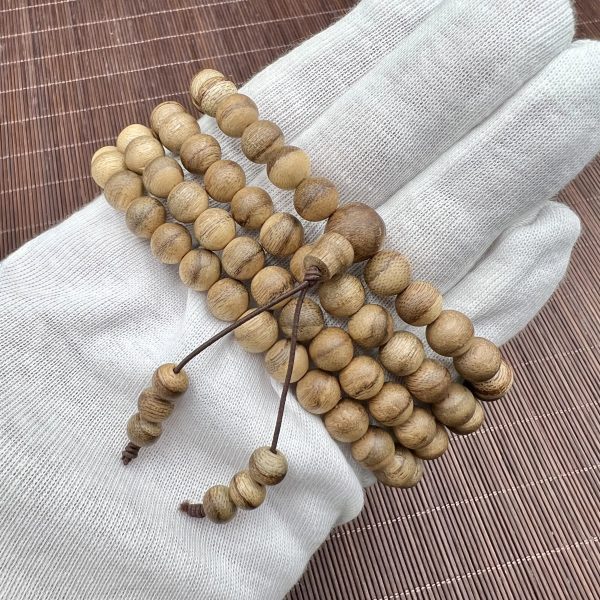
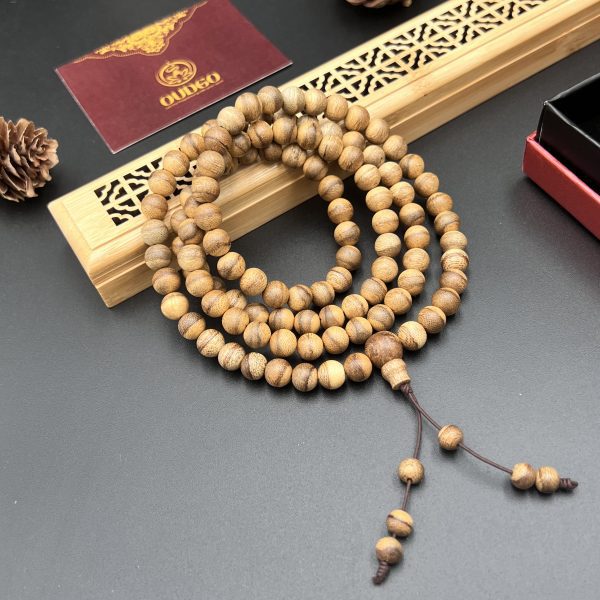
A full mala often consists of repeated smaller beads, a larger or visually distinct guru bead, cord, and sometimes a tassel or terminal element. The repeated beads create a tactile sequence. The guru bead, also called a marker in some descriptions, can signal the beginning or end of a circuit. A tassel may be aesthetic, practical, or tradition-linked depending on the strand and community.
The physical form is not identical in every mala. Some have wooden or seed beads; others use stone, glass, bone, metal, or mixed materials. Some have a prominent terminal bead; others use a different marker form. A wrist mala may have fewer beads because it is designed for a compact form. These differences are features to describe, not evidence that one item is inherently more authentic or spiritually powerful.
| Part of the strand | Practical role | Respectful limit |
|---|---|---|
| Repeated beads | Provide a tactile sequence for repetition | Count alone does not define validity |
| Guru or marker bead | Can identify a start/end point by touch | Meaning varies across traditions |
| Cord | Holds the structure together | Construction is not a spiritual ranking |
| Tassel or terminal | May mark the end or add visual finish | Not every mala uses one |
Why 108 appears – and why counts also vary
One hundred eight is a familiar count in many mala descriptions, including museum records of 108 Buddhist bead strands. The Met’s collection, for example, includes a nineteenth- or early twentieth-century Chinese string identified as 108 Buddhist beads. The number is therefore an important and widely encountered form, but its symbolic explanations vary across Hindu and Buddhist traditions, schools, teachers, and modern retellings.
It is better to say that 108 is common than to claim one undisputed reason for every occurrence. Many simplified product pages list a long catalog of symbolic meanings without identifying a tradition or source. Those explanations can be meaningful within particular teachings, but they should not be presented as a universal fact about every mala.
Counts also vary. Wrist malas, abbreviated strands, and practice-specific forms may use smaller numbers. A different count does not make a strand lesser or incorrect. It may reflect a practical form factor, regional custom, teacher guidance, or the intended use of the object.
Hindu, Buddhist and modern wellness uses compared carefully
In Hindu and Buddhist settings, a mala may support mantra recitation, prayer, meditation, or other disciplined practice. The religious context matters: a strand used within a particular lineage or community should not be described as a neutral accessory detached from that setting. The National Museum of Asian Art’s collections explicitly connect malas with religious objects and practices in Hindu and Buddhist art.
Modern wellness culture often borrows the appearance of a mala for breath counting, intention setting, or fashion. A person may use beads for a secular calming routine, but that does not make the object’s Hindu or Buddhist histories disappear. The respectful choice is to name the difference instead of marketing every strand as a universal cure for stress, focus, or spirituality.
For a broad discussion of agarwood in religious and ritual settings, see Agarwood in Religion and Rituals. The page should be read as cultural context, not as a substitute for tradition-specific instruction.
Materials, symbolism and later interpretations
Materials affect the feel, weight, sound, and durability of a strand. Seeds may have a textured surface; wood can feel warm and light; stone may feel cooler and heavier. Materials can also carry associations within specific traditions or local markets. However, material alone cannot prove a lineage, a spiritual effect, or the authenticity of an individual’s practice.
Later interpretations often attach broad symbolic claims to colors, gemstones, bead numbers, or particular woods. Some may be meaningful in a named school or teaching; others are modern marketing language. A careful reader asks: Which tradition is being cited? Is the claim historical, devotional, aesthetic, or commercial? Does the source distinguish community practice from a seller’s story?
Clear sourcing is better than a dramatic claim. A responsible product page can say what a bead is made of, its size, the strand count, and its construction. It should not guarantee healing, protection, enlightenment, or status.
What evidence supports common origin stories
Evidence for mala history comes from texts, images, objects, and living traditions, but each source has limits. A museum object can show that a particular form existed in a place and period; it cannot settle every question about origin or contemporary use. An image of a deity holding beads can show visual association with recitation; it does not create a single rule for all people who use a mala.
The National Museum of Asian Art’s Tibetan Buddhist mala record documents a specific material object and its collection context. The Met’s 108-bead Buddhist strand documents another. Together, they support a careful statement that malas have diverse historical forms; they do not support an all-purpose origin myth.
When an origin story is important to a reader’s practice, the best next source is a qualified teacher or tradition-specific authority. This page can help identify the question; it cannot resolve every lineage or doctrinal issue.
How to read product claims without mixing traditions
Read a product claim in layers. First, what is physically being sold: count, bead size, material, cord, marker, and origin information? Second, which tradition is named, if any? Third, is the wording describing a historical association or promising a guaranteed personal result? These questions help separate useful information from generic spiritual branding.
A mala should not be casually relabeled as tasbih, a rosary, or every other prayer-bead form. Each belongs to distinct histories and practices. If you are choosing a mala for learning or a gift, ask about the recipient’s preferred tradition, count, material, and intended use. Avoid buying a strand simply because a product page claims it is more powerful or more authentic than others.
For an introduction to using a mala within a mantra-focused context, see How to Use Mala Beads for Mantra Practice. For Buddhist count and school differences, see Buddhist Prayer Beads: Meaning, Counts and School Differences.
Choose for honesty and comfort
A well-made strand with accurately stated materials and a comfortable bead size is more useful than one surrounded by unsupported claims. Let the intended practice and community context guide the choice.
Keep tradition names precise
When sharing a mala, name the Hindu, Buddhist, regional, or personal context you actually know. If you do not know it, say so rather than filling the gap with generic wellness language.
How a full mala differs from a wrist strand
A full-length strand can make a longer sequence physically available in one object. A wrist strand is more compact and may use a smaller count, different marker, or different cord arrangement. Neither form is automatically more traditional in every context. Their practical difference is size and handling, while their meaning still depends on the use and tradition attached to them.
Do not assume that a strand described as a bracelet must be worn at all times, or that a full mala must be displayed. Personal and community habits differ. The considerate choice is to ask or to use the item in a way that does not trivialize its intended significance.
What a guru bead does not require you to do
Many explanations describe the guru bead as a turning or terminal point. That can be a useful structural description, but it should not become a universal instruction. Some users may have specific guidance about how to approach the marker; others may use a strand differently. A general article can say that the bead helps orient the sequence without prescribing a practice for every reader.
This restraint is important because product pages often turn one community teaching into a sales feature. Context is more valuable than certainty where practices vary.
Care, repair, and replacement
Store a mala dry and protected from tangling or crushing. Inspect the cord and knots periodically, particularly if the strand is worn or carried often. If a cord frays, a repair may be appropriate when done carefully and in accordance with the owner’s preference. Do not make a replacement sound like a spiritual failure; objects wear with use, and practical care is separate from devotional meaning.
When materials are from a living plant or animal source, responsible sourcing and accurate disclosure remain important. A seller should identify material honestly instead of inventing a symbolic story to obscure uncertainty.
Use learning as an act of respect
Readers do not need to master every tradition before encountering a mala. They do need to avoid claims that flatten diverse Hindu and Buddhist practices into a single lifestyle product. Learn the names, ask what context applies, and let qualified living traditions speak for their own religious instruction.
The result is a more useful and more respectful understanding: a mala can be a carefully constructed counting aid, a meaningful religious object, and a material artifact with varied histories, without being reduced to any one of those descriptions.
