
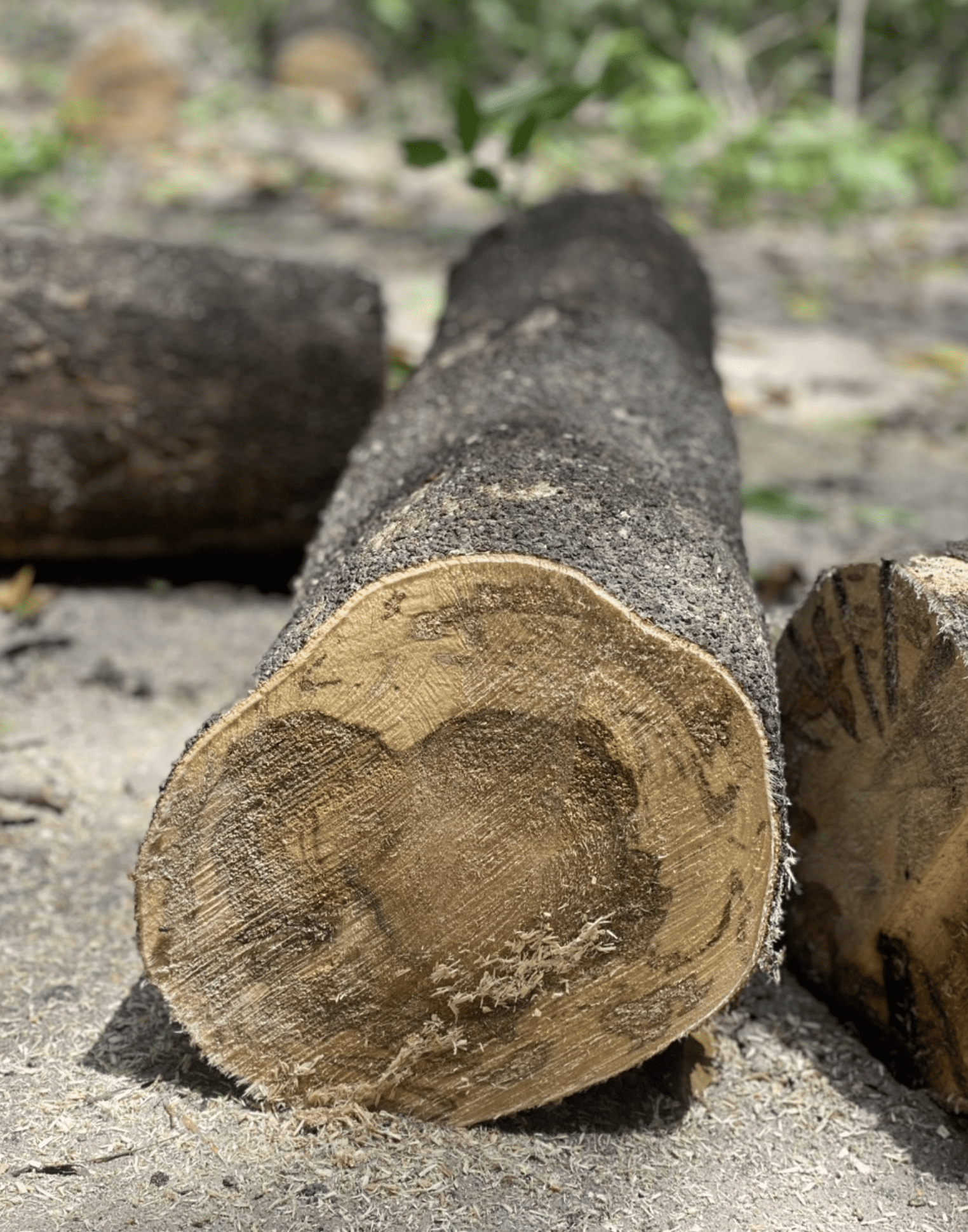
The safest way to preserve agarwood is to store each product form separately, keep it away from heat, direct sunlight and uncontrolled moisture, and handle it only as much as necessary. Raw wood, incense, bracelets and oud oil do not share one universal storage method. Use the guide below to choose the right container and routine for what you own.
This page focuses on storage and preservation. For product selection and use, visit our how-to-use agarwood guide. For identification, use our real-vs-fake evidence checks and agarwood grading guide. Storage cannot prove origin, species, grade or authenticity.
Which storage method should you use?
Quick recommendation: keep the original label, order record and any batch document with the item. Do not combine different lots merely to save space. If a seller claim matters to your purchase, records linked to the exact item or batch are more useful than color, weight, aroma or a home test alone.
What conditions preserve agarwood best?
A stable environment matters more than a decorative container. Avoid direct sunlight, radiators, hot vehicles, damp cabinets and places with rapid temperature or humidity changes. The container should be clean and appropriate for the product form. It should not introduce perfume, cleaning-product residue or another strong odor.
There is no responsible universal humidity percentage for every agarwood product. Wood form, local climate, packaging and storage duration all affect the choice. If you live in a very humid or very dry environment, use a room-level humidity monitor and make gradual changes rather than placing the item beside an uncontrolled heat or moisture source.
Do not assume that making a container completely airtight is always the answer. A damp item sealed immediately can trap moisture; an inadequately closed oil bottle can leak or oxidize. Inspect the item first, follow its product-specific packaging instructions and ask us when the current batch needs special handling.
How should you store raw agarwood and chips?
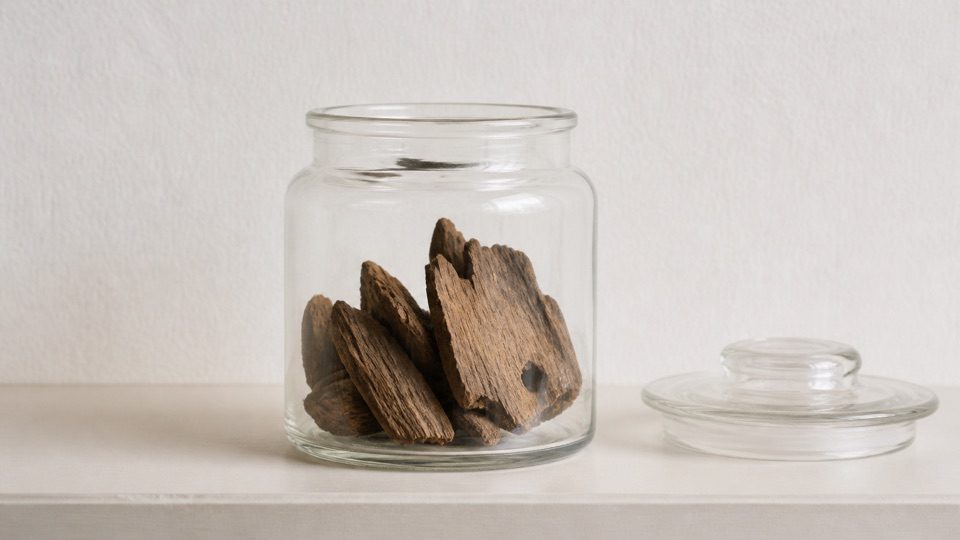
Keep wood pieces and chips dry, clean and separated by labeled lot or product. A rigid container helps protect delicate pieces from crushing. If you use bags, make sure they are clean and free of fragrance or chemical residue. Do not mix a new order with an older one until you have checked both.
- Record the item: retain the product name, order date, listed origin and any lot or report reference supplied.
- Inspect before storing: look for visible dampness, foreign material, pests or damage.
- Choose a stable location: keep it away from sunlight, heat sources, kitchens, bathrooms and strong household odors.
- Use clean tools: dry tongs or a clean scoop reduce repeated hand contact and cross-contamination.
- Recheck periodically: compare appearance and odor with your first record instead of relying on memory alone.
Storage does not make a wood-origin or species claim verifiable. The CITES timber guide explains that agarwood trade covers listed tree taxa and multiple product forms; legal-trade and identification questions require the appropriate documents and methods, not a universal sink, color or burn test.
How should you preserve an agarwood bracelet or mala?
Store bracelets and malas separately in a soft pouch or lined box so hard jewelry, metal edges and abrasive surfaces do not scratch the beads. Remove the piece before bathing, swimming, cleaning, applying perfume or using products that may contact the wood. Water and cosmetics can affect wood surfaces and may also shorten the life of elastic or cord.
Before wearing, inspect the elastic, cord, knot, clasp, spacers and charms. Replace a weakened string before it fails. Do not soak beads, sand them, apply an unknown oil or use a chemical cleaner as an “authenticity test.” Those actions can alter the surface while proving little about species, origin or grade.
For a focused routine, see how to care for an agarwood bracelet. Product-specific dimensions, construction and care limits should come from the live product page rather than a country or bead-size stereotype.
How should you store agarwood incense?
Keep sticks, coreless incense, cones, coils and other formats in their original labeled packaging when practical. If you transfer them, use a clean, dry container and carry over the product name and instructions. Separating formats and fragrances helps prevent mix-ups and transferred odor.
Protect incense from humidity and crushing. A changed odor by itself does not prove contamination, purity or authenticity, but a strong unfamiliar odor, visible dampness or damaged packaging is a reason to pause and ask the seller before burning it.
Storage and fire safety are separate. Use only a holder or burner intended for the exact format, place it on a stable noncombustible surface, keep it away from combustible materials and never leave burning material unattended. For product-form instructions, read our agarwood incense safety guide.
How should you store oud oil?
Keep oud oil in its original bottle with the cap fully closed. Store it upright, away from direct light, excessive heat and temperature swings. Avoid touching the bottle opening or returning dispensed oil to the container. Keep the label and batch information readable.
Aroma and appearance can change over time, but there is no single shelf-life promise for every oud oil. Bottle type, closure, formulation, storage and contamination all matter. Follow the seller’s batch-specific directions and see our agarwood oil shelf-life FAQ for the evidence boundary.
“Essential oil,” “fragrance oil,” diluted perfume and other aromatic preparations are not interchangeable terms. Do not ingest a product or apply it to skin unless the exact product is labeled and documented for that intended use. The U.S. FDA notes that intended use affects how fragrance and aromatherapy products are regulated; a natural-origin label does not by itself establish safety for every use.
What should you do if the item changes?
Use documentation to preserve value—not destructive tests
Good preservation includes records. Save the invoice, product-page snapshot, option selected, listed dimensions, photographs and any batch-linked report. Photograph the item under consistent light when received and note its packaging condition. If you later need seller support, customs information, resale documentation or comparison with a replacement item, this record is more useful than memory.
Do not cut, burn, soak, scratch or chemically treat an item simply to decide whether it is “real.” Such tests can damage the item and still fail to establish origin, species, treatment, grade or legal-trade status. Our six evidence checks explain when visual inspection helps and when documentation or specialist analysis is needed.
A five-minute preservation checklist
- Identify the product form and keep its original label.
- Separate different lots, fragrances and jewelry pieces.
- Keep the item away from direct sunlight, excessive heat and uncontrolled moisture.
- Use clean, dry containers and tools appropriate to the product.
- Record the condition when received and inspect it periodically.
- Pause if you find dampness, mold-like growth, pests, leakage or structural damage.
- Use product-specific instructions for burning, wearing, topical use or shelf life.
- Ask for batch-linked evidence when origin, species, grade or composition is important.
Frequently asked questions
Should agarwood be kept in an airtight container?
Not as a universal rule. A clean, well-closed container can limit contamination and odor transfer, but sealing a damp item may trap moisture. Inspect the item and follow product-specific guidance.
Can I refrigerate or freeze oud oil?
Do not assume refrigeration or freezing is suitable for every formulation and bottle. A stable, cool location away from direct light and heat is the safer general approach unless the exact product instructions say otherwise.
Does aroma prove that stored agarwood is authentic?
No. Aroma can help compare an item with its earlier condition, but it does not prove species, origin, grade, treatment or legal-trade status by itself.
Can I oil an agarwood bracelet before storing it?
Do not apply an unknown oil as a default. It may alter the bead surface, collect residue or affect the cord. Follow the product-specific care instructions.
What should I do with damp or mold-like agarwood?
Isolate it, avoid burning or applying it, document the condition and contact the seller or an appropriate local specialist. Do not make a health or contamination diagnosis from appearance alone.
Does proper storage preserve a certificate or provenance claim?
Storage preserves the item and its paperwork; it does not create evidence. Keep the document linked to the exact item or batch and verify what the document actually covers.
Sources and editorial method
- CITES: guide to CITES-listed tree species and agarwood product forms
- U.S. FDA: aromatherapy products and intended-use boundaries
- U.S. FDA: fragrances in cosmetics
- U.S. Fire Administration: open-flame safety principles
Updated by the Oudgo Editorial Team on 15 August 2026. We separated product forms, used current official sources for trade, intended-use and fire-safety boundaries, and did not invent a universal humidity target, shelf life, authenticity test, medical result or provenance certificate. Product-specific instructions and current batch documents take precedence over this general guide.
