
Backflow Incense: How It Works and How to Use It
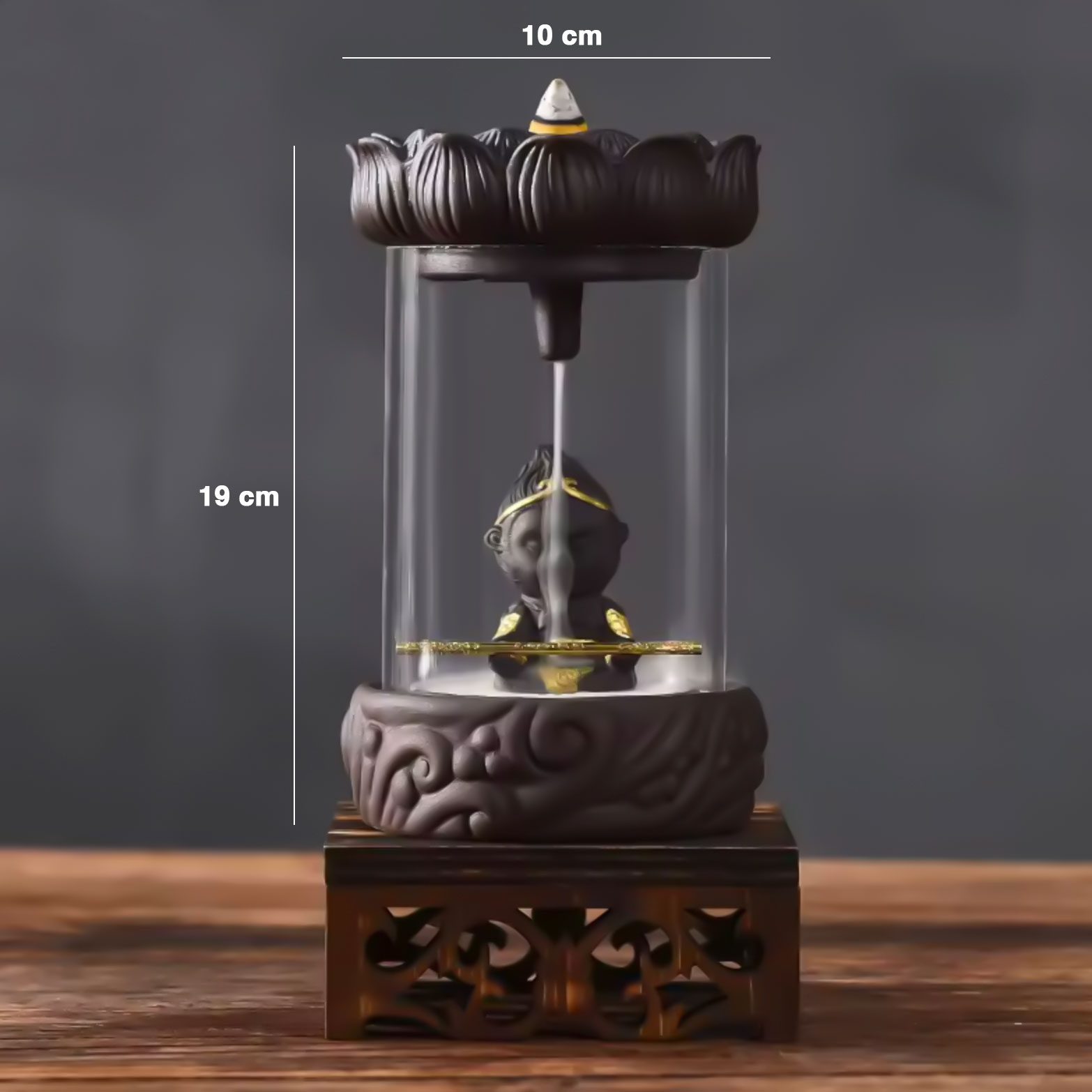
Backflow incense is designed to make smoke appear to flow downward through a burner like a small waterfall. The effect can be beautiful, but it only works when a compatible cone, a level burner, and a still enough room work together. It is also still burning incense: the downward flow is an airflow effect, not proof that the smoke is harmless or that ventilation is unnecessary.
Why backflow smoke moves downward
Smoke normally rises because warm air is less dense than the air around it. A backflow cone changes the smoke path. As smoke moves through the cone’s central opening and into the burner channel, it cools and can become dense enough to settle downward. The burner guides that cooled smoke into a visible path, which creates the waterfall effect.
The effect depends on a gentle temperature difference and a protected path. A fan, air-conditioner stream, open window, or uneven surface can disrupt it quickly. The smoke may rise, drift sideways, or collect around the burner instead of tracing the intended channel. This is normal physics, not necessarily a fault in the cone.
Because the smoke remains smoke, use backflow incense with the same care you would give any other burning fragrance. Keep fresh air available, avoid prolonged use in a small enclosed room, and stop if anyone nearby feels irritation. For a balanced discussion of exposure, read is incense bad for you and how to reduce exposure.
What makes a cone compatible with a backflow burner
A true backflow cone has a small hole or hollow channel that runs from its base into the burning material above. That opening lets smoke move downward into the burner. A standard solid cone may smell pleasant, but it will usually send its smoke upward because it does not have the passage needed for the waterfall path.
| Feature | Backflow cone | Standard cone |
|---|---|---|
| Base | Opening or hollow channel | Usually solid |
| Smoke direction | Can flow through burner channel | Mostly rises above cone |
| Best holder | Backflow burner with aligned opening | Heat-safe cone holder |
Check the base before lighting. The opening must be clear, and the cone must sit directly over the burner inlet. If the cone is off-center, the smoke cannot enter the channel cleanly. Do not drill or modify an ordinary cone: changing the material can make the burn unstable and may leave debris where it does not belong.
Set up the burner for a continuous smoke path
Put the burner on a flat, non-combustible surface with room around it. Empty old ash and residue from the channel so smoke has a clear route. Then place the cone over the inlet so its opening aligns with the burner hole. A backflow burner can be decorative, but stability and easy cleaning matter more than appearance.
Keep the burner away from curtains, paper, dried flowers, electronics, and anything that can be affected by soot or residue. The smoke path may travel lower than a normal cone’s smoke, so protect the surface around the burner as well as the space above it. If the burner has several waterfall steps, make sure they are dry and free of residue before use.
Run an airflow test before the full session
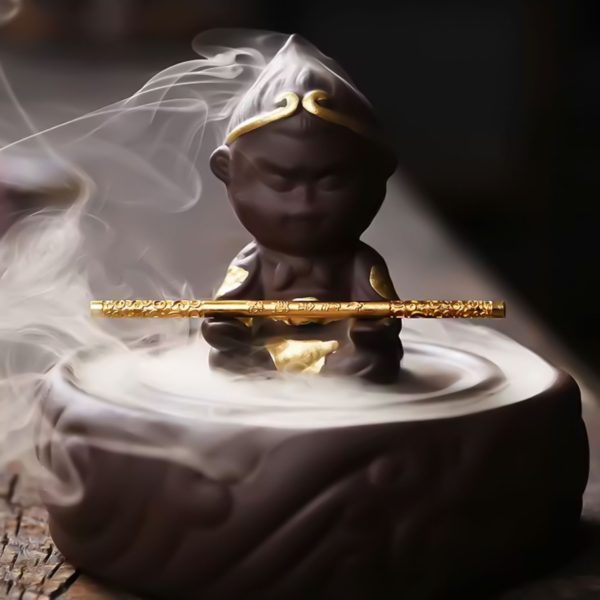
Light the tip of the cone, allow the flame to establish briefly, and then gently blow the flame out. A small glowing ember should remain. For the first minute, watch rather than moving the burner. At first, some smoke may rise from the top; after the cone warms and smoke begins to travel through the opening, the lower channel should start to fill.
Use this short observation as an airflow test. Is the burner level? Is the cone centered? Is a nearby fan moving the smoke? Is the channel clear? Correct these conditions before deciding that the cone has failed. Moving a lit cone can crack it or spread ash, so extinguish and cool it first if adjustment is needed.
Do not expect instant waterfall flow in every room. Temperature, humidity, drafts, and cone composition can affect the first few minutes. A calm, consistent flow is more useful than a dramatic burst of smoke that immediately spreads through the room.
Fix broken waterfalls, weak flow and smoke pooling
When the waterfall breaks, start with the simplest checks. Confirm that the cone is a true backflow type, that its base hole is not blocked with ash, and that it sits directly over the burner inlet. Then check the room for a direct draft. Closing a nearby window or moving the setup away from an air vent often resolves weak or sideways flow.
Smoke pooling at the bottom can mean the room is too still, the channel is dirty, or the decorative path is too enclosed for the amount of smoke produced. Do not lean over the burner or fan smoke around with your hand. Extinguish the cone, let the burner cool, remove residue, and try again with a clean channel and more comfortable ventilation.
If the cone burns unevenly or repeatedly goes out, it may be damp, damaged, or poorly seated. Do not keep relighting multiple points. A single controlled ember is safer and makes the smoke path easier to assess.
A practical troubleshooting order
Check compatibility first, alignment second, cleanliness third, and room airflow fourth. This order prevents the common mistake of replacing the cone when a blocked burner channel or a small draft is the actual cause.
Residue, ventilation and surface protection
Backflow smoke travels over the burner surface and can leave a noticeable oily or sooty residue, especially in grooves and waterfall channels. Let the burner cool completely after use, then wipe residue away with a soft cloth suited to the material. Do not wash a hot burner or pour water onto a warm ceramic piece.
For material-specific cleaning guidance, including what to avoid on ceramic, metal, and delicate finishes, see how to clean incense burners by material. Regular cleaning is not only cosmetic: a clear channel helps the next cone flow more predictably and reduces transferred scent from old residue.
Place a protective, heat-safe mat beneath a burner if its finish, ash tray, or base could mark a table. Keep the room ventilated during and after the session. If the smell becomes heavy or residue reaches an unintended surface, stop the burn and improve the setup before the next use.
When a standard cone is a better choice
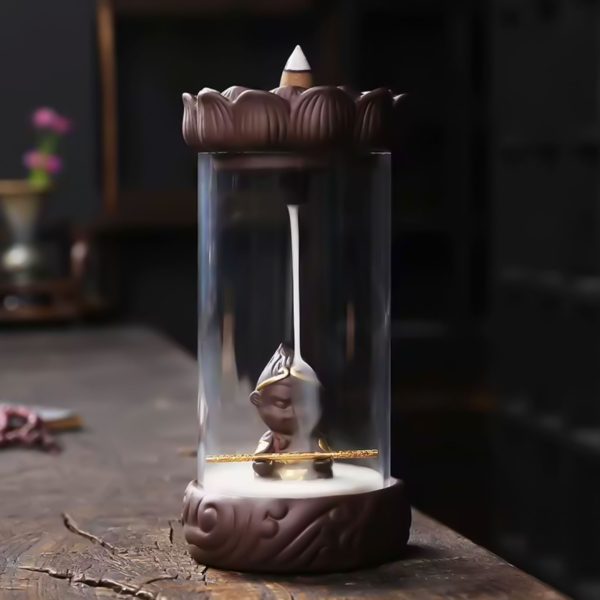
Choose a standard cone when you want a simpler, shorter, or more flexible incense session. A regular cone only needs a stable heat-safe holder and does not depend on channel alignment. It can be the better choice for someone who enjoys the fragrance but does not need the visual waterfall effect, or for a room where small drafts are unavoidable.
Standard cones still require the same basics: a clear surface, supervision, appropriate ventilation, and a safe method for extinguishing. If you are new to cone incense, begin with the straightforward process in how to use incense cones safely, then return to a backflow setup when the holder and conditions are ready.
After the session
Let the cone and burner cool fully before emptying ash. Wipe the channel, check that no residue blocks the inlet, and store unused cones dry and protected from crushing. These small habits keep the next setup predictable and protect the burner finish over time.
Choose a realistic session length
Use only the amount of incense that fits the time you can supervise. A backflow cone may appear calm once the smoke begins to descend, but the ember remains active until it is completely out. Do not begin a session immediately before leaving home, sleeping, cooking, or taking a shower. If the room needs a shorter scent experience, a standard cone or another shorter format is the better fit.
Backflow burners also reward patience. The visual path usually improves after the cone and burner have warmed gently, not after repeated lighting or extra flames. Let one cone do its intended job, observe the conditions, and change only one variable at a time when troubleshooting.
Keep children and pets out of the setup zone
Low waterfall channels can be visually interesting to children and may invite a pet to investigate. Put the burner where it cannot be bumped, touched, or reached, and never treat the decorative form as a reason to relax normal fire precautions. A clear, protected location is part of the mechanism as much as the cone and channel are.
With compatible cones, a clean burner, gentle ventilation, and active supervision, backflow incense can be an enjoyable visual ritual. Those same conditions are what keep it controlled.
