

How to Clean Incense Burners by Material
Incense burners collect ash, soot, fragrance residue and—when used with oud chips or charcoal—sticky resin. The safest way to clean them is not one universal soak or solvent. It depends on the burner’s material, finish and whether the residue is loose, hardened, oily or baked onto a heated surface.
Start gently. Remove dry debris, use the least aggressive method that works, and test any cleaner on an inconspicuous area. If the manufacturer gives care instructions, follow those first. This guide covers common ceramic, metal, wood, stone and unglazed surfaces without treating them as interchangeable.
Let the burner cool and identify its material
Before touching residue, make sure the burner has cooled fully. Ash can look harmless while an ember remains inside; a metal insert may stay hot longer than the outer body; and a ceramic bowl can crack if it meets cold water while still warm. Remove any loose accessories only after they are safe to handle.
Then identify the surface. Glazed ceramic, unglazed ceramic, brass, copper alloy, stainless steel, wood, stone and electric heating surfaces each need different care. If the material is uncertain, treat it as delicate: use a dry soft brush and a slightly damp cloth only after checking a small hidden area.
Remove dry ash and loose residue first
Dry removal is the least risky first step. Tip cold ash into a non-combustible bin only after confirming that no heat remains. Use a soft natural-bristle brush, a dry microfiber cloth or a small soft brush to lift ash from vents, grooves and carved details. Avoid metal tools that can scratch glaze, plated metal or a heating surface.
For a charcoal burner, remove the ash tray or sand insert only when it is cool. Sift or discard spent ash carefully and inspect the holder for cracks, warping or residue buildup. For stick and cone holders, clear blocked holes gently with a wooden toothpick or soft brush rather than forcing a metal pin through the opening.
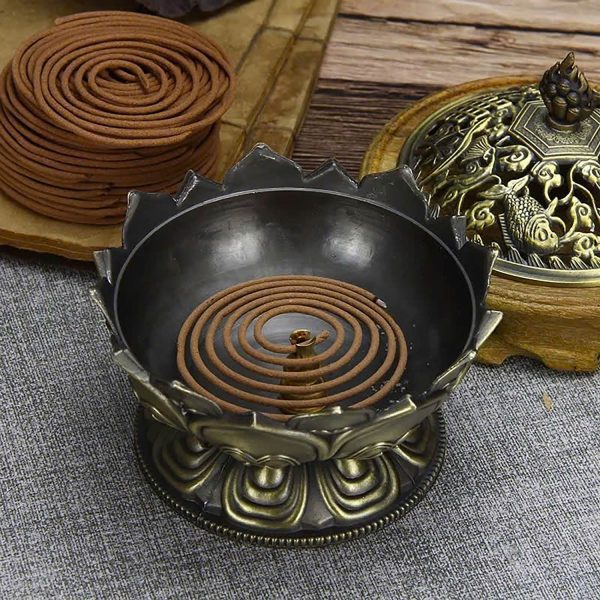
Clean ceramic and glazed surfaces
For glazed ceramic, wipe the cooled surface with a soft cloth lightly dampened with water. If residue remains, use a small amount of mild dish soap on the cloth, then wipe again with clean water and dry completely. Do not use abrasive pads, scouring powder or a metal scraper; they can dull the glaze and leave scratches that collect more residue later.
For backflow burners, clean smoke paths slowly. Residue may settle inside narrow channels, so use a soft brush, cotton swab or a barely damp cloth rather than flooding the burner. Let it dry fully before the next use. For related setup and residue expectations, see Backflow Incense: How It Works and How to Use It Safely.
Clean brass, copper alloy and other metals
Metals can tarnish as well as collect soot and resin. First remove loose ash with a dry soft cloth. Then use a lightly damp cloth with mild soap for ordinary grime, drying immediately to reduce water marks. If a metal has a lacquer, plating or unknown protective finish, avoid metal polish unless the maker specifically recommends it; a polish can remove the finish and change the colour permanently.
For bare brass or copper alloy, use a product intended for that exact metal only when necessary and after a spot test. Keep cleaner away from wood handles, glued joints and porous inlays. Do not soak the object, and do not use acidic home mixtures on an unknown finish. A gentle clean is usually better than an aggressive shine.
Clean wood, stone and unglazed materials
Wood should receive the least moisture possible. Brush away ash, then wipe with a dry or barely damp cloth and dry immediately. Do not soak wood, use alcohol or apply scented oil as a cleaner: moisture can raise the grain, while solvents and fragrances can change colour or weaken finishes. If residue is stubborn, work slowly with a soft wooden tool rather than scraping with metal.
Stone and unglazed ceramic can be porous. Use a dry brush first, then a lightly damp cloth with mild soap only after a spot test. Avoid strong acids, bleach and prolonged soaking, which can stain or weaken porous material. Allow the piece to dry naturally and completely before use. Care principles are similar to those used for preserving aromatic wood: use clean, dry storage and avoid unnecessary exposure to moisture or fragrance. See the Agarwood Storage Guide for the underlying care approach.
Remove oud oil and resin residue without scratching
Oud chips and oil can leave a sticky film, especially on a warming plate or small metal cup. Once the part is fully cool and unplugged where applicable, start by lifting loose residue with a soft wooden stick, cotton swab or cloth. Warming residue by running the appliance again is not a cleaning method; it risks burns and can bake residue further into the surface.
For a removable, non-porous insert, use a soft cloth very lightly moistened with warm water and mild soap, then dry thoroughly. Follow the manufacturer’s instructions for electric burners: many heating plates must not be submerged, and liquid must not enter vents or electrical sections. If the residue will not release without force, stop before scratching the surface and contact the maker or use the recommended replacement insert.
Cleaning products and methods to avoid
| Material or situation | Use instead | Avoid |
|---|---|---|
| Glazed ceramic | Soft damp cloth and mild soap | Abrasives, metal scrapers, thermal shock |
| Brass or copper alloy | Soft cloth and finish-appropriate cleaner after testing | Unknown polish, long soaking, acids on plated surfaces |
| Wood or porous stone | Dry brush, barely damp cloth | Soaking, alcohol, bleach, strong fragrance products |
| Electric burner | Maker-approved method with unplugged cool unit | Submersion, liquid in vents, cleaning while plugged in |
| Hot ash or charcoal | Wait until completely cool | Water on hot fuel, indoor disposal while warm |
Avoid harsh kitchen degreasers, oven cleaner, wire brushes, pumice, abrasive sponges and untested solvents. They may remove a stain but can permanently damage the burner’s surface, finish or function.
A simple maintenance rhythm
Remove cold ash after each use. Wipe visible residue before it hardens. Give the burner a gentle material-specific clean when scent, airflow or appearance begins to suffer. This rhythm is easier on the surface than waiting for heavy buildup and reaching for harsh cleaners.
Before the next use, check that every removable part is dry, stable and correctly seated. Look for cracked ceramic, loose fittings, blocked vents or a damaged cord. A clean burner is not automatically a safe burner; maintenance should include a quick condition check.
When to stop and replace a part
Stop using a burner if ceramic is cracked through, a metal tray is badly warped, a heating surface is damaged, the electrical cord is frayed or residue has entered a part you cannot safely clean. Do not repair an electric burner with tape, glue or household coatings. Replace the affected insert or consult the manufacturer.
For a better match between cleaning method and burner format, see How to Use an Incense Burner by Material Type. The material and heat source should guide both daily use and maintenance.
Final check before relighting
Make sure the burner is fully dry, level and free of loose ash. Place it on a stable, heat-resistant surface and keep cleaning cloths, paper and other combustibles away from the heating area. Use only the fuel and accessories intended for that burner. Careful cleaning preserves the finish, while careful setup preserves safety.
When in doubt, use the least aggressive method first. A burner that is gently maintained will generally last longer and give a cleaner, more predictable incense experience.
