
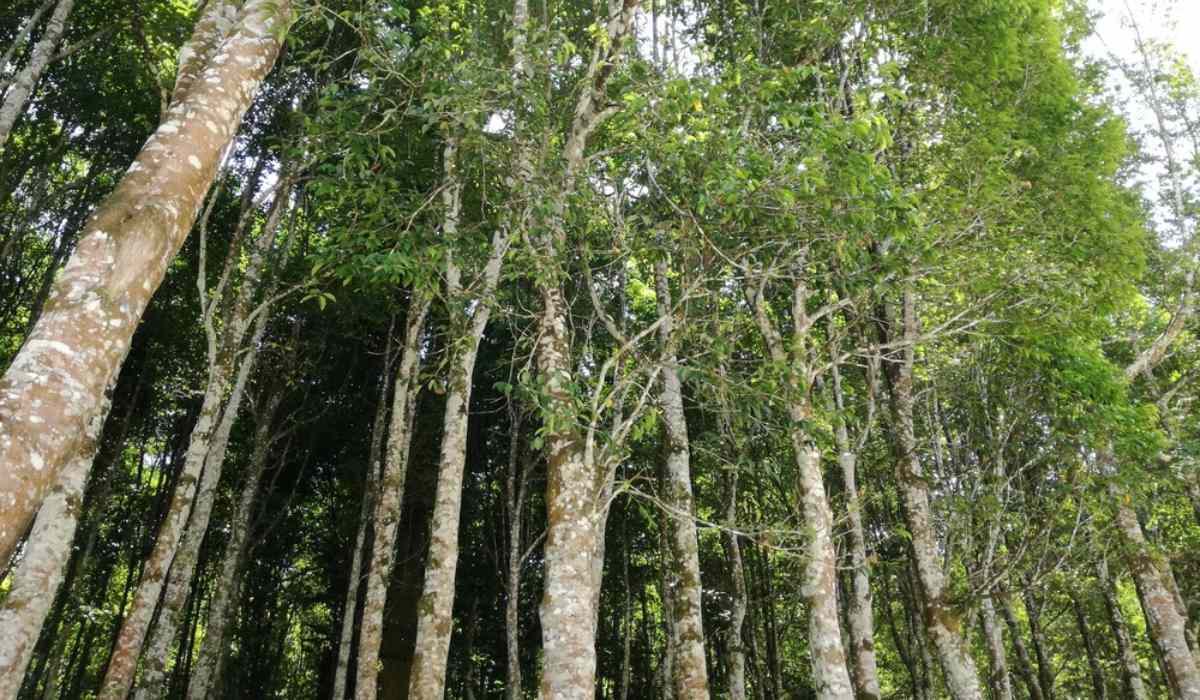
Agarwood Plantation Timeline: Planting, Induction and Harvest Claims
There is no single number of years that guarantees an agarwood harvest, a certain resin level or a particular market grade. A plantation timeline is a sequence of stages with uncertainty at every point: site preparation, establishment, tree growth, induction or other management, monitoring, harvest and processing.
That is why fixed promises such as “harvest-ready in exactly X years” should be treated cautiously. Tree species, local climate, soil, survival, management method, tree health, induction approach and market decisions all influence the outcome. A useful plan gives ranges and decision points, not a calendar guarantee.
A plantation timeline is a range, not a fixed promise
Plantation projects are often presented as a straight line from seedling to premium material. In reality, each stage can take longer or shorter than expected, and a setback early in the process can alter every later estimate. Survival, growth rate and response vary by species, site and management. The sensible language is “possible range,” not “guaranteed date.”
Buyers and investors should also separate a tree-growing timeline from the history of a finished retail item. A seller may know the approximate age of planted trees without knowing the exact formation history of one chip or bracelet. A practical claim should state what its date refers to.
Site selection, planting and early tree establishment
Before planting, growers consider species suitability, climate, rainfall, drainage, soil, access, disease pressure and long-term management capacity. Seedling source and survival are important because a plantation is not just a count of trees planted on day one. Losses, replanting and uneven establishment change the real timeline.
Early management may include watering, weed control, protection and monitoring. These steps do not create agarwood directly, but they determine whether trees reach a condition in which later decisions are possible. A timeline that skips establishment is already hiding an important uncertainty.
Growth before induction
Before any managed induction is considered, growers may track tree health, size, survival and site conditions. There is no universal threshold that can be copied across every plantation. Different species and local conditions can produce different growth patterns, and a chronological age alone does not show whether a tree is suitable for a particular practice.
For context on the tree-response biology that makes later stages variable, read How Agarwood Forms: Injury, Inoculation and Resin Response. It explains why formation is not a mechanical switch that can be turned on by a date.

Inoculation methods and response monitoring
Managed inoculation describes an attempt to encourage a tree response; it is not a synonym for adding fragrance to finished wood and it does not guarantee a uniform result. Methods, timing and monitoring approaches differ. A careful grower records what was done, to which trees, when, and what was observed afterward.
Monitoring is essential because a plan needs evidence, not just an intervention date. Tree health, local response, losses and practical management constraints affect whether a later harvest claim is realistic. Retail descriptions should avoid turning the existence of an inoculation program into a promised quality grade.
Resin development and sampling
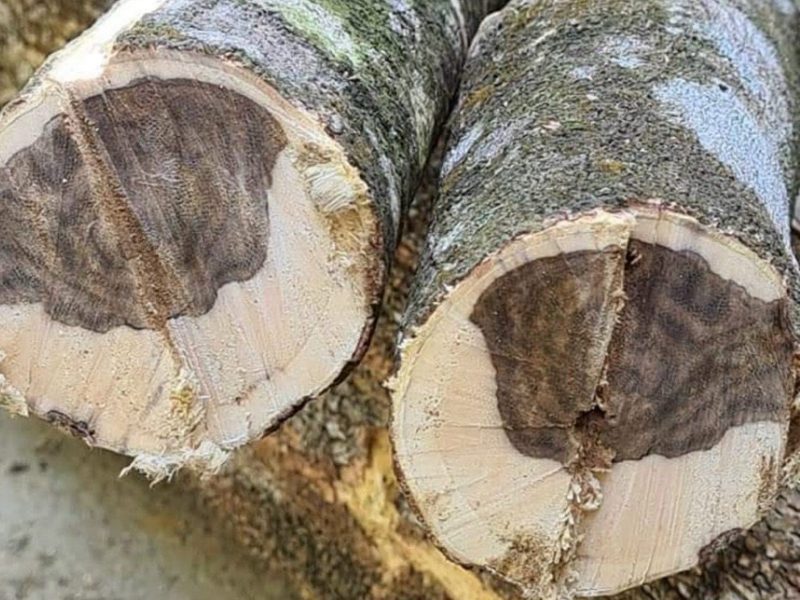
After a response begins, material can remain uneven across the wood and over time. Sampling and observation can inform a management decision, but one sample does not necessarily describe every tree or every part of a tree. This is where broad marketing phrases become especially risky: “more time” may be relevant, yet it does not guarantee an identical result for every lot.
A buyer who encounters a formation claim should ask what is documented about the batch, rather than trying to infer the full history from colour, density or aroma. The natural, cultivated and treated agarwood guide explains why source, formation and post-harvest treatment remain separate questions.
Harvest timing, partial harvest and processing
Harvest can involve decisions about tree condition, expected material, local practice, processing capacity and legal context. In some situations, material may be sorted or processed in stages rather than treated as a single uniform output. Once harvested, cutting, drying, sorting and storage further shape the material that reaches customers.
That means a finished chip or product should be described by its own evidence. A plantation timeline can provide useful background, but it cannot substitute for current photographs, batch information, processing disclosure and an honest statement of uncertainty. Cultivation context is useful when it is connected to the actual item.
Where commercial timelines become unrealistic
Be cautious when a claim offers a precise universal harvest date, guarantees a fixed return, or implies that every tree will produce the same type of material. Also pause when a seller uses a plantation label as proof of legal status, sustainability or grade without showing the records that connect those claims.
Unrealistic timelines often remove the decision points that real growers face: weather, survival, tree health, response monitoring, labor, processing and market conditions. A more credible plan explains ranges, variables and what must be measured before the next stage is chosen.
Timeline bands for evidence-backed planning
| Stage | Planning focus | Evidence to retain |
|---|---|---|
| Establishment | Site suitability and survival | Planting and seedling records |
| Growth | Tree health and management | Monitoring notes and replanting records |
| Induction decision | Method suitability and timing | Method and date records |
| Response monitoring | Variation, health and practical results | Observations tied to trees or batches |
| Harvest and processing | Selection, handling and traceability | Batch, processing and sale records |
For a buyer, the most useful conclusion is simple: treat any timeline as a documented range. Compare the clarity of the records, the honesty of the uncertainty and the quality of the finished material. For source context, also see Cultivated vs Wild Agarwood.
How to use a timeline without making a false promise
A useful project timeline names the next decision rather than pretending the entire future is known. After planting, the next question may be survival and establishment. Before induction, it may be tree health and site suitability. After induction, it may be whether monitoring shows a response that justifies further management. Before harvest, it may be whether records, handling capacity and legal requirements are in place.
This decision-based approach gives growers room to respond to real conditions. It also gives buyers a way to recognise a credible claim. A credible seller can say what stage a batch came from and which parts of the timeline are documented. They do not need to claim that every tree followed the same schedule or that a fixed age proves a fixed grade.
Records that make later claims more credible
Planting records, survival notes, approximate tree ages, management dates, induction notes, harvest records and processing details all help a plantation story remain connected to actual material. The records do not need to be elaborate to be useful. Even a consistent batch identifier, dated photographs and a clear supplier statement can be better than a vague claim repeated after the fact.
Once material enters retail, preserve the link where possible. State whether the seller’s information is first-hand, supplier-reported or general category information. Keep handling and treatment disclosures separate from formation claims. This makes it possible for a customer to understand the product without mistaking a farm timeline for an item-specific certificate.
Questions a buyer can ask about a plantation claim
Ask what the stated years refer to: tree age, time since planting, time since induction or time in storage. Ask whether the claim applies to the exact batch. Ask whether the trees were cultivated and how the source statement was obtained. Ask what processing occurred after harvest. Finally, ask which documents can be retained with the purchase.
The answer may include uncertainty, and that is not a failure. A transparent answer lets the buyer align price with evidence. For a small product, a reasonable description may be enough. For a large order, collector item or high premium, the same questions should lead to deeper records or independent advice.
Why fixed-age marketing is tempting—and incomplete
Precise numbers are attractive because they make a living process sound predictable. But they can hide the very factors that make agarwood valuable and difficult to evaluate: tree variability, local conditions, formation response, selection and handling. Replacing a fixed promise with a range does not make a product less interesting. It makes the claim more useful because it shows where observation and documentation are still needed.
The right conclusion is not that plantation timelines are unknowable. It is that they should be stated as evidence-backed stages. This supports better planning, fairer trade and more realistic expectations for growers and buyers alike.
Keep a timeline honest after harvest
The need for accuracy does not end when wood is harvested. Once chips, beads, oil or incense are sold, future descriptions should preserve the original limits. Do not change “seller-stated plantation source” into a more dramatic claim simply because the material has aged in storage or changed hands. Retain invoices, batch information and product photographs. This protects the next buyer and gives responsible growers credit for the records they actually kept.
A sensible timeline is therefore also a traceability tool. It connects planting, management, harvest and processing to a real material history without promising more than the evidence can bear.
When every stage is described with care, a timeline becomes a practical guide rather than a marketing promise, and the customer can judge the final product with appropriate confidence.
That matters.
