
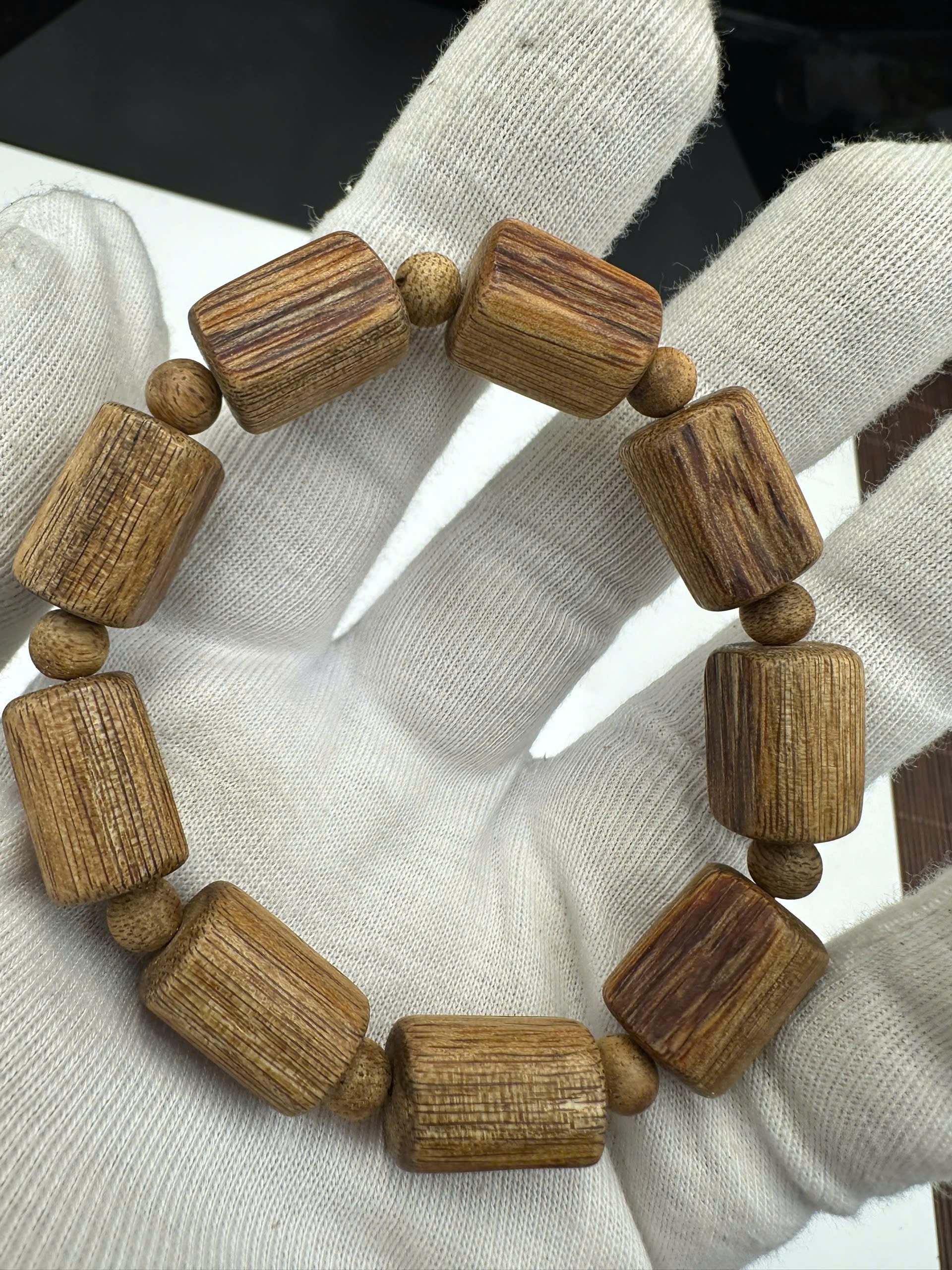
33 vs 99 Tasbih Beads: Counts and Practice
Tasbih strands with 33 or 99 beads are widely recognized in many Islamic contexts. The count can help a person keep place during dhikr, or remembrance of God, but the beads do not establish a single required practice. Language, sequence, bead layout, and community custom can differ. This guide explains the visible structure of the two common counts while keeping religious instruction where it belongs: with knowledgeable teachers and the reader’s own community.
Why 33 and 99 are common tasbih counts
Thirty-three and ninety-nine appear frequently in descriptions of Islamic prayer beads. A 99-bead strand is commonly associated in cultural accounts with the ninety-nine beautiful names of God. A 33-bead strand can be moved through repeated cycles to reach a larger count. These patterns make counting more manageable, especially when the person wants a tactile way to keep track of repeated remembrance.
The British Museum’s Islamic Gallery documents prayer beads under the names misbahah, tasbih, and subhah, including a 99-bead example. The Metropolitan Museum also describes subha strands commonly made with thirty-three or ninety-nine beads. These collection records show familiar historical forms; they do not make a museum object a rule for every current community.
If the basic terminology is new, begin with What Is Tasbih? Meaning, Names and Respectful Use. It explains why the word can refer to both remembrance and, in common speech, the physical bead strand.
How the divider and terminal elements organize counting
Many strands use structural elements that help the fingers recognize a section or the end of a circuit. These may include divider beads, a larger terminal bead, an elongated piece, or a tassel. Their exact names, placement, and symbolism can vary by region and maker. The practical role is often tactile orientation: the user can sense that a group has ended without needing to look closely at every bead.
A strand may also include smaller groupings within a larger count. The visible design is therefore a helpful map, not an instruction card. Do not assume that a divider must be used in one prescribed way, or that a strand with a different number of markers is less authentic. Material-culture examples show considerable diversity in bead, cord, and terminal design.
| Visible feature | What it may help with | What it does not prove |
|---|---|---|
| 33-bead sequence | A manageable repeated counting cycle | One universal recitation rule |
| 99-bead sequence | A full longer count on one strand | That every community uses it identically |
| Divider bead | Feeling a section boundary | A single fixed religious meaning |
| Terminal element or tassel | Recognizing the end or handling the strand | That material alone defines spiritual value |
A visual counting loop for 33 beads
A 33-bead strand can be understood as one sequence of thirty-three tactile points. A user may move bead by bead through a phrase or set of phrases, then use the strand again for another sequence if their practice calls for it. The structure is easy to carry and gives the hand a clear, repeatable rhythm.
Visual map: start marker – 1 to 11 – divider – 12 to 22 – divider – 23 to 33 – terminal element. Not every strand has precisely these visual divisions, and a user should not read the map as a mandatory ritual sequence. It simply illustrates why a 33-bead piece can feel organized rather than like an undifferentiated string.
A 33-bead strand may suit someone who prefers a compact form or who has been guided toward a repeated-cycle method by their community. It may also be the right count for a family tradition. The appropriate choice comes from context and comfort, not from a claim that smaller or larger automatically means more devotion.
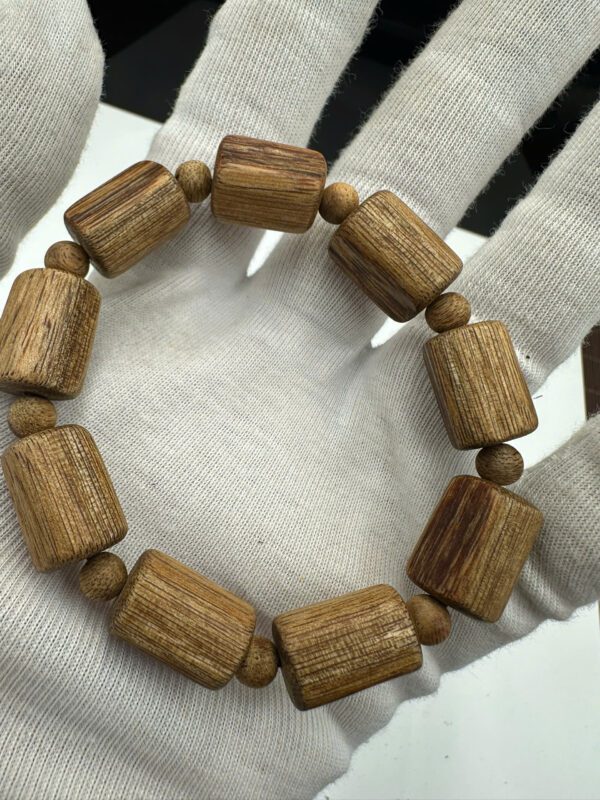
A visual counting loop for 99 beads
A 99-bead strand gives a longer sequence on one continuous piece. It may include markers that help divide the strand into recognizable sections, allowing the user to feel progress without visually recounting from the start. The 99 count is often explained in connection with the beautiful names of God, but the relationship between a strand and a particular devotional practice should be described with care and local context.
Visual map: start marker – first 33-bead section – divider – second 33-bead section – divider – third 33-bead section – terminal element. This is a simple structural illustration, not a compulsory arrangement. Some strands vary in bead size, marker position, or terminal form, and users may follow practices taught differently in their own communities.
The practical advantage of a 99-bead strand is that it can hold a longer count without restarting the physical loop. Its size may be less convenient for someone who wants a pocket-sized strand, while its full-length structure may feel more comfortable to another user. Neither preference gives the strand a higher religious rank.
Variations across communities and personal practice
Islamic communities span many languages, regions, schools, and family traditions. A term that is ordinary in one place may be less common in another. Some people use beads regularly, some count on their fingers, and some do not use a strand at all. A respectful article acknowledges this range rather than turning one observed form into a universal standard.
Practice-specific questions – which phrases to say, when to say them, whether a particular count is recommended, or how a local community regards a strand – should go to a trusted scholar or teacher. A product article can describe construction and terminology, but it should not determine religious obligation or validity.
The broader cultural setting of aromatic materials and ritual can be explored in Agarwood in Religion and Rituals, while keeping distinct traditions and practices separate rather than blending them together.
Respectful use, storage and handling
Handle prayer beads with the care you would give a personal devotional item. Ask before touching someone else’s tasbih. Keep a strand clean, dry, and protected from crushing or unnecessary tangling. Do not use it as a toy, costume prop, or casual decoration in a way that ignores the owner’s relationship to it.
Respect does not require inventing universal rules about materials or storage. Different families and communities may have their own habits. The safest general approach is simple: follow the owner’s or community’s guidance, avoid making claims you cannot support, and keep the item away from situations likely to damage or trivialize it.
How to choose a count for learning or gifting
For personal learning, choose the count and size that a trusted community guide recommends or that helps you handle the strand comfortably. A 33-bead form may feel compact and easy to follow; a 99-bead form may suit a person who prefers one longer continuous structure. The decision should not be framed as a measure of piety.
For gifting, avoid assuming that a premium material is automatically more suitable. Clear construction, responsible sourcing, a comfortable bead size, and the recipient’s preferences matter more than a seller’s claim of spiritual superiority. Ask whether the item is intended for use, remembrance, collection, or another personal context.
To compare prayer-bead traditions without collapsing them into a single category, see What Are Prayer Beads? Traditions Compared Without Mixing Them. That distinction is essential when discussing a tasbih alongside other kinds of bead strands.
Material and count are separate questions
Wood, seed, glass, stone, and other materials can affect weight, feel, and appearance. They do not decide whether a 33- or 99-bead strand is right for a person, and they do not establish religious validity.
Use precise language when sharing
Say that a pattern is common when evidence supports that description, name community variation, and avoid speaking for traditions you have not been taught. Precision is part of respectful cultural explanation.
How to use historical sources carefully
Historical and museum records can show that particular forms, materials, and counts have existed in specific places and periods. For example, the British Museum Islamic Gallery record describes a 99-bead prayer strand and its association with dhikr, while the Metropolitan Museum material notes the familiar thirty-three and ninety-nine forms. These sources are useful for describing objects; they are not a replacement for living community knowledge.
This distinction prevents two common errors. First, it avoids treating an old object as proof that every present-day Muslim person must use the same count. Second, it avoids turning a religious object into a purely historical artifact with no connection to current faith and practice. Both history and living tradition deserve care.
A practical comparison before choosing
Hold a strand if possible and notice the bead size, cord movement, terminal element, and overall length. A count is easier to use when the strand feels comfortable in the hand and does not require force or constant visual checking. If you are buying online, look for clear dimensions and honest materials rather than dramatic claims about spiritual effects.
For a new learner, a respectful conversation with a family member, local community, or trusted teacher may be more useful than any comparison chart. The role of a guide like this is to make that conversation better informed, not to replace it.
Do not reduce count to a style label
Listing a strand as 33-bead or 99-bead describes structure. It should not be used to imply that one count is more authentic, more powerful, or better for everyone. Meaning comes from the religious and personal context in which the beads are used.
