
Vietnamese Incense: Materials, Traditions and Agarwood
Vietnamese incense is not one formula or one ritual. It includes household practices, temple use, craft traditions and contemporary products made for many markets. A useful guide starts with the material and form in front of you, while leaving room for local customs and personal practice.
Respect context as much as scent. Incense can carry spiritual and family meaning; use it as intended, avoid universal claims about tradition, and never treat a cultural practice as a product feature.
What makes incense ‘Vietnamese’ in a useful sense
“Vietnamese incense” may describe where something was made, a material associated with Vietnam, a local craft style or a seller’s broader aesthetic. Those meanings are not interchangeable. A product label becomes more useful when it tells you which one it means: the country of manufacture, the type of wood or aromatic material, the form of the incense, and how it is meant to be used.
Agarwood is strongly associated with Vietnam, but not every incense item sold with a Vietnamese reference is made only from agarwood. Finished incense may use wood powder, plant binders, aromatic oils or a blend. Read the description for what is actually named rather than assuming the origin word answers every material question.
A timeline of household, temple and craft traditions
Incense has long been part of Vietnamese home and religious settings, including offerings, remembrance and moments of quiet attention. The meaning of a particular use belongs to the people and place involved. A visitor or buyer does not need to reproduce a ritual to appreciate the craft; a respectful approach is to learn the local purpose, follow the host’s guidance and avoid turning a meaningful practice into a costume.
Craft knowledge is also practical. Makers make decisions about powder, binder, drying, colour, core and fragrance based on the desired burn. These decisions can vary between workshops and regions, so it is better to ask about a particular product than to expect one fixed national style.
Agarwood and other materials used in Vietnamese incense
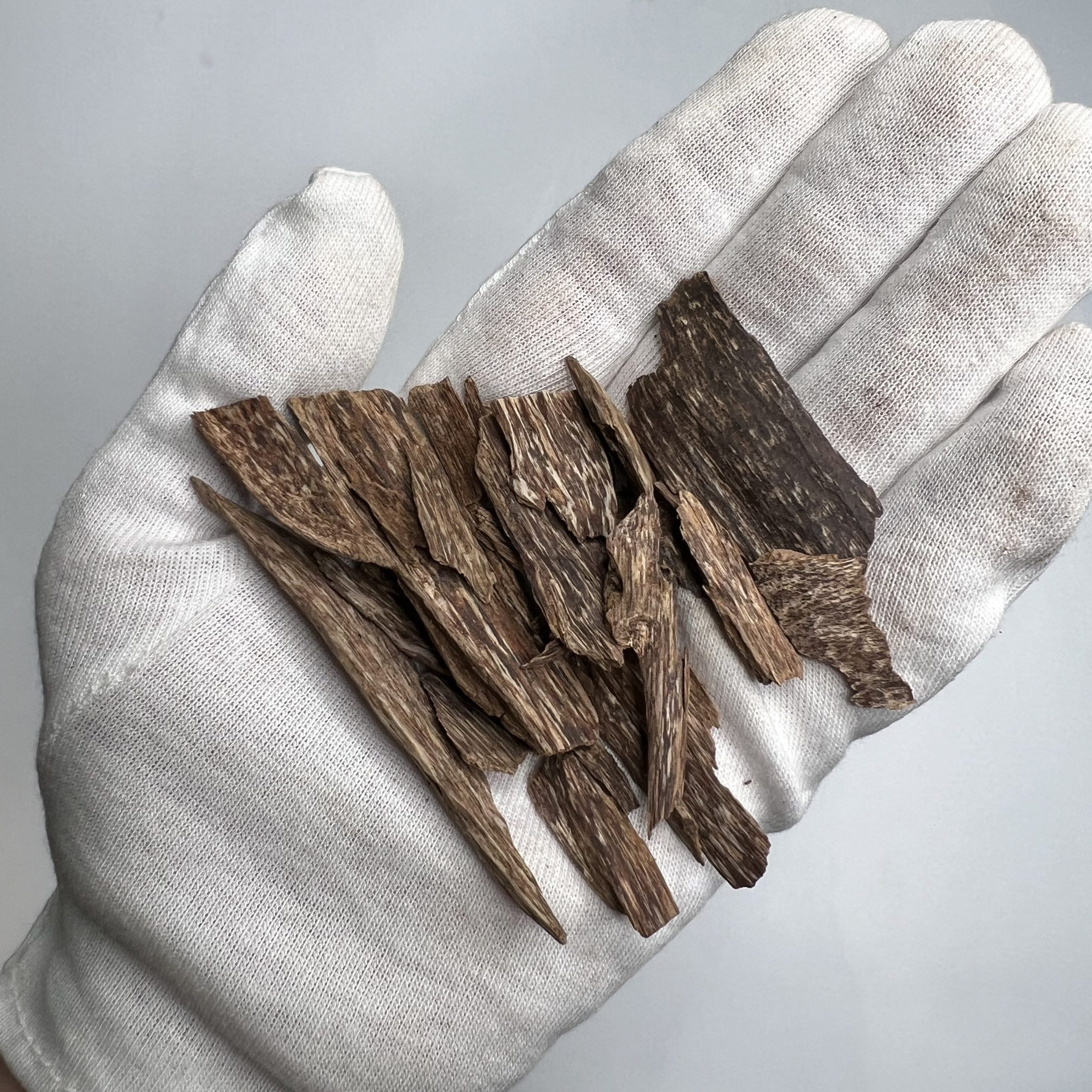
Agarwood may be used as chips, powder or part of an aromatic blend. Its scent tends to be described in resinous, woody, sweet or earthy terms, but the impression changes with the material and heat. Other incense materials can include plant powders, natural gums, wood bases and fragrance components that help a stick or cone hold its shape and burn consistently.
The form matters as much as the ingredient. Loose chips are usually warmed with controlled heat; powder needs a suitable burner and careful handling; sticks and cones are designed to burn from an ember. Choose the material and device together rather than placing any fragrant substance on any heat source.

Regional craft differences without turning them into stereotypes
It is tempting to reduce regional craft to a single scent profile or visual style. That shortcut leaves out the people who make and use the incense. Climate, access to materials, workshop practices and customer preference can all affect a finished product. Variation is not evidence that one region is “more authentic” than another.
When comparing products, use concrete questions instead: Is this a cored stick, a cone, a coil, powder or chips? What is disclosed about the ingredients? How is it meant to be heated? Is the maker describing a specific workshop practice, or using a broad regional story without details?
Traditional forms versus modern export products
Contemporary products may adapt packaging, burn length, fragrance intensity or format for international buyers. That does not automatically make them less meaningful or less well made; it simply means the intended context may differ from a household or temple setting. A well-described modern product can be easier for a new user to handle safely.
Look for clarity instead of a romantic promise. A seller should be able to explain the format, handling instructions and whether agarwood is raw material, an ingredient or an aroma reference. If a claim is important to your purchase, ask for detail before treating it as established fact.
How to evaluate origin and handmade claims
“Handmade” can describe a real part of the process, but it does not tell you every step was manual or that every ingredient came from one place. “Vietnamese” can be meaningful, but country names do not prove species, grade or concentration. A reliable description identifies what is known and leaves room for what cannot be confirmed from a photograph or scent alone.
For higher-value agarwood material, keep receipts, product descriptions and any provenance documents supplied by the seller. For finished incense, ingredient disclosure, use instructions and consistent batch information are often the most practical evidence. Avoid listings that offer only superlatives, health promises or a vague origin story.

Choose Vietnamese incense by material and intended use
Start with your setting. For a brief, supervised home session, choose a format with clear instructions and a holder that catches all ash. For appreciating raw material, use low, controlled heat only with compatible equipment. In a shared room, use less material and consider whether smoke or fragrance will affect someone else.
Do not buy on country names alone. A small first purchase gives you room to learn how a particular material smells and behaves. If you want to compare sticks, chips and cones, read our format guide; for a broader material overview, continue to our agarwood incense guide.
When comparing a sample, note the form, room size, heat method and burn duration before deciding what the aroma tells you. Repeating that simple check on another day separates a material difference from a change in setting, storage or expectation, and gives you a more grounded basis for a later purchase.
Questions readers ask
Does Vietnamese incense always contain agarwood?
No. A Vietnamese reference can describe origin, style or material association. Check the product’s stated ingredients and form.
Can I use chips like an incense stick?
No. Chips need a heat method designed for loose material; they are not intended to be lit and left like a stick.
How can I use incense respectfully?
Learn the purpose in the setting you are visiting, follow local guidance and avoid making broad assumptions about another person’s practice.
Read Vietnamese as context, not a fixed formula
Vietnamese incense may describe a place of making, a material tradition, a maker’s background, a market category or a product intended for Vietnamese household and temple use. Those meanings can overlap, but they should not be collapsed into one guaranteed scent. A product can be Vietnamese in origin and still differ greatly in stick core, binder, added fragrance, agarwood amount, burn time and intended setting. The useful starting point is to ask what the label means in that specific product.
Household, temple and craft uses also call for different levels of scent and duration. A small daily household session may favour a manageable stick and a holder that controls ash. A ritual setting may use another form, duration or fragrance profile. Respect for tradition does not require treating every region or household as identical. A clear description makes cultural context more visible without turning it into a stereotype.
Compare materials before stories
Look for a description of the physical form and ingredients. Vietnamese incense can use agarwood alongside bamboo cores, plant powders, binders and other aromatic materials. A coreless stick is not automatically purer than a cored stick, and a handmade claim is not proof of a specific agarwood percentage. The best comparison is concrete: what is the form, what does the maker disclose, how does it burn in a safe holder and what kind of session is it intended to create?
Modern export products can make traditional materials more accessible, but packaging or English-language marketing may simplify the story. Keep the country claim connected to the maker, material or batch where possible. If the claim is broad, choose a sample and evaluate it in the actual room before buying a large quantity. This respects the product as an experience while keeping origin statements proportionate to available evidence.
Connect tradition with safe use
Use incense only in a stable, supervised setup suited to the form. Good material does not remove the need for ventilation, ash control, a heat-safe surface and attention to people, pets and alarms. Select by intended use: a quiet personal session, a shared ritual context, a gift or a material comparison all call for different quantities and tolerance for smoke. Stop if the scent is uncomfortable, the product cannot be burned safely in the space or the claim cannot be explained clearly.
For cultural context, read Agarwood in Religion & Rituals. For the broader materials-and-forms framework, see Agarwood Incense: Materials, Forms, Scent and Buying Guide. For the language around trầm hương and agarwood, read Agarwood Tree, Oud Wood Tree and Agar Tree: Names Explained.
Make the first purchase a learning purchase
Begin with a small, clearly labelled quantity. Keep the original packaging or photograph the label, then note the product form, ingredient wording, maker or seller, batch information where provided, the room and holder used, and how the scent changes over time. This record helps distinguish the experience of one product from a broad conclusion about Vietnamese incense as a whole. It also makes a later comparison more honest: you can tell whether a difference came from material, storage, setting or expectation.
When choosing a gift or a ritual product, match the format to the recipient’s space and experience. A delicate cone, a long stick or a powdered material may be beautiful but not suitable for every room or schedule. Prefer a product with clear safety and storage guidance, and avoid making historical or handmade claims on behalf of a maker when the listing does not support them. Cultural appreciation is strongest when it includes accurate material information and respectful use.
Return to the sample on another day before scaling up. If it remains comfortable, burns predictably in the correct setup and its description continues to make sense after use, it is a good candidate for a larger order. If not, the useful result is still a better understanding of which materials, forms and claims suit your intended use.
Keep the conclusion modest: a documented product and a repeatable sample experience tell you more than a country label alone. That approach supports both informed buying and a respectful understanding of Vietnamese incense traditions.
Use the same care when sharing it: explain the form, the materials and the intended setting rather than presenting one sample as the single definition of a country or tradition.
Documented context and thoughtful use keep the comparison accurate, useful and respectful.
It also helps readers choose with clarity and avoid overclaiming from a label.
Keep that principle with every future sample.
Use evidence, comfort, safety and context together.
