

Agarwood Tree, Oud Wood Tree and Agar Tree: Names Explained
“Agarwood tree,” “oud wood tree,” “agar tree” and “aloeswood” are often used as if they were interchangeable botanical names. They are not. Some refer loosely to trees associated with agarwood, some refer to the resin-associated wood itself, and some are trade or fragrance terms that have moved across languages and markets.
Getting the names right matters because a label can otherwise imply more than it says. “Oud” does not name one single tree species. “Agarwood” is not a separate species of wood. And a common name on a finished chip, bead or oil bottle does not automatically establish the tree species, source country or quality grade.
Agarwood tree, oud wood tree and agar tree: what the names point to
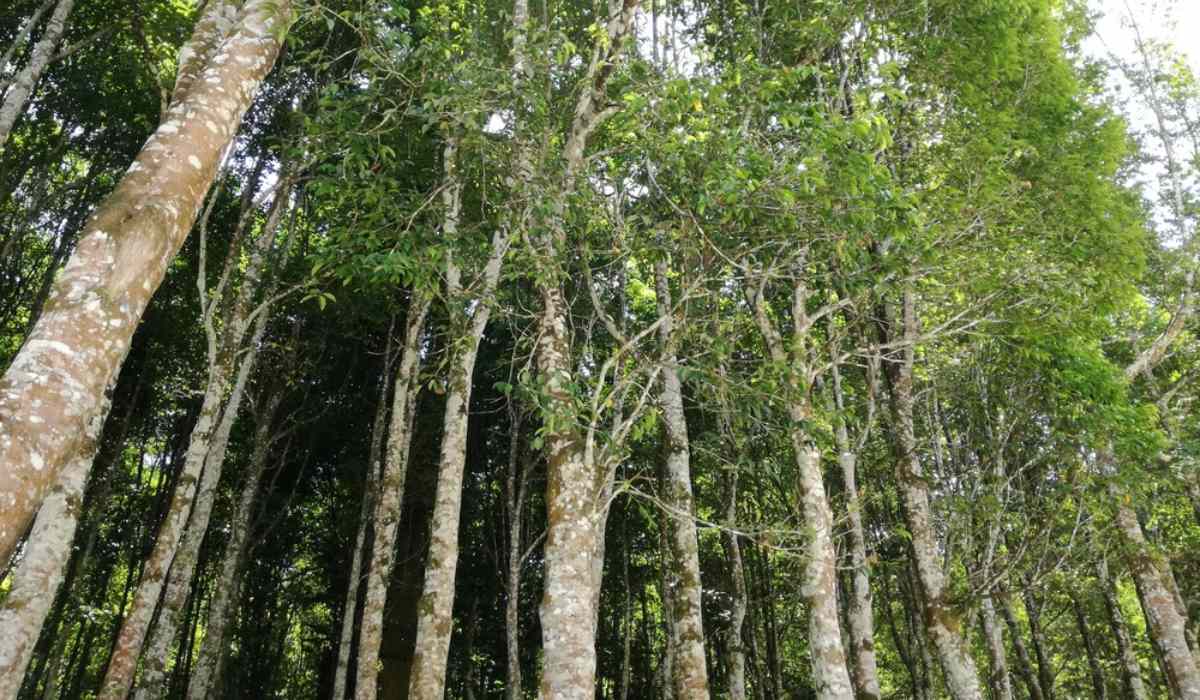
An “agarwood tree” normally means a tree capable of forming the resin-associated wood sold as agarwood. “Agar tree” is a shorter common expression that may be used in the same way. “Oud wood tree” is a popular phrase, but it is less precise: oud is commonly used for the aromatic material or fragrance context rather than for a single botanical tree name.
When people ask where oud comes from, the useful answer is not a one-word species label. It comes from particular tree genera, under particular conditions, and becomes a product only after formation, harvest, sorting and processing. The What Is Agarwood guide explains that material journey in plain language.
A finished item may be described with a tree name for convenience, but a careful listing also explains its form. Is it a raw chip, a carved object, powder, incense, a bracelet, an oil or a fragrance blend? The answer influences the questions a buyer should ask and the evidence that can realistically be provided.
Aquilaria and Gyrinops are genera, not product grades
Aquilaria and Gyrinops are botanical genera. They are not grade names and they do not promise a particular aroma, darkness, density or market value. Within each genus there are species with different documented ranges and cultivation contexts. A scientific name helps identify a plant; it does not replace the evidence required for a finished product claim.
This distinction is especially important in retail. A seller may correctly say that a source is associated with Aquilaria while still lacking species-level records for the exact batch. That limitation should be visible. It is better to say “seller-stated Aquilaria source” than to present a finished chip as laboratory-confirmed species material without the necessary evidence.
For a focused comparison of three commonly discussed Aquilaria species, see Aquilaria Species Compared: Crassna, Malaccensis and Sinensis. It shows why botanical context is valuable without turning the name into a universal ranking.
How healthy pale wood becomes resinous agarwood
The wood of a healthy tree is usually pale and does not look like the dark, resin-rich material that many buyers associate with agarwood. Agarwood formation is linked to a complex tree response and localized chemical change. Injury, environmental conditions, biological interactions and managed induction can all be part of the context, but no single explanation fits every tree or every piece of wood.
The key point is variation. Resin-associated material may occur unevenly through the wood, and the result depends on the individual tree, time, location in the trunk or branch, processing and storage. This is why an image of dark streaks or a strong fragrance description cannot establish an origin or grade by itself.

When a product description mentions “natural resin,” ask whether it means naturally formed material, a source claim, or the absence of post-harvest additives. Those are separate facts and should not be merged into one reassuring phrase.
Regional names: agar, aloeswood, oud and related terms
Names change as agarwood moves between languages. “Agarwood” is widely used in English. “Aloeswood” appears in older English-language writing, though it is unrelated to the aloe plant. “Oud” is common in Arabic-influenced fragrance and trade contexts. Local terms may point to a language tradition, an origin story, a material form or a market category.
These names can be culturally meaningful, but translation is not certification. A regional term does not prove that the item came from a particular country, and two spellings do not necessarily indicate two different botanical species. Use the agarwood terminology glossary to compare language variants before reading a grade conclusion into a name.
A reliable seller is comfortable explaining what term they use and why. They should be able to say whether it is a botanical name, a traditional name, a product category or a seller description. That clarity helps buyers compare like with like.
Why common names create species confusion
Common names are designed for conversation, not precision. The same name can be used across regions for several related trees, while one species may carry several local names. In addition, a commercial label may be repeated from supplier to retailer without anyone confirming how it was originally assigned. The farther a finished product is from the living tree, the harder it is to identify species from appearance alone.
Confusion becomes expensive when a common name is used to justify a rare-name premium. A buyer should ask: Is this a name for the material or for a documented species? Is the origin statement tied to a batch? Does the seller know what processing occurred after harvest? Are the answers written clearly enough to keep with the purchase?
None of these questions diminish the pleasure of a beautiful piece of wood. They keep the material’s actual qualities—aroma, craftsmanship, condition and personal meaning—from being obscured by a label that claims too much.
What commercial listings should name clearly
A good listing identifies the product form and says what is known about source, species, formation and processing. It should make clear which facts come from records, which come from the seller’s observation and which remain uncertain. For example, “plantation-sourced chips; seller-stated Aquilaria material; induction details not supplied; no added fragrance disclosed” is far more useful than a line of vague superlatives.
If an oil is offered, the listing should distinguish pure oil from a blend and state the relevant composition information. If a bracelet is offered, it should describe bead material and finishing rather than treating a tree name as a guarantee. If chips are offered for burning, a practical description of format, storage and expected use is valuable.
A name-to-tree-to-product terminology map
| Term | Usually points to | What it does not establish alone |
|---|---|---|
| Agarwood tree / agar tree | A tree associated with agarwood formation | Exact species, resin grade or source of a finished item |
| Aquilaria / Gyrinops | Botanical genera | Product quality, aroma or legality |
| Agarwood / aloeswood | Resin-associated wood material | A single tree species or no post-harvest treatment |
| Oud | Trade, material or fragrance context | A single botanical species or pure oil composition |
This map gives buyers a useful next step: translate the label into a question. If it is a tree term, ask for botanical and source context. If it is a material term, ask about formation and handling. If it is a fragrance term, ask about composition. The right question is more valuable than a more ornate name.
Keep the story proportionate
For everyday use, a clear product description and fair price may be enough. For a high-value source or species claim, expect stronger documentation and retain it with the item. Accurate terminology supports better choices, fairer trade and a deeper appreciation of the material itself.
How to read a label before purchase
Read the description in order. First, identify the physical item and its intended use. Second, list any tree, species or origin terms exactly as written. Third, note whether the seller says where those terms came from: grower records, supplier information, direct observation or a general category. Fourth, look for a separate statement about finishing, additives or blending. This small sequence prevents a buyer from mistaking a poetic name for a complete product specification.
It also makes comparison easier. Two retailers may use “oud wood” for different forms of material, and two products called “agarwood oil” may have different compositions. Keep the description, price, photographs and seller response together rather than relying on a single headline. If a seller’s language is careful, the purchase record will remain useful after the product is moved, gifted or resold.
When terminology should trigger more questions
Ask for clarification when a listing combines several powerful words—such as wild, natural, old, rare and named-species—without giving an evidence trail. Ask whether a botanical term is verified for the batch, whether an origin statement refers to the tree or simply the sales route, and whether a fragrance term means a pure oil or a blend. These questions do not accuse a seller of misconduct; they establish what is actually being offered.
Higher-priced material deserves a higher standard of clarity. A minor label ambiguity may not matter for an inexpensive chip selected for personal use. It matters much more where price, legality, collection value or future resale depends on a source claim. In that setting, preserve the answer in writing and do not rely on memory or a social-media caption.
Language that respects both tradition and evidence
Traditional names carry history and should not be erased merely because they are broader than scientific taxonomy. The respectful approach is to use them accurately: present the local or trade name as a cultural or market term, then state what botanical, source and processing information is available. This leaves room for tradition while protecting buyers from a claim that the evidence cannot support.
Agarwood is a material with many stories—ecological, cultural, spiritual and commercial. Good terminology does not flatten those stories. It lets each one be told in the right place, with the right degree of confidence.
A final practical example
“Oud wood chips, seller-stated plantation Aquilaria source, no added fragrance disclosed” is a more useful description than “rare natural oud.” The first tells a buyer what the product is, how the source is being represented and what processing has been disclosed. It also reveals what remains unknown. The second may sound more impressive, yet it gives the buyer almost nothing to verify or compare. Clear language is a quality of service in its own right.
When a seller is able to make these distinctions plainly, the buyer can focus on the material’s real character, intended use and value rather than trying to decode a label after the purchase is complete.
This builds durable buyer confidence.
