
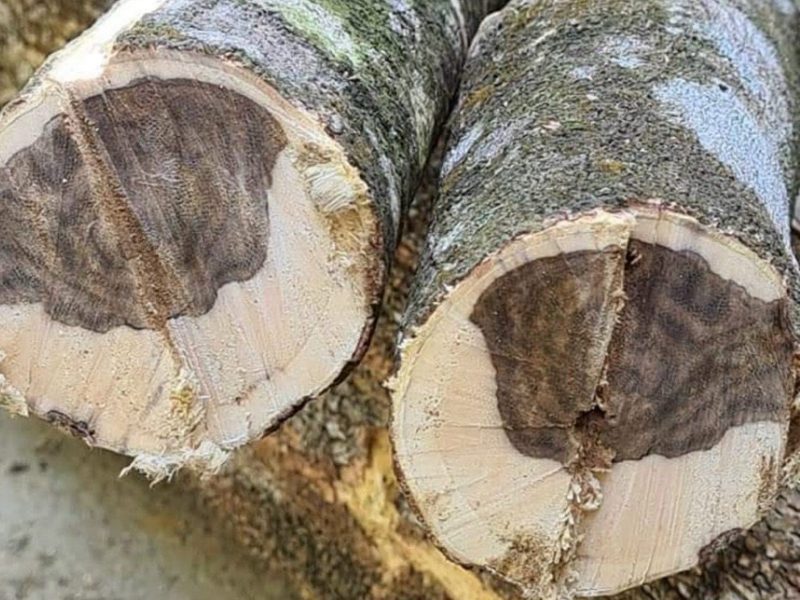
Aquilaria Species Compared: Crassna, Malaccensis and Sinensis
Aquilaria is the genus most often named in conversations about agarwood, but a product label that says only “Aquilaria” leaves important questions unanswered. The genus contains multiple species with different documented ranges, botanical traits and conservation contexts. Three names appear especially often in commercial discussions: Aquilaria crassna, Aquilaria malaccensis and Aquilaria sinensis.
Species information is useful, but it must be handled carefully. Identifying a tree species does not prove where a finished chip or oil originated, how resin developed, whether the material was treated after harvest, or how it will smell. This guide gives a practical botanical comparison and explains what buyers can reasonably verify.
Aquilaria as a genus—and why species identification matters
Aquilaria species are trees associated with agarwood formation. They are discussed in botany, forestry, cultivation and trade because the genus includes trees capable of producing resin-associated wood under particular conditions. Accurate names help researchers, growers and regulators communicate about the right plant, the right range and the right conservation context.
For buyers, the first caution is that a finished product may be difficult to identify botanically from appearance alone. A dark chip, a bead, a carved object or a bottle of oil does not carry a visible species label. A seller should therefore distinguish a documented source statement from a visual guess. The broader agarwood types and varieties guide is useful for understanding how species, form and trade descriptions overlap without being identical.
Scientific names can also change as taxonomy develops. A responsible listing should use an accepted name where possible, retain a known synonym only for clarity, and avoid treating a local common name as a precise botanical conclusion. If the species is unknown, “species not documented” is more accurate than an attractive but unsupported label.
Aquilaria crassna: distribution and documented context
Aquilaria crassna is widely associated in trade discussions with mainland Southeast Asia, including contexts connected with Thailand, Cambodia, Laos and Vietnam. Its name may appear in cultivation and conservation literature as well as in commercial descriptions. The presence of a regional association, however, does not mean that every product described as Vietnamese or Thai agarwood has a verified A. crassna origin.
In a well-documented supply chain, a crassna claim may be connected to nursery records, grower information, planting records or batch documentation. In a retail chain several steps away from the grower, the seller may know less. The useful response is to state the source of the information and its limits: for example, whether the name comes from the grower, a supplier declaration or a general product category.
Do not translate a species label into a promise about density, age or aroma. Trees within one species respond differently to site conditions, health, induction approach, time and processing. The name tells you which botanical question to ask; it does not answer every product question.

Aquilaria malaccensis: distribution and documented context
Aquilaria malaccensis is another species frequently cited in agarwood literature and commerce. Its documented range is generally discussed in South and Southeast Asian contexts, and its name has been widely used in relation to historical trade. Because the name is familiar, it can be overused in listings that do not include item-level botanical evidence.
When evaluating a malaccensis claim, ask the same disciplined questions used for any species: What is the source of the identification? Does it apply to this lot or only to a general region? Is there a grower, processor or supplier record? Are there photographs or documents that connect the statement to the offered material? The answer may be limited, and that is acceptable if the listing does not charge a premium for unsupported certainty.
Conservation and trade context also deserve care. A scientific name can be relevant to regulation, but the applicable rules depend on more than taxonomy. Country, source, date, form and documentation can all matter. Do not use a species name as a shortcut to a legal conclusion.
Aquilaria sinensis: distribution and documented context
Aquilaria sinensis is commonly associated with southern China in botanical and cultivation discussions. It may be encountered in research on plantation management and in supply chains that use Chinese species terminology. As with the other species, a regional association is not enough to establish the identity of a finished product without a traceable source.
A species name can be helpful to a grower planning cultivation or a researcher comparing plant material. A consumer buying a chip, bracelet or oil needs a more complete description: where was the material sourced, what form is it, was induction used, how was it processed, and what documentation follows the batch? These questions make the label useful rather than decorative.
Common names complicate the picture further. “Agar tree,” “oud wood tree” and local names may be used broadly for more than one botanical situation. Read Agarwood Tree, Oud Wood Tree and Agar Tree: Names Explained before assuming that a common name is a species identification.
Compare morphology, range and conservation status
| Species | Useful context | What a retail label still needs |
|---|---|---|
| A. crassna | Often discussed in mainland Southeast Asian cultivation and trade contexts | Batch source, basis of identification and processing disclosure |
| A. malaccensis | Frequently cited in South and Southeast Asian agarwood literature | Item-specific provenance rather than a generic historical association |
| A. sinensis | Often associated with southern China and cultivation research | Clear distinction between regional naming and documented botanical source |
Morphological features—such as leaves, flowers or fruits—help botanists identify living trees, but they are usually unavailable to a buyer of finished wood. Range information can help a buyer spot an implausible story, but it does not prove an origin. Conservation status provides an important policy context, but it is not a grade label. Each category answers a different question.
Species does not determine grade or scent by itself
It is tempting to turn species into a ranking. That simplification is unreliable. Aroma and apparent quality are influenced by multiple conditions: the individual tree, growth environment, formation response, time, portion of wood, drying, storage, cutting, heating method and post-harvest handling. Two samples identified with the same species can be strikingly different.
The same is true of visual appearance. Darker material can be visually appealing, but colour alone does not quantify resin content or authenticate a grade. Density, sinking observations and fragrance descriptions should be read alongside context, not as stand-alone proof. A transparent seller should explain the exact observations and avoid suggesting that a scientific name guarantees an extraordinary result.

For buyers, the better comparison is between documented pieces, not between abstract species reputations. Choose a product with a description and evidence level that match its price and your intended use.
How to verify botanical names in commercial claims
Ask the seller for the exact scientific name as supplied by the grower or source, and ask whether it is a direct record or a general category. Request any batch, nursery or plantation information that can be shared. If the product is far removed from the tree, recognise the limit: retail photos of a finished item rarely verify a species claim on their own.
Use reliable botanical references when checking spelling and accepted names, but do not turn an online search into an origin certificate. A correct name in a database shows that the species exists; it does not confirm that a particular item comes from it. The clearest listings state both the positive information and the uncertainty.
A practical buyer checklist
Record the seller’s stated species, origin, source of that statement, batch details, processing disclosure and return terms. If a species label is central to a high price, seek stronger documentation or independent advice. If it is simply a useful context note, let it remain that—one accurate part of a wider product story.
Why accuracy matters even for everyday products
Accurate botanical language is not only for collectors. It helps ordinary buyers understand why two products with similar names can differ in form, availability and price. It also helps sellers avoid making a claim that their own supplier cannot support. When the species is well documented, it is worth stating carefully. When it is not, a broad but honest description is better than false precision.
This is especially relevant for products that move through several stages before reaching a customer. A grower may know the planting stock. A processor may know the incoming lot. A retailer may only know the category supplied by the processor. Those are different levels of knowledge, and none should be silently upgraded into a laboratory-confirmed result for a finished chip, bead or bottle.
Separate observation from conclusion
A buyer can observe colour, grain, shape, weight and aroma under a stated method. A seller can report what a supplier declared. A botanist can identify a living specimen from the right material. These are all useful, but they are not interchangeable. Write them down in the appropriate column: observation, seller statement, record, or independent assessment. The habit makes it much easier to decide what confidence is justified.
When a listing has limited documentation, the proportionate response is a modest claim and a fair price. When a listing commands a premium for a named species or special origin, it should offer a deeper evidence trail. That is a sound rule regardless of whether the material is intended for burning, wear, gifting or study.
Before relying on a species claim
Confirm that the name is spelled correctly, determine whether it is an accepted scientific name or a loose trade term, and ask how it was connected to the offered item. Keep the answer with your purchase record. If the explanation remains vague, enjoy the material for its disclosed qualities rather than paying for an unverified botanical conclusion.
Species names belong beside—not instead of—the formation story. A tree’s response to injury, induction, environment and time is why a botanical label cannot predict the material outcome. For context on these interactions, review the agarwood formation process.
Good commerce makes room for this complexity. It explains what is known from records, what is observed in the present item, and what remains outside the scope of a retail description. That candour lets a customer compare products without pretending that a name alone has settled the question.
Remember: the best species claim is specific, sourced and modest. If a name cannot be traced to the batch, retain it as a seller statement, compare the rest of the evidence, and make the purchase decision on that honest basis.
This keeps confidence proportionate.
