
Oud Oil & Perfumery
Real Oud in Perfume vs Synthetic Oud Accords
“Real oud” is a compelling phrase, but it needs a careful reading. In perfume, oud may refer to natural agarwood oil, a formula containing some natural material, an accord designed to evoke agarwood, or a creative scent category. None of these is automatically better for every wearer. The responsible comparison separates what the formula documentation shows from what the finished scent suggests.
Evidence first: a dark, smoky or long-lasting perfume does not prove the presence of agarwood oil, and a perfume containing natural oud does not have to smell the way a buyer expects. Smell can guide preference; it cannot independently verify composition.
What ‘real oud’ in perfume can mean
At its most specific, real oud means an ingredient derived from resinous agarwood and used in a perfume formula. That ingredient may be an oil, a fraction or another disclosed natural material. The phrase becomes less precise when it is used without a material name, source, concentration, batch reference or explanation of the product format. A finished perfume can contain natural oud alongside many other materials, so the natural component may be central, subtle or mainly textural.
Buyers also use “real” to mean an experience: deep woods, leather, smoke, barnyard warmth, resin or a shifting drydown. These associations may occur with natural oils, but they may also be created through a composed accord. For the practical distinction between oil, essential oil and fragrance oil, read Oud Oil vs Essential Oil vs Fragrance Oil. The terms describe different product categories, not a simple scale of quality.
How synthetic oud accords are built
An accord is a deliberately constructed olfactory effect. To suggest oud, a perfumer may combine woody, amber, leathery, smoky, spicy, balsamic or animalic facets with natural extracts, isolates and aroma materials. The exact palette is a creative and commercial choice. It can be designed to feel clean and modern, dark and resinous, soft and floral, or intense and dramatic.
That construction offers control. An accord can be more consistent across production runs, can accent a particular facet and may be practical at a price point where a natural material would be difficult to use. It can also coexist with natural agarwood oil in the same formula. The right question is therefore not “natural or synthetic?” as a moral label; it is whether the description honestly distinguishes a material claim from an accord name, and whether the finished perfume is enjoyable for its intended use.

Formula disclosure and evidence levels
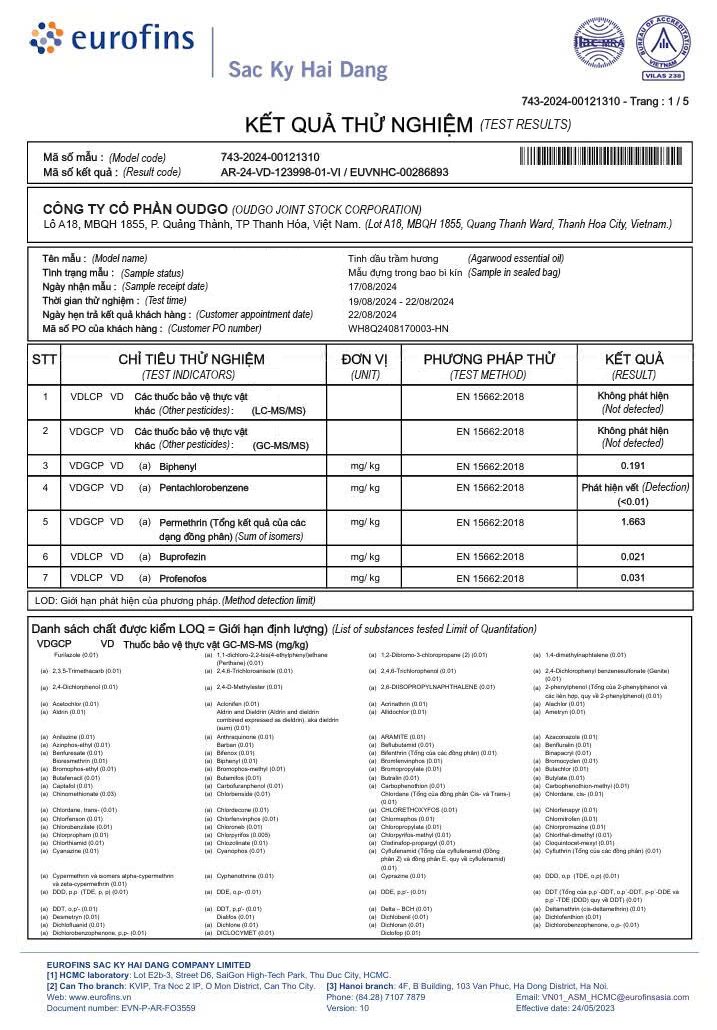
Evidence has levels. The strongest consumer-facing evidence is a clear material description supported by batch, supplier or product documentation that identifies what is being offered and in which format. A detailed ingredient list, a certificate or analytical information may be useful, but each document has a scope: it may address a raw material, a batch, a fragrance compound or a finished product. Read what it actually covers.
| Information available | What it can support | What it cannot prove alone |
|---|---|---|
| Evocative note list | Intended scent style | Exact ingredients or amount of natural oud |
| Clear product description and batch reference | Traceable seller claim | Complete formula disclosure |
| Supplier or analytical documentation with scope | Specific material or batch facts | Every aspect of a different finished product |
| Personal scent test | Wear preference and performance on you | Ingredient identity |
Use this ladder to avoid two mistakes: dismissing a well-made accord because it is not a raw oil, and accepting a vague “real oud” promise as proof. How to Identify Pure Oud Oil explains why simple home tests and isolated sensory clues have limits.
Scent differences that may appear—but cannot prove composition
Natural agarwood oil may show complexity, unevenness and movement that enthusiasts enjoy: fruity, honeyed, medicinal, leathery, woody, fermented, smoky or green facets can emerge at different times. Yet those impressions vary with origin, resin formation, distillation and age. A wearer cannot reliably infer a specific origin or purity level from one sniff.
Accords may be more linear, more polished, cleaner, sweeter or more emphatic in a chosen direction, but none of those traits proves an accord is present. A skilled formula can be nuanced; a natural material can be surprisingly quiet. Temperature, skin, dilution and the surrounding notes alter perception further. Use scent language to describe what you enjoy, and use documentation to evaluate composition claims.
Performance, consistency and cost tradeoffs
Natural material and accords make different practical tradeoffs. Natural oils can vary from batch to batch, which may be a feature for someone who values material character but a challenge for a brand seeking a fixed profile. An accord can be built for dependable projection, a particular drydown or repeatable supply. Performance also comes from the entire formula, so longevity alone does not identify the oud source.
Cost reflects more than a single ingredient. It can include raw-material availability, processing, formulation, packaging, distribution and the brand’s positioning. A higher price is not proof of more natural oud, and a lower price is not proof of poor artistry. Compare like with like: format, amount, disclosed information, performance you personally value and the clarity of the claim. For how oud functions across a composition, see How Oud Works in Perfume.
How brands phrase natural-ingredient claims
Look for precise language. “Contains agarwood oil,” “built around an oud accord,” “oud-inspired,” “natural material disclosed in the formula” and “oud note” make different claims. A precise statement gives the buyer something to understand and, where appropriate, ask about. A broad phrase may be poetic but is not automatically a composition disclosure.
Good communication distinguishes a sensory story from a technical claim. It may explain the intended profile while avoiding an invented percentage or a claim that one word on a note list can certify a product. Be equally careful with “pure,” “authentic,” “natural” and “essential oil”: each needs context. If the seller cannot clarify the product format or intended use, treat that uncertainty as part of the purchase decision.
Questions buyers can ask without demanding a secret formula
Most buyers do not need a secret formula to ask useful questions. Start with: Is this an oud accord, a perfume containing natural agarwood material, or a natural oud oil? What is the intended route of use? Is there a batch or lot reference? Can you describe the material or formula at the level you are able to disclose? What is the concentration or format? These questions invite clear answers without requiring proprietary percentages.
Compare claims with use: if your goal is to explore raw material, seek a clearly described oil and evaluate it slowly. If your goal is a finished perfume, judge the composition, comfort, performance and description together. In either case, choose documentation that is proportionate to the claim.
Keep notes after wearing a sample at several points in time. Record what you actually smelled, how it performed and what the seller stated. That simple separation between experience and evidence makes comparisons more thoughtful and makes “real oud” a useful question rather than an empty label.
A fair way to compare two bottles
Place the two products in the same category before comparing them. An undiluted oil, a perfume oil, an eau de parfum and a fragrance accord in a candle or diffuser are not interchangeable. Check the stated format, concentration where supplied and route of use. Then test a modest amount on separate blotters or skin areas, at the same time of day, and return at a few intervals. This shows how each product develops without asking the opening to answer every question.
Next, write two columns: what is documented and what you perceive. Documentation may include material naming, batch information or use instructions. Perception may include dry wood, rose, smoke, amber, sweetness or softness. Keeping the columns separate does not reduce the romance of fragrance; it makes the buying decision more resilient. You can value a beautiful accord for its composition while reserving stronger claims about origin or natural content for evidence that supports them.
Make a comparison that remains useful after the first impression
Before buying a full bottle, create a simple comparison record. Note the seller’s exact wording, format, volume, stated material information and batch or lot reference where it is available. Then wear or smell the product under comparable conditions. Do not test a rich oud perfume immediately after several other fragrances, and avoid using a strong scented lotion that makes the base impossible to judge. Return after the opening, after the heart and at the late drydown. A modest sample can reveal more than a dramatic first spray.
Give special weight to information that is specific and checkable. “Oud-inspired” is a useful creative description if the buyer understands it as a scent direction. “Contains natural agarwood oil” is a more particular material claim and should be presented with a level of clarity proportionate to the promise. Neither phrase tells you that you will enjoy the perfume. Personal preference is still sensory: some people want the variation and textured edge associated with a natural material, while others prefer a smooth, stable accord that performs in a predictable way.
There is also value in acknowledging uncertainty. A brand may properly protect its formula while still explaining whether an oud note is an accord, whether natural material is present and how the finished product is intended to be used. A buyer may enjoy an accord without being misled, and may enjoy a natural oil without assuming every unusual facet is proof of quality. This balance keeps the conversation focused on clear descriptions, responsible evidence and the actual wearing experience rather than a hierarchy created by a single word.
When the documentation and the sensory result point in different directions, do not force a conclusion. Ask a concise question, compare a second sample if practical, or choose the product whose communication gives you more confidence. The aim is not to audit every perfume at home. It is to recognise the difference between a fragrance preference and a composition claim, so that your choice is informed, enjoyable and fair to the material and the maker.
Set expectations before interpreting the name
Words such as natural, authentic and traditional can describe an aspiration, a raw material or a brand story; they do not replace a clear statement of what is in the product. Read the surrounding sentence, not only the headline. A useful listing identifies whether you are choosing a finished perfume, an oil, an accord-led composition or a product that combines several approaches. It also gives enough use information to keep the product in the appropriate context.
For the wearer, the practical test is straightforward: does the scent develop in a way you enjoy, does the seller describe it in language that remains accurate after you test it, and can you make a decision without filling gaps with assumptions? When those answers align, the formula need not be reduced to a single natural-versus-synthetic label. It can be appreciated as a documented product with its own material choices and sensory character.
