
Oud Oil & Perfumery
Oud Oil vs Essential Oil vs Fragrance Oil
Oud can describe several very different fragrance materials. A real agarwood distillate comes from agarwood through a documented extraction process; an essential-oil label may or may not identify that material precisely; and a fragrance oil may be a composed blend, a synthetic accord, or a blend that includes a small amount of natural oil. Read the composition, not the front-label shorthand.
Label principle: words such as “natural,” “pure,” “essential,” or “oud” do not tell you the whole composition. Look for the botanical source, extraction method, dilution or carrier, batch information, intended use, and ingredient disclosure.
The short distinction: oud oil, essential oil and fragrance oil
Start with a useful distinction. Agarwood oil, sometimes called oud oil or agar oil, should mean a material distilled or otherwise extracted from agarwood and described with enough information to understand what was made. The word alone is not a certificate of species, origin, grade or purity; those require evidence such as a batch record, producer statement, or analytical documentation.
Essential oil is a broad trade and consumer term for volatile aromatic material obtained from plant matter. Some sellers use it carefully; others use it loosely for a scented oil, a pre-diluted roll-on, or any natural-smelling product. A label saying “oud essential oil” becomes meaningful only when it explains whether it is undiluted agarwood distillate, a blend, or fragrance compounded in a carrier.
Fragrance oil usually means a formula designed for scent. It can contain natural extracts, synthetic aroma materials, or both. A synthetic oud accord is not automatically poor quality or unsafe; it is simply a constructed smell, not a claim that the bottle is a single agarwood distillate. The responsible question is: what is it, and what is it intended to do?
How real agarwood oil is produced
Real agarwood oil begins with resin-bearing wood, not with the generic idea of “oud.” Producers prepare the wood, manage water and heat, collect the aromatic fraction, and allow the material to settle or mature according to their practice. Yield, aroma and colour can vary substantially with the source material, resin content, cut size, distillation method, storage and blending choices. That variation is normal; it is why a credible description names the process rather than relying only on romantic terms.
For a fuller production baseline, see our Oud Oil Pillar. A trustworthy product page should make a reasonable distinction between “distilled agarwood oil,” “agarwood oil blended in a carrier,” and “fragrance inspired by oud.” If a seller cannot say which one applies, treat the description as incomplete rather than filling the gap with assumptions.
Price alone cannot decode composition. A small bottle may be expensive because it is a carefully sourced distillate, because it is a branded perfume formula, or because the packaging is elaborate. A very low price does not prove deception, but it is a prompt to ask for clearer composition and use information.
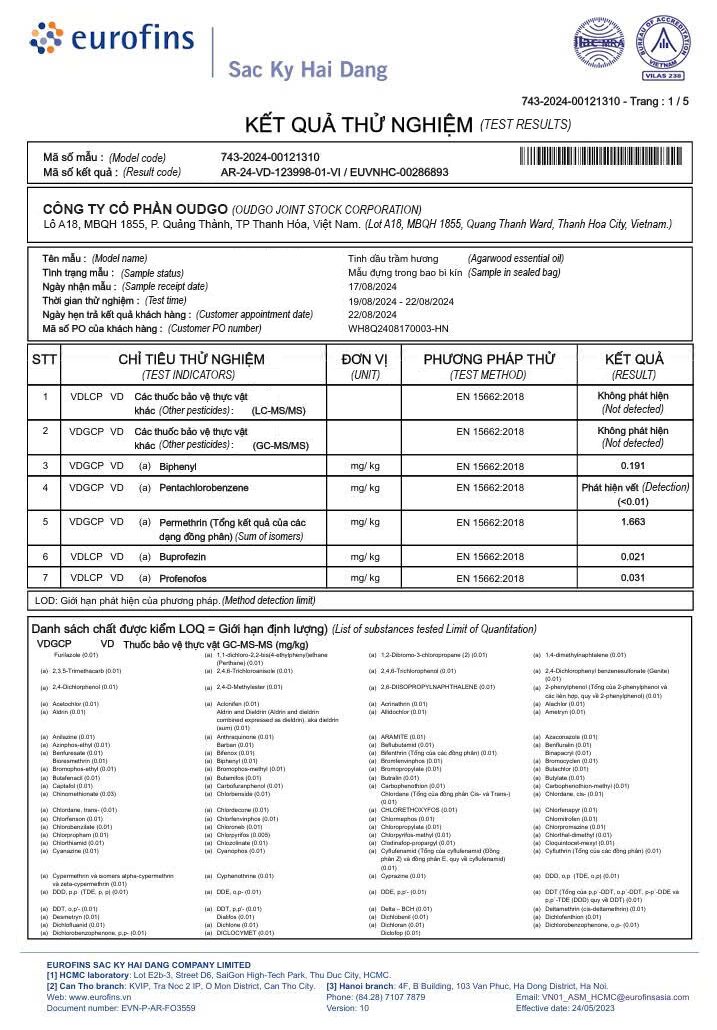
Batch and composition information are more useful than front-label shorthand when comparing aromatic oils.
Why ‘essential oil’ is used inconsistently in commerce
The phrase “essential oil” describes a category, not a universal quality grade. In consumer commerce it is often used as a positive signal: plant-based, concentrated or traditional. But the phrase does not automatically answer the questions a buyer needs answered. It does not specify the percentage of agarwood material, whether another oil carries the scent, whether the bottle is intended for skin, diffusion, incense, or perfume compounding, or whether the aromatic material has been mixed with other ingredients.
Use the wording on the whole package. A product that lists a botanical name, plant part, extraction method, country or region, lot number and intended route gives the reader more to evaluate than a label that only says “pure oud essential oil.” Conversely, the presence of a long ingredient list may indicate honest disclosure rather than a lower-quality product. It may describe a finished fragrance rather than a raw aromatic material.
In other words, “essential” is not a safety guarantee and “synthetic” is not a complete safety judgment. Safety depends on the actual formulation, concentration, exposure route and the person using it. Readers seeking evidence limits should also review how to identify pure oud oil: evidence and test limits.
What fragrance oil and synthetic oud accord mean
Perfume composition is often a creative formula rather than one raw material. A fragrance oil may contain natural resins or essential oils, aroma molecules, solvents, stabilisers and a carrier selected for the product format. “Oud accord” usually signals a scent profile built to evoke facets people associate with oud: woody depth, smoke, leather, sweetness, dryness or animalic warmth. That can be useful language for choosing a perfume, but it is not a claim of a particular percentage of agarwood distillate.
There is room for both categories when the description is honest. A perfumer may use an accord because real distillate is scarce, costly, too variable for a formula, or not the desired aromatic effect. A collector may seek a documented natural distillate for its material character. The problem is not the existence of a formula; the problem is presenting a formula as if it were an unblended raw oil.
“Attar” adds another layer. Depending on region and maker, it can refer to a traditional perfume preparation carried in sandalwood or another base, or to a modern commercial perfume oil. Read our Attar vs Oud Oil guide before assuming that the word identifies a single formula type.
Read an ingredient label and product description
Use a composition-first checklist. Look for a botanical name where a natural source is claimed, a plain statement of whether the material is distilled oil, a blend, or fragrance, and a route of use. For a rollerball, ask what the carrier is. For a perfume, look for an ingredient list and whether “parfum” or “fragrance” is used as a formula disclosure. For a raw material, ask whether there is a batch, lot, extraction method or producer record.
| Label wording | What it can tell you | What it does not prove |
|---|---|---|
| “Agarwood / oud oil” | It names the claimed aromatic material. | Species, percentage, origin, extraction, or whether it is blended. |
| “Essential oil” | It suggests a plant-derived aromatic category. | That the product is undiluted agarwood oil or suitable for every use. |
| “Fragrance oil” or “parfum” | It signals a composed fragrance formula. | That natural ingredients are absent, or that one note dominates the formula. |
| “Attar” | It may identify a perfume-oil tradition or format. | A single universal recipe or a specific percentage of oud. |
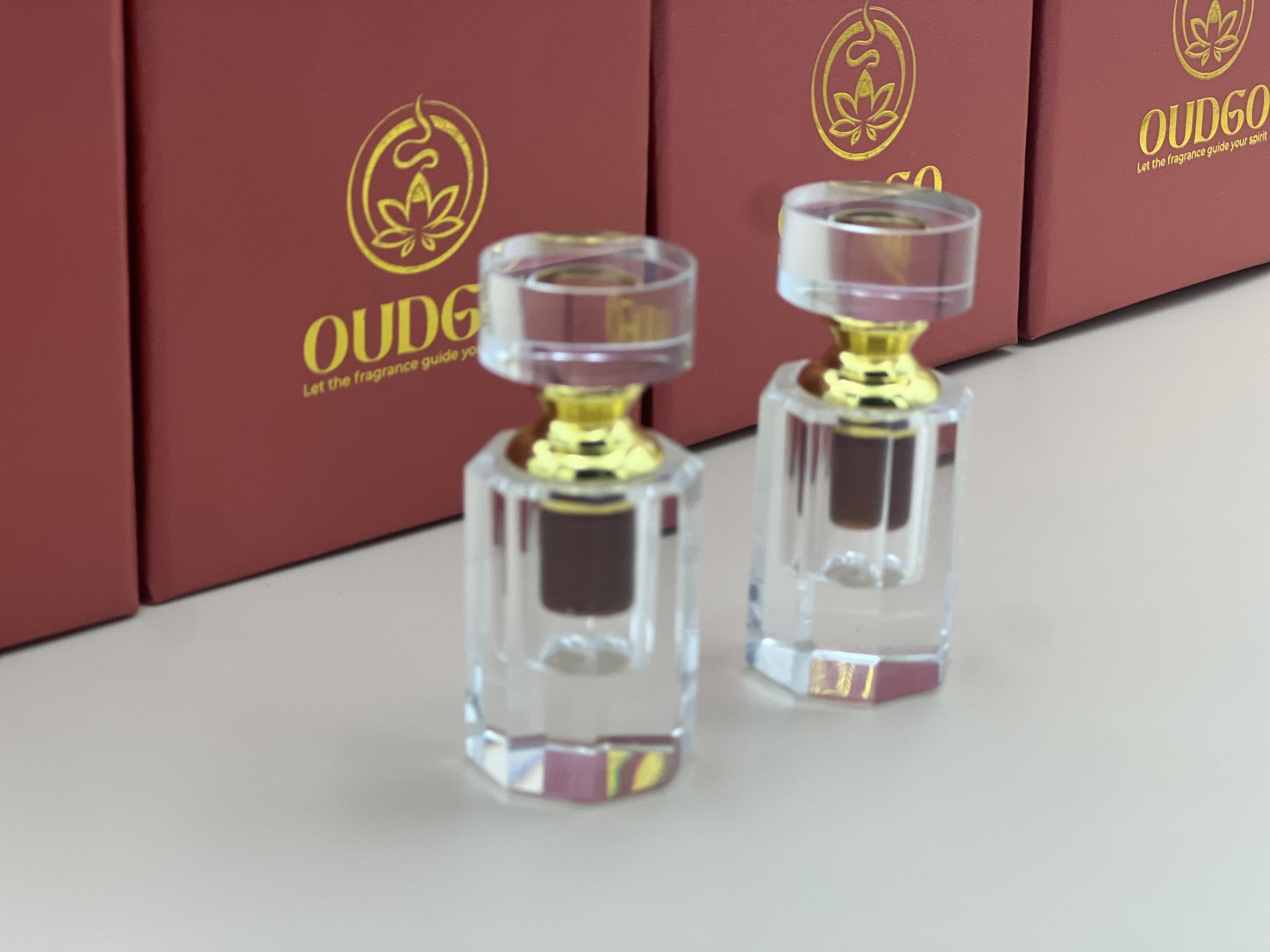
Photos of wood, laboratory glassware or an ornate bottle are marketing context, not composition evidence. Save the product page, batch note or invoice if provenance matters to you; they are easier to compare later than a memory of how the front label looked.

A source-material image is not a composition certificate; reliable descriptions connect the material, process and finished product.
Compare concentration, use route and safety expectations
The same aromatic material behaves differently in a diffuser, a skin perfume, a candle, an incense product and a raw-material bottle. Do not transfer instructions between those formats. A concentrated oil that is appropriate for a trained perfumer to evaluate is not automatically ready for direct skin application. A fragrance used in a candle is not automatically intended for a diffuser or body product. Follow the product’s stated route, dilution instructions and local safety labelling.
People with a known fragrance sensitivity, a history of contact reactions, or a current skin concern should be especially cautious and seek professional advice when appropriate. The European Commission notes that fragrance ingredients can cause allergic contact dermatitis in sensitised individuals and that certain allergens require individual label disclosure in EU cosmetics above specified thresholds. An ingredient name is information, not a diagnosis; stop using a product if it causes an adverse reaction and consult an appropriate clinician for personal medical guidance.
For any product intended for skin, use only the maker’s directions and avoid treating the term “natural” as a substitute for a formulation or safety assessment. For ambient use, maintain ventilation and follow relevant appliance or product instructions.
A label-decoder decision tree
- Does the page state what the bottle is? Distillate, blend, perfume oil, fragrance oil or attar are materially different starting points.
- Is agarwood identified beyond the word “oud”? Look for botanical source, extraction or producer information when the claim matters.
- Is a carrier or fragrance formula disclosed? If yes, compare it as a finished formulation, not as an undiluted raw oil.
- What is the intended use? Skin, home fragrance, incense and raw perfumery material need different handling.
- Is there batch or composition support? If not, describe the product cautiously and avoid claims of purity or origin that the record cannot support.
This decision tree does not tell you which aroma you should prefer. It gives you a fairer comparison: like with like, with the label read as evidence rather than decoration.
Questions readers also ask
Is oud oil always an essential oil?
No. “Oud oil” can be used for a distillate, a diluted product or a fragrance formula. Read the full composition and production description.
Does “fragrance oil” mean there is no natural material in it?
No. Fragrance formulas can combine natural extracts and synthetic aroma materials. The phrase describes a formula category, not a complete ingredient list.
Does a natural oud oil have no allergy risk?
No. Natural aromatic extracts are chemical mixtures, and sensitivity depends on the formula and exposure. Follow labelled use directions and seek professional advice for personal health concerns.
