
How Long Does Incense Burn? Realistic Times by Format
Incense burn time is best treated as a useful range, not a promise printed in stone. A thin stick in a quiet room may finish far sooner than a thicker stick from the same package. A cone can seem quick because it releases scent intensely, while a coil may continue for hours. Oud chips are different again: they are generally warmed or heated in small portions rather than timed as a self-burning stick.
Typical burn times for sticks, cones, coils, chips and powder
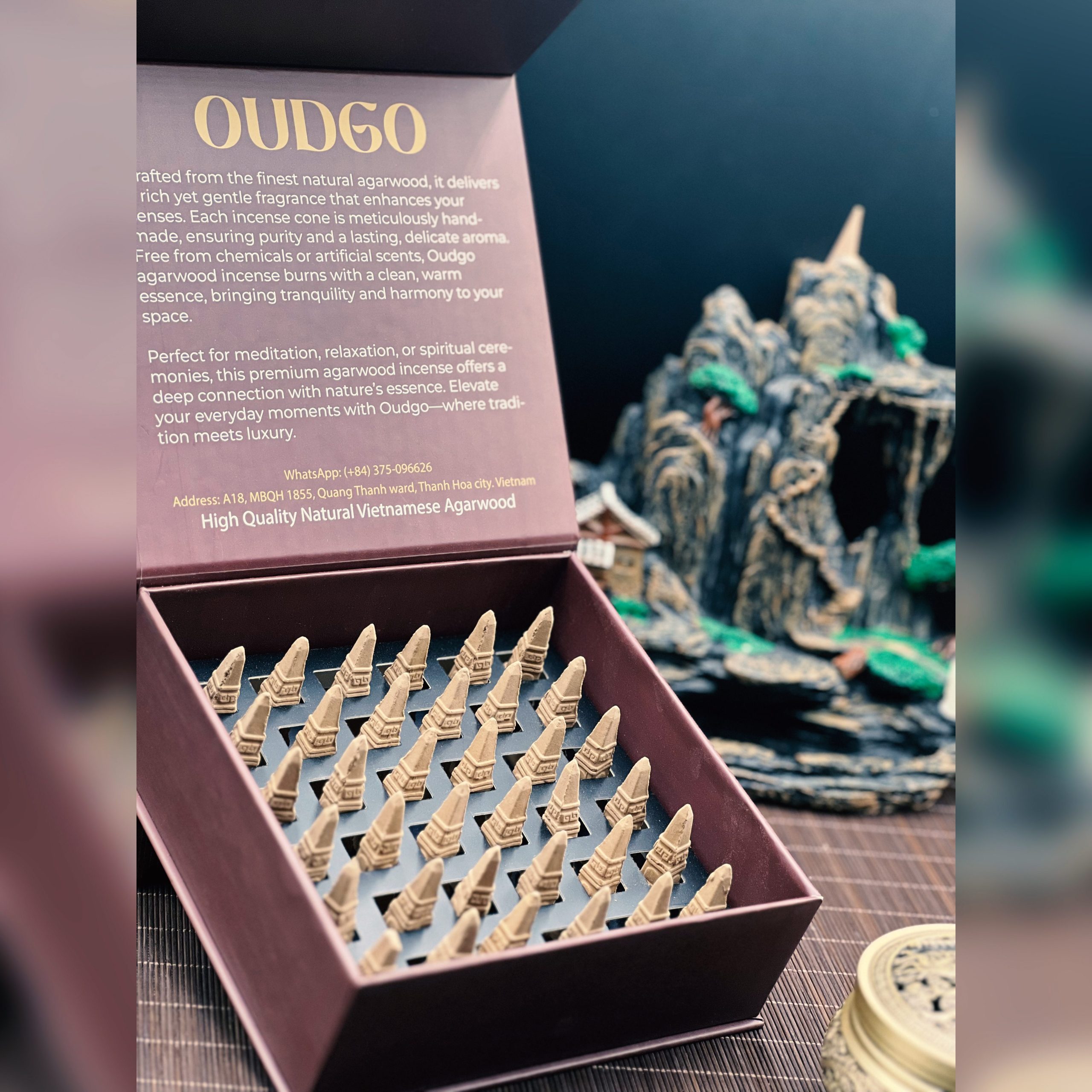
Most standard incense sticks burn for roughly 25 to 60 minutes, depending on length and thickness. Shorter sticks may last 15 to 30 minutes; long, dense sticks can run longer. Small cones often burn for about 15 to 30 minutes, while larger cones may last 30 to 45 minutes. These ranges describe the active ember, not the time until every surface is cool.
| Format | Typical active time | Planning note |
|---|---|---|
| Short stick | 15-30 minutes | Useful for a brief supervised session |
| Standard stick | 25-60 minutes | Depends strongly on thickness and formula |
| Small cone | 15-30 minutes | Use a deep ash-catching holder |
| Large coil | 1 hour or more | Only when full supervision time is available |
| Oud chips or powder | Varies by heat method | Warm a small portion; do not time as a stick |
Coils cover a wide range because their diameter and thickness vary greatly. Some tabletop coils last under an hour; large hanging coils can last much longer. Treat any long-duration format as a reason to plan more supervision, not as a convenience for an empty room.
Why size and density change burn duration
Length matters, but diameter and density matter just as much. A narrow stick has less material around the ember and can move quickly. A thicker stick contains more fuel and may progress more slowly, though its exact formula still affects the rate. A dense cone may burn longer than a lighter cone of the same apparent size because the ember moves through it differently.
Binders, charcoal content, wood powders, oils, and moisture all affect the way oxygen reaches the glowing tip. Two sticks that look alike can therefore have different burn times. Manufacturer ranges are useful as a starting point, but they cannot account for every household condition. If a product provides a range, expect ordinary variation rather than assuming a shorter or longer session proves a problem.
How airflow, humidity and holder design affect timing
Airflow can make an ember burn faster, burn unevenly, or go out. A strong fan, an open window, or an air-conditioning stream may feed oxygen to one side of a stick or bend the smoke path. Humidity has the opposite kind of influence: damp incense can struggle to stay lit, especially if it has been stored in an unsealed area.
Holder design affects both safety and performance. A stick should stand upright or at the intended angle without being squeezed. A cone needs enough space for air and a tray that contains ash. A coil needs support across its full diameter. The correct holder does not guarantee a fixed duration, but it helps the ember burn in a stable, predictable way.
Why oud chips are heated rather than timed like sticks
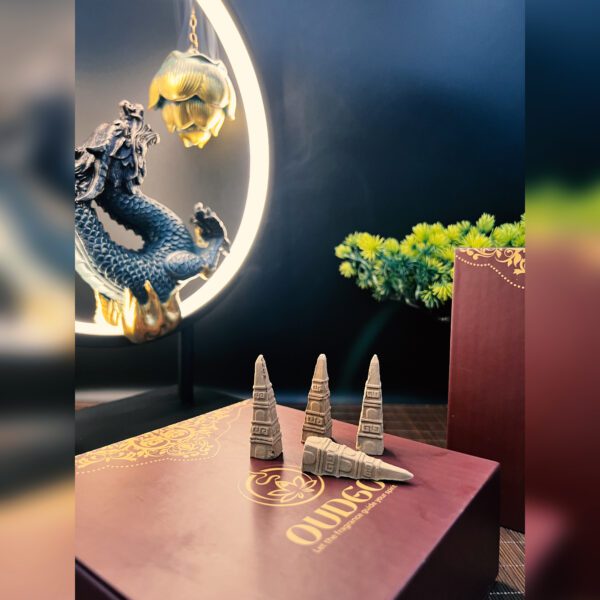
Oud chips and small aromatic wood pieces are usually heated in a censer, over moderated charcoal, or in an electric heater. The goal is to release aroma from the material, not to make a self-sustaining ember travel along it. A tiny chip may offer scent for only a few minutes at higher heat or for longer when warmed gently; the result depends more on temperature and portion size than on a fixed burn-time label.
Using too much heat can char a chip and create a harsh scent before its more nuanced aroma has time to develop. Start with a small piece and use a controlled heat source. If using charcoal, follow the safety method for the heat source itself. Chips remain hot after the fragrance fades, so wait for the censer and ash to cool before clearing them.
How to run a simple burn-time test at home
A simple test can help you plan future sessions. Choose a clear heat-safe surface, note the starting time, and use the same type of holder you would normally use. Stay present while the incense burns. Record the format, size, room conditions, and when the visible ember goes out. Do not use the test as a reason to leave incense unattended.
Repeat the test only when conditions are reasonably similar. If one result is very different, check storage, moisture, drafts, and whether the holder held the incense at the same angle. A short note on the package or in a journal is usually enough. You are looking for a practical planning range, not laboratory precision.
For the correct lighting and extinguishing sequence, see how to burn incense sticks safely and how to use incense cones. Each format needs its own holder and ash management.
Choose a format by session length and smoke tolerance
Choose a short stick or small cone when you want a compact, supervised session. Choose a longer stick only when you know you can remain nearby for its full duration. Choose a coil when the longer format truly fits the room, the holder, and your available time. For many users, a small portion of warmed wood or a low-temperature heater is preferable when visible smoke needs to be limited.
Do not choose the longest product simply because it seems economical. The best format is the one that fits your room, ventilation, preferences, and household routine. If anyone nearby is sensitive to smoke or fragrance, use less, improve fresh air, or choose not to burn incense in that setting.
Plan coils separately
Coils need a specific holder, more ash capacity, and much more time than a short stick or cone. Read the incense coil holder and safety guide before choosing one. A long burn is only useful when it remains a fully supervised burn.
After the ember ends
Allow the incense and holder to cool completely. Ash may hold heat longer than expected, especially in a deep tray or censer. Empty only cooled ash and store unused incense dry so the next session remains consistent.
Do not use scent strength as a clock
The room may smell strongest near the beginning of a session, while the ember still has considerable time left. Conversely, an aroma can become faint before every part of the holder is cool. Use visual observation and a safe timer as planning tools, but do not assume that a weaker scent means the heat source is finished.
Keep timing expectations realistic
Small differences between batches are normal. The practical value of a stated duration is knowing whether a format suits a fifteen-minute pause, an hour of quiet work, or a longer supervised ritual. If it does not fit your time, choose a shorter format rather than trying to stop and restart hot incense.
