

Christian Prayer Beads: Rosaries, Chaplets and Prayer Ropes
Christian prayer beads are not one single object. A Roman Catholic rosary, a chaplet, Anglican prayer beads, and an Orthodox prayer rope can all use repeated tactile points, yet they have different structures, devotional contexts, and authorities. The shared physical idea – moving through beads or knots to support attention – is not a license to mix their prayer sequences or treat every strand as a generic Christian accessory.
The main families of Christian prayer beads
Christian bead traditions include the Roman Catholic rosary, various chaplets, Anglican prayer beads, and Orthodox prayer ropes. The forms can include beads, knots, a crucifix or cross, markers, and different groupings. Their names tell the reader that the structure is connected to a particular tradition rather than to a universal rule.
A Roman Catholic rosary has a recognized sequence of prayers and mysteries. A chaplet refers to a more specific devotional pattern and may differ in bead count and prayer sequence. Anglican prayer beads are a more recent tool used by some Anglicans for rhythmic prayer. Orthodox prayer ropes often use knots and have a distinct practice context. The correct way to learn each form is from resources and teachers within that tradition.
This article is a map of objects, not a substitute for devotional instruction. For the wider cross-tradition framework, see What Are Prayer Beads? Traditions Compared Without Mixing Them.
Rosary anatomy and the sequence it supports
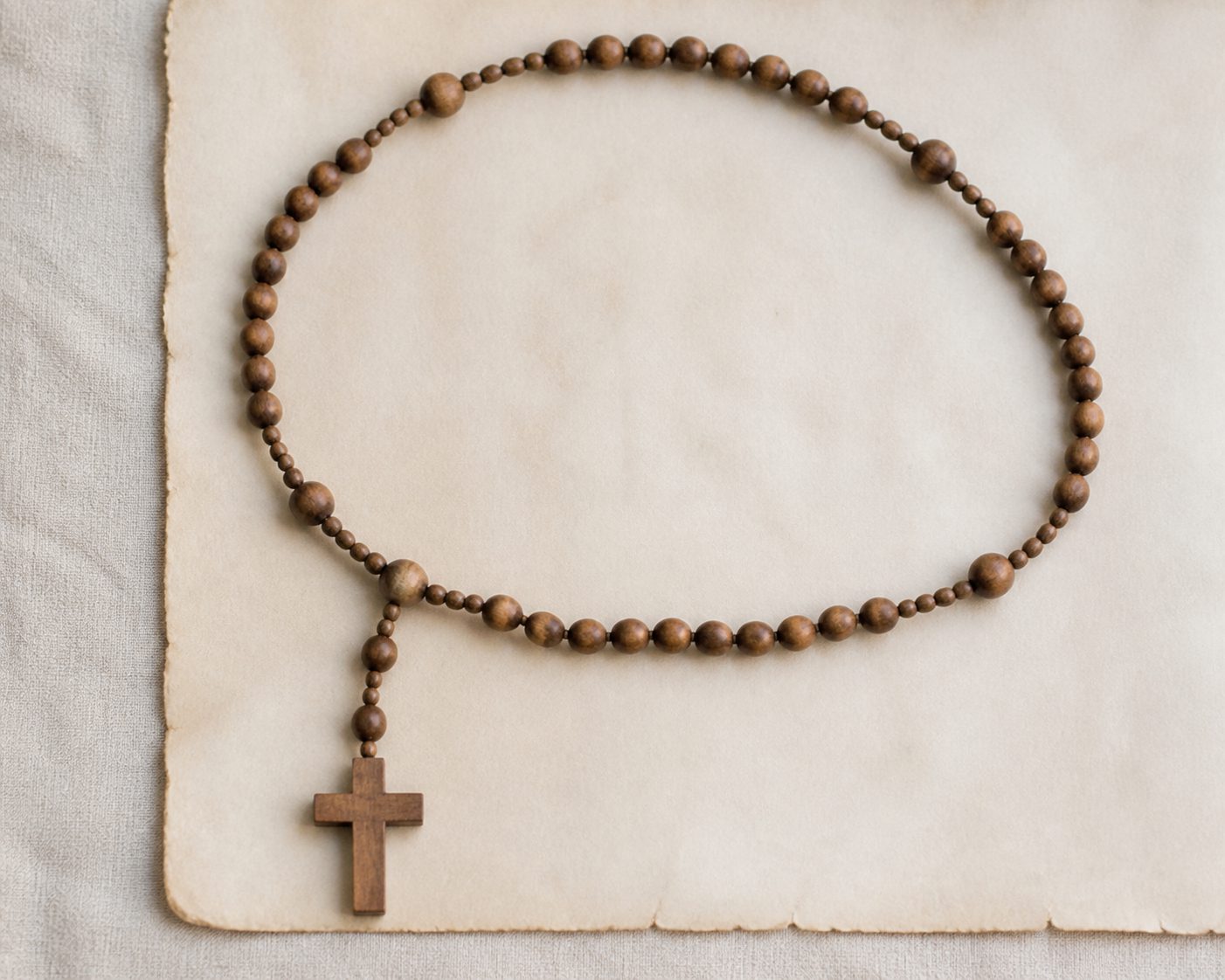
A Roman Catholic rosary is a structured strand associated with contemplation and a sequence of prayers. Its visible elements commonly include a crucifix, an introductory section, larger and smaller beads, and grouped decades. The sequence matters: the beads are not merely counters detached from the prayer context.
The Vatican’s Holy Rosary resource presents the Rosary as a Catholic devotional practice, and Vatican guidance describes it as contemplative prayer. The Met likewise describes a rosary as a string of beads used for counting a sequence of prayers. These sources support a careful structural description without asking a general product article to teach all of the prayers or mysteries.
| Visible element | What it helps identify | Respectful limit |
|---|---|---|
| Crucifix or cross | Part of the traditional rosary form | Not every Christian bead object has the same element |
| Grouped beads | A sequence within a rosary structure | Do not assign the sequence to a chaplet or prayer rope |
| Larger marker beads | Different positions in the sequence | Meaning depends on the Catholic devotional context |
| Looped strand | Allows tactile movement through prayer | Similar loops do not prove identical belief |
When a person wants to pray the Rosary, a Catholic parish, approved prayer book, or Vatican resource is the appropriate place for the actual sequence. A product page should not reduce the rosary to a fashion item or imply that handling the beads alone has a guaranteed spiritual effect.
Chaplets and their specific devotional structures
A chaplet is not simply another word for any rosary-like object. Christian chaplets can have particular bead counts, prayers, saints, themes, or devotional histories. Their structures may be shorter, longer, or arranged differently from a standard rosary. A clear description should identify the chaplet by name and state what is known about its construction.
Because chaplets are specific, a generic list of prayers is often misleading. One chaplet’s sequence should not be copied onto another, and a seller should not label every small beaded strand a chaplet just because it looks devotional. If the object is meant for a particular Catholic devotion, seek guidance from the relevant church or devotional source.
The responsible commercial information is simple: name the object accurately, describe its materials and construction, and avoid inventing claims about automatic protection, healing, or spiritual status.
Anglican prayer beads and modern development
Anglican prayer beads are used by some Anglicans as a tool for rhythm and attention in prayer. They are not the same as the Roman Catholic rosary, and their exact prayers or bead patterns can differ by community and individual practice. An Episcopal Church curriculum describes Anglican prayer beads as a tool to quiet distraction and create a rhythm for prayer; that is a useful contemporary church-source description, not a universal Anglican rule.
Anglicanism is a global communion with diverse liturgical and local practices. A general guide should therefore avoid presenting one online bead pattern as the definitive Anglican sequence. If you are interested in using Anglican prayer beads, consult a parish, priest, or tradition-specific resource that can explain the form used in your community.
The distinction is important: a strand may look similar to a rosary, but visual resemblance does not transfer Catholic prayer sequences or devotional authority into an Anglican setting.
Orthodox prayer ropes: form, counting and terminology
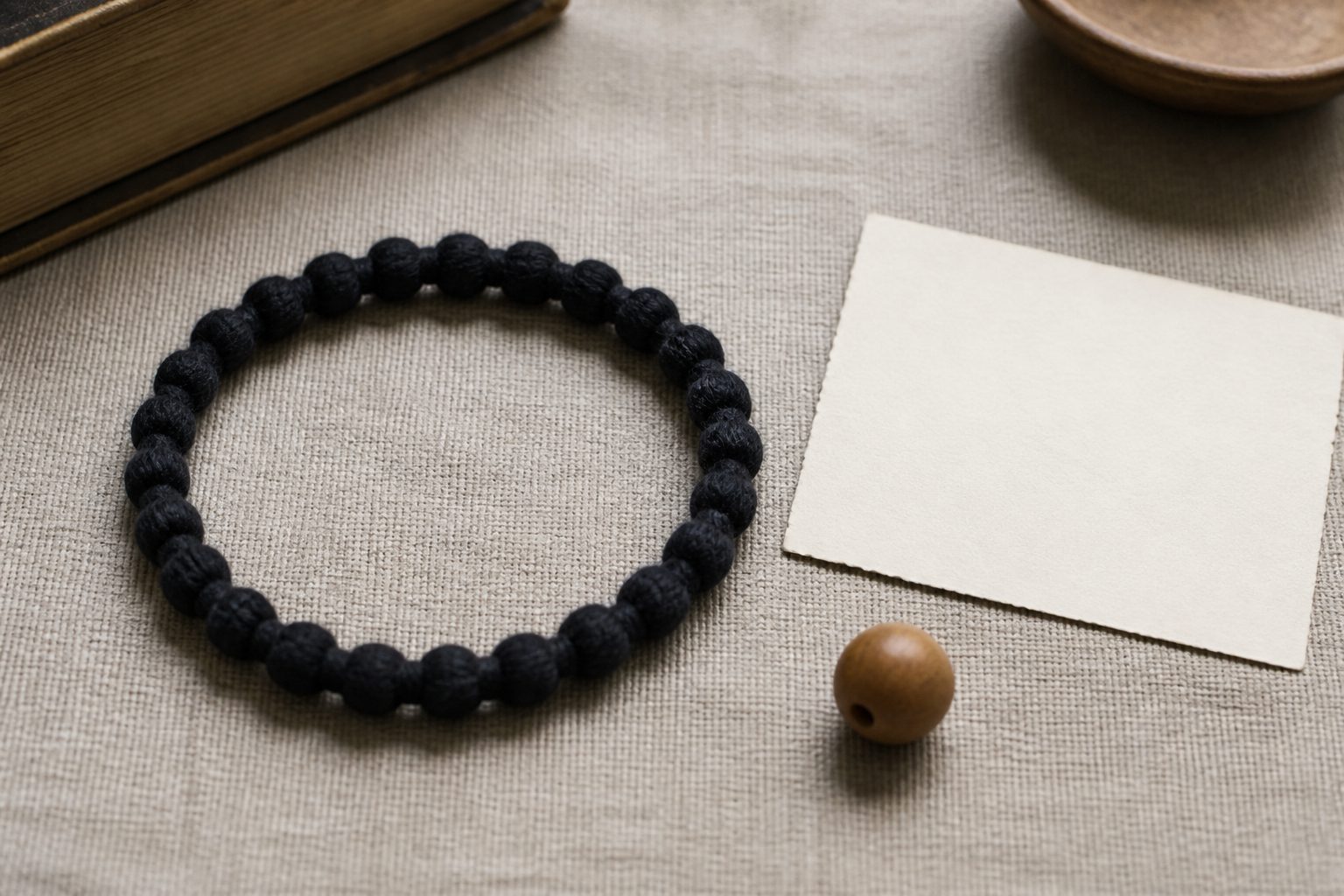
Orthodox prayer ropes are distinct Christian devotional objects, often associated with knots rather than ordinary beads, although bead-based forms also exist. The Orthodox Church in America explains that Orthodox practice of the Jesus Prayer on a prayer rope is different in origin, form, and content from the Roman Catholic Rosary. That source is a useful reminder not to collapse every repeated prayer object into the same category.
Counts and construction can vary, and monastic or parish guidance may be especially important. Do not assume a Catholic rosary sequence applies to a prayer rope, or that every Orthodox person uses the same count. If a prayer rope is received from a monastery, parish, or spiritual guide, follow their instructions about its use and handling.
As with other Christian devotional objects, the value of the rope is not established by a product claim or unusual material. Its meaning comes from the prayer setting and living tradition.
Why these objects should not be treated as interchangeable
All of these forms can support attention through touch and repetition, but they do not use the same prayers, theology, history, or authority. A rosary is not an Orthodox prayer rope. A chaplet is not automatically a rosary. Anglican prayer beads are not a generic replacement for any other Christian object. Calling them all simply prayer beads may be acceptable as a broad category only when the article immediately explains the differences.
Interchangeability is a problem in product descriptions as well as conversation. A seller should not attach a cross to a generic bead loop and claim it represents every Christian practice. Nor should a general Christian object be relabeled with terminology from Islamic or Buddhist traditions. Precise names make it easier for buyers to learn and less likely that a devotional item is trivialized.
Choosing an educational or devotional item respectfully
If choosing an item for learning, start with a clear question: Which tradition is this for? Is the object intended for devotional use, educational display, or a gift? Then check the name, material, count, cross or knot structure, and seller disclosure. Avoid novelty items that use sacred imagery only as decoration or promise benefits they cannot support.
If buying for another person, ask about their denomination, preferred form, and whether they already follow a specific devotional practice. A sincere conversation is more respectful than guessing from bead color or a trend. Material care is separate from religious instruction; for practical care of agarwood or wood-based strands, see How to Care for Agarwood Prayer Beads and Bracelets.
For a broader context on religious use of aromatic materials, see Agarwood in Religion and Rituals. Material context does not replace a church’s guidance about a particular devotional object.
Ask a local source for the actual practice
Churches, clergy, and trusted community resources can explain the prayers and sequence attached to a particular form. A general article should make that next step easier, not override it.
Describe materials without magical claims
Wood, metal, cord, and stone affect construction and care. They do not guarantee holiness, protection, healing, or a higher spiritual status for the person using the object.
How to use reference sources responsibly
A source should explain the tradition it actually represents. The Vatican Holy Rosary resource is appropriate for Catholic Rosary context. The Orthodox Church in America explanation is appropriate for distinguishing Orthodox prayer-rope practice from the Roman Catholic Rosary. The Episcopal Church curriculum offers a contemporary reference for Anglican prayer beads as an aid to prayerful attention.
These sources do not authorize a general article to decide what every Christian community must do. They provide bounded context that should be named rather than generalized beyond the evidence.
Recognize educational interest without pretending ownership
Someone may be curious about Christian prayer objects without belonging to the tradition that uses them. Learning can be respectful when it begins with correct names, trustworthy sources, and awareness that devotional objects are more than visual motifs. A museum image, a diagram, or an online shop cannot carry the whole context by itself.
If the purpose is a gift, ask the recipient. If the purpose is personal devotion, seek a church or spiritual guide in that tradition. If the purpose is academic learning, identify sources and avoid turning prayer instructions into a universal lifestyle routine.
Keep object care practical
Store a rosary, chaplet, bead strand, or prayer rope clean and dry, away from crushing, tangling, and harsh household chemicals. Repair a worn cord or knot with the owner or maker preference in mind. Practical care respects a meaningful object without claiming that material condition determines the value of a person’s prayer.
A short comparison checklist
Name the form, identify its tradition, describe its visible structure, cite a tradition-specific source, and avoid transferring the prayer sequence from another object. This keeps a comparison useful while giving each Christian tradition room to speak in its own voice.
Why product labels need restraint
Terms such as blessed, healing, protective, or sacred can be meaningful when used by an authorized tradition in a specific setting. A general seller should not use them as shortcuts for a product claim. Describe the item honestly, give the buyer relevant dimensions and materials, and let tradition-specific authorities speak about devotion.
This approach helps a buyer choose thoughtfully while avoiding the mistake of treating Christian prayer beads as interchangeable fashion accessories.
Respectful learning is practical: use the correct name, follow a source from the relevant tradition, and do not make claims about another communitys prayer life. Those habits make the object easier to understand without flattening its history. Context, care, and humility are better guides than visual similarity. When a detail still seems uncertain, pause and ask a church, teacher, or community source rather than filling the gap with a trend-driven answer.
