

Oud Oil & Perfumery
Attar vs Oud Oil
Attar and oud oil are related fragrance terms, not interchangeable names. Attar commonly describes an oil-based perfume composition, while oud oil may mean an agarwood distillate, a diluted oil or an oud-themed fragrance. Read the composition and use route before deciding which format you are comparing.
Composition first: an attar is not automatically pure oud, and an oud-labelled bottle is not automatically a traditional attar. Clear labels make a better comparison than a romantic name.
Attar and oud oil are not interchangeable terms
Attar, ittar and perfume oil are used in different regions and markets with different precision. In one context, attar may refer to a traditional oil-based perfume; in another, it may simply mean a roll-on fragrance. Oud oil can similarly describe a natural agarwood-derived material, a dilution in carrier oil or a finished perfume formula. The front label starts the conversation; it does not complete it.
Ask the seller to state the category plainly. Is the product a documented agarwood distillate? Is it a perfume oil where oud is one part of a blend? Is there a carrier? Is “attar” a traditional composition term or a modern format name? Answers to these questions prevent a category mistake before you compare scent or price.
How traditional and modern attars are composed
Some traditional attars are prepared as perfume compositions involving botanical distillates and a base oil; practices, terms and materials vary by community and producer. A modern attar may be an alcohol-free perfume oil with natural extracts, aroma materials or both. Neither form should be presented as a universal recipe.
What matters for a buyer is disclosure. A useful product page identifies whether the formula contains a carrier, which materials are named, the intended route of use and any batch information. A seller can protect a formula while still saying whether the bottle is a blend or a single raw material.
Pure agarwood oil versus oud-centered perfume oil
A documented agarwood oil is evaluated through its source, extraction and batch record. An oud-centered perfume oil is evaluated through its finished formula, wear and disclosure. One is not automatically better; they answer different interests. A collector may want a traceable distillate. A wearer may want an approachable blend that is clearly labelled for skin use.
For terminology before buying, read Oud Oil vs Essential Oil vs Fragrance Oil. It explains why “natural,” “essential” and “fragrance” should not be used as automatic quality or safety conclusions.
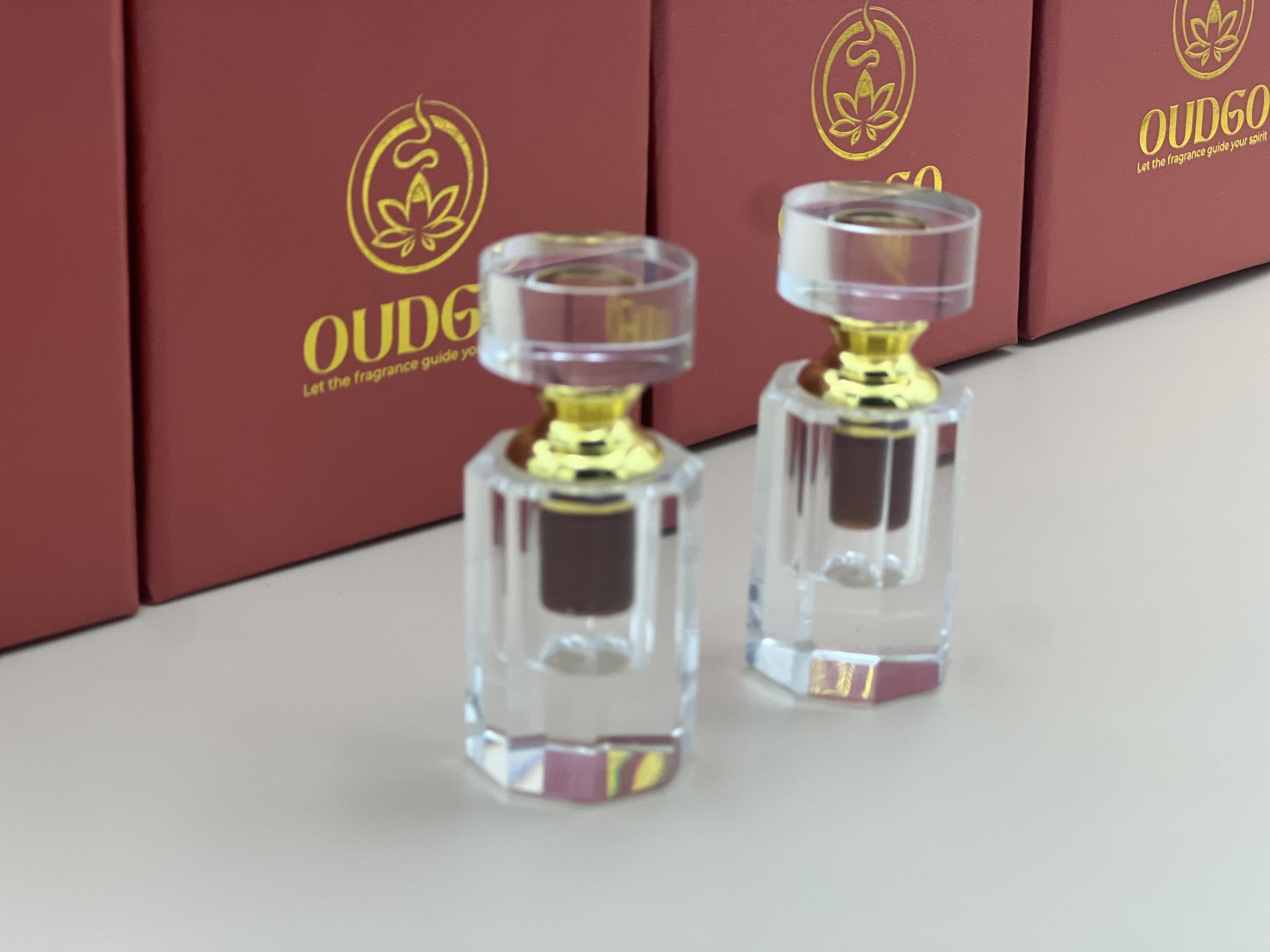
Concentration, projection and drydown compared
Concentration is only one part of wear. A dense oil may sit close to skin; a lighter formula may project more at first. Carrier, dose, climate, skin, fabric and the balance of the perfume all change the result. Do not use a loud opening as proof that a product contains more oud or that it is more authentic.
Evaluate one formula at a time on a clean scent strip or according to its label. Note the opening, the middle and the drydown. Oud can appear as a dark woody base, a smoky accent, a sweet resinous facet or a quiet support note. For a fuller explanation, see How Oud Works in Perfume.
Skin use, allergens and disclosure expectations
Use a product on skin only when it is labelled for that route and follow its instructions. A raw aromatic material, home fragrance oil or unknown blend should not be assumed ready for direct application. Natural extracts and synthetic aroma materials are both chemical mixtures; individual sensitivity and the finished formula matter.
Read the ingredient panel where available and contact the maker if the route, carrier or formula category is unclear. Stop using a product that causes an adverse reaction and seek appropriate professional advice for symptoms. “Alcohol-free” does not mean allergen-free, and “natural” does not mean suitable for every person or application.
Price and labeling questions
Compare price only after normalising volume and category. A small attar roll-on, a documented raw distillate and a finished perfume oil may all be marketed as oud but have different costs, composition and intended use. Ask what is in the bottle, whether a carrier is present, the volume, batch information and the seller’s evidence for material claims.
Luxury packaging, dark colour and long-lasting scent do not prove that a bottle is pure oud. Clear documentation and proportionate claims are more valuable than prestige language. Save the listing and receipt if provenance matters to you.

Which format fits your intended use
| Goal | Useful question |
|---|---|
| Collect a natural material | Can the producer connect the bottle to source, extraction and batch? |
| Wear an alcohol-free perfume | Is it a finished skin-labelled formula with clear ingredients and use directions? |
| Understand an oud note | Is oud a raw material, a blend component or a synthetic accord? |
| Layer a fragrance | Have you tested each finished product separately at a low dose? |
Choose the format that matches your purpose, then describe it honestly. If you want a skin perfume, a transparent attar-style formula may be appropriate. If you want a material study, seek a documented agarwood oil. If the description remains vague, pause rather than filling the gap with assumptions.
Use labels as evidence, not decoration. Clear category, batch and intended-use information make it possible to enjoy an attar or oud oil without turning a fragrance preference into an unsupported purity claim.
Match the format to the question
Use an attar-style perfume oil when your aim is a finished, alcohol-free fragrance and the maker clearly describes its skin-use instructions. Use a documented agarwood oil when you want to study a material claim, compare batches or collect a natural distillate. Use an oud accord when you want a particular perfume effect and the formula is honestly presented as a composition. This is a purpose choice, not a hierarchy of worth.
Before sharing a recommendation, say which category you tried and what is known about it. “A skin-labelled perfume oil with an oud accord wore softly for several hours” is more useful than “this is real oud” when the formula is not disclosed. The same careful wording helps readers compare products without repeating a seller claim as a fact.
Store each bottle upright, closed and away from light and heat. Keep its original label and any batch note with it. Good storage preserves not only the fragrance but also the evidence trail that lets you understand what you bought later.
A buyer-first comparison routine
Begin with three columns: material category, evidence and intended use. Under material category, record whether the item is seller-described as a natural agarwood distillate, a dilution, an attar-style blend or an oud accord. Under evidence, record the exact label statement, seller identity, batch reference, ingredient disclosure and any report that can be linked to the bottle. Under intended use, record skin, scent strip, home fragrance or raw perfumery material. This structure makes unclear claims visible without assuming bad faith.
Then add a wear note only after you have followed the product directions. A finished perfume can be assessed for opening, projection, drydown and personal preference. A raw material can be assessed for its observed aroma in a controlled context. Neither note proves origin or purity, but both can help you decide whether you enjoy the product. Keep the evidence note separate from the sensory note so that a familiar smell does not become a substitute for documentation.
When a seller uses “traditional,” ask what that means for this exact product. It may describe an inspiration, an oil-perfume format, a specific production method or a regional practice. A respectful comparison names the source of the claim and avoids treating one product description as the rule for everyone. The same restraint is useful when discussing mukhallat, sandalwood carriers or alcohol-free perfumes: composition and terminology should be attached to the bottle, not assumed from a word alone.
For gifts, a clearly labelled finished perfume oil is usually easier to choose than an undocumented material claim. The recipient can follow the stated route and decide whether the aroma suits them. For collecting or research, prioritise batch records and transparent producer communication. In either case, retain the receipt and current product listing. A good record makes later storage, authenticity and comparison questions less speculative.
Finally, allow “I do not know” to be a valid result. If the route, carrier or category cannot be confirmed, do not apply the oil to skin or recommend it as pure oud. Pause, ask the seller, or select a product with clearer disclosure. That decision protects the reader and supports honest fragrance trade.
Keep the comparison proportionate
Do not let a single adjective decide the product category. “Rare,” “traditional,” “dark,” “natural” and “long-lasting” may be useful descriptions only when they are connected to an identified material, formula or record. If that connection is missing, use a limited description and keep the uncertainty visible.
The same approach improves purchase decisions over time. Record the category, evidence and your own wear observations separately. This turns an attar-versus-oud question into a clear comparison instead of a contest between labels.
When documentation is limited, choose the clearest available category and avoid upgrading a scent impression into an origin or purity claim. That restraint is part of good fragrance comparison.
Good labels, proportionate evidence and careful use give readers a dependable basis for choosing either format.
Clear descriptions, careful comparison and labelled use let readers choose confidently without mistaking a fragrance name for proof. Keep records with each bottle for meaningful comparison later.
Make comparisons that stay meaningful
When two bottles seem similar, compare them on the same small area of skin and at the same time of day. Note the opening, the first quiet stage and the late drydown rather than deciding from the cap alone. A pure agarwood oil can vary with wood source, distillation choices and age; an attar can vary with the perfumer’s formula and the carrier. Those differences are useful information, not necessarily a fault.
For a considered purchase, keep the name, batch or lot reference where supplied, the seller’s material description and your own wear notes together. This simple record makes later comparisons clearer and helps separate a composition you enjoy from one that merely projected strongly at first. If the use is personal fragrance, comfort and transparent labelling matter more than a dramatic claim on the front label.
