
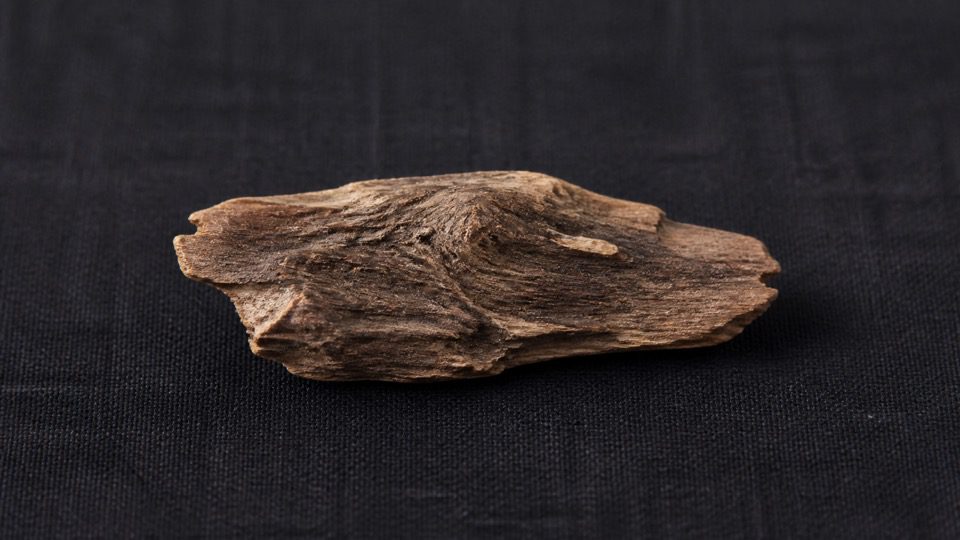
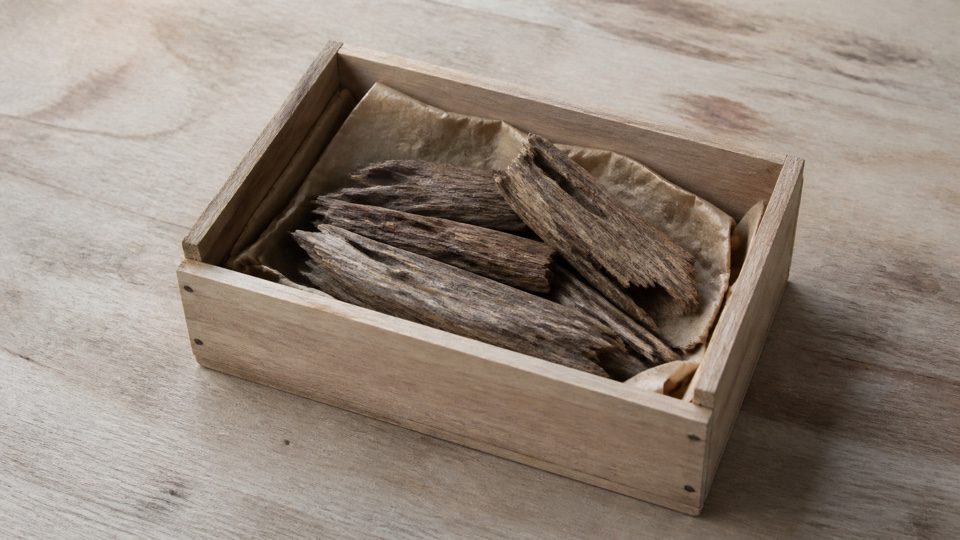
The agarwood market is not one commodity market with one reliable global price. Trade includes wood, chips, powder, beads, extracts, oils, perfumes and finished incense from listed Aquilaria and Gyrinops taxa. Values depend on product form, source, species claim, resin or formulation evidence, documentation, condition, transaction size and destination rules.
This hub replaces unsupported market-size forecasts, invented interviews and success stories with a practical evidence framework. For current price factors, see our agarwood cost and price guide. For selling and investment risks, use our due-diligence guide.
What is included in the agarwood industry?
| Stage | Typical activity | Evidence that matters | Common risk |
|---|---|---|---|
| Tree production | Nursery, plantation, inventory and induction | Taxon, land/source record, tree inventory, method and harvest record | Treating every planted tree as guaranteed agarwood yield |
| Primary material | Wood, chips, powder and resinous sections | Lot weight, product definition, source, condition and trade documents | Using color or aroma as complete proof |
| Processing | Distillation, grinding, incense manufacture, carving and bead making | Inputs, batch record, yield, ingredients, treatment and finished specifications | Calling an oil, perfume and extract interchangeable |
| Trade and retail | Export, import, wholesale, retail and collector transactions | Invoice, permit where required, quantity, option, seller and delivery record | Comparing unrelated asking prices as completed sales |
What do official trade records show?
The CITES Trade Database contains official records reported by Parties and can be queried by taxon, term, source, purpose, exporter, importer and year. It is the right starting point for regulated international trade, but it is not a simple retail-market valuation. Records can use different terms and reporting bases; CITES recommends reading its guidance before interpreting totals.
CITES Plants Committee work in 2024 continued to identify gaps in wild-population data, taxonomy, non-detriment findings and implementation for agarwood-producing taxa. That is evidence of an active, complex regulatory system—not evidence that every shipment is illegal or that every plantation claim is verified.
We do not publish an unsourced “multi-billion-dollar” market size or CAGR. Third-party forecasts often mix different product definitions, years and modeling assumptions. A number is useful only when its dataset, scope, currency, transaction level and methodology are visible.
What drives price?
- Product form: raw wood, chips, powder, oil, perfume and finished goods cannot be compared per kilogram without context.
- Claimed identity: species, origin, source and formation method may influence value only when supported.
- Material evidence: resin distribution, chemical profile, sensory result under a stated method and condition can affect a lot comparison.
- Documentation: legal-trade and chain-of-custody records can materially affect whether a transaction is possible.
- Quantity and channel: a retail sample, wholesale lot and collector piece carry different unit economics.
- Condition and processing: moisture, contamination, treatment, packaging, breakage and oil dilution can change usable value.
Price is not proof of authenticity. A high asking price can reflect scarcity language, positioning or seller expectations. Compare completed transaction evidence and the exact lot specification where available.
How should buyers navigate the market?
- Define the intended product form and use.
- Save the listing, selected option, quantity, price, seller identity and date.
- Ask which claims are observations and which are supported by documents or tests.
- Check trade requirements for the taxon, form, origin and destination before payment.
- Compare like-for-like lots and include shipping, duties, testing, loss and payment risk.
- Use a reversible sample purchase before a larger commitment when practical.
Our where-to-buy guide covers channel checks. Our legal and planting guide explains why plantation, import and species questions must be separated.
What should sellers document?
A responsible listing should distinguish product name from verified fact. State the current weight or size, format, intended use, condition and treatment disclosure. When claiming species, country, plantation source, certification, lab testing or traceability, identify the document, issuer, date, scope and connection to the exact batch.
A testimonial is not a laboratory result, and a laboratory result for one sample does not automatically cover future lots. Keep batch boundaries visible.
Are agarwood plantations or inventory units investments?
They can involve substantial biological, operational, legal and market risk. A planted tree does not guarantee resin formation, harvest timing, grade, buyer, export eligibility or return. Before any investment, verify land rights, tree inventory, operator identity, induction plan, costs, loss assumptions, legal route, insurance, exit terms and independent financial/legal advice.
Oudgo does not promise returns, buy-backs, fixed yields or future price appreciation. Retail content is not an investment offering.
What market trends are worth monitoring?
| Signal | Useful evidence | Misleading shortcut |
|---|---|---|
| Regulated trade | CITES records, quotas, reviews and national authority notices | One headline market-size estimate |
| Cultivation and induction | Field inventories, method disclosure, replicated studies and harvest data | One demonstration tree or promotional yield |
| Product quality | Defined grading method and batch-specific observations/tests | Country stereotype or universal sink rule |
| Consumer demand | Comparable sell-through, repeat order and completed transaction data | Search volume or asking prices alone |
Frequently asked questions
How large is the global agarwood market?
No single current figure is accepted here because reports use different product scopes and methods. Use CITES trade records for regulated specimens and disclose any commercial forecast’s methodology before quoting it.
Which country has the best agarwood?
No country label guarantees the best lot. Species, formation, processing, condition, documentation and the buyer’s use all matter.
Is cultivated agarwood legal to export?
Not automatically. Requirements depend on taxon, product form, source, origin, destination and current national/CITES rules.
Can a certificate prove every claim?
No. Read the issuer, method, sample, date and scope. A trade permit, laboratory report and commercial grade serve different purposes.
Sources and editorial method
- CITES Trade Database
- CITES PC27 Doc. 25: agarwood-producing taxa
- CITES/ITTO: Expensive, Exploited and Endangered
- ITTO technical reports
- UNODC World Wildlife Crime Report 2024, Chapter 2
Updated by the Oudgo Editorial Team on 15 August 2026. We removed invented experts, company success stories, unsourced market values and guaranteed growth language. Official trade data, batch evidence and current legal advice take precedence.
