

Short answer: agarwood is not universally banned, but its collection, possession, transport and international trade can be regulated. Agarwood-producing Aquilaria and Gyrinops taxa are covered by CITES Appendix II, while each country can impose additional domestic rules. A legal purchase therefore depends on the species, source, product form, origin, destination and documents—not simply on a seller calling the material “cultivated.”
Reviewed: August 12, 2026 by the Oudgo Editorial Team
Scope: Educational guidance for international buyers and growers, with extra detail for the Philippines and the United States. This is not legal advice. Confirm the current requirements with the relevant CITES, customs, wildlife and plant-health authorities before collecting, planting, importing or exporting.
Is Agarwood Illegal?
No—not as a universal rule. CITES Appendix II is a trade-control listing, not a statement that every agarwood product is illegal. The listing is intended to ensure that international trade is legal and does not threaten the survival of the listed taxa. Whether a particular shipment is lawful depends on the scientific name, CITES annotation, wild or cultivated source, product form, quantity, countries involved and supporting documents.
The safest way to check a transaction is to separate three questions:
- Was the material legally acquired? Ask for the supplier, country of origin, scientific name when known, and evidence supporting any wild or cultivated claim.
- Does the transaction cross a border? If it does, check the current CITES listing and annotation plus the export, re-export and import rules of both countries.
- Does another rule apply? Domestic wildlife, forestry, customs, plant-health, tax and marketplace rules may apply even when a CITES exemption or simplified procedure exists.
What CITES Appendix II means for agarwood
CITES identifies agarwood-producing taxa under Aquilaria spp. and Gyrinops spp. Its official agarwood materials explain that the genera were included in Appendix II in 2005. Appendix II trade is permitted only under the applicable CITES controls; it should not be confused with either a blanket ban or blanket approval.
Do not rely on a common name alone. The U.S. Fish and Wildlife Service advises timber traders to search the current listing by scientific name and review the annotation, because the covered parts, derivatives and products can differ. For a real shipment, use the current Species+ listing database and ask the relevant national CITES Management Authority what documents are required.
Is Agarwood Legal in the Philippines?
Agarwood propagation and trade in the Philippines are regulated, not simply “legal” or “illegal” in every situation. Republic Act No. 9147 regulates collection, possession, transport, import, export and trade in wildlife, by-products and derivatives. The law also provides for wildlife farm or culture permits for authorized commercial propagation.
In a December 2021 public advisory, the Philippine Department of Environment and Natural Resources said people interested in propagating agarwood may apply for a Wildlife Culture Permit through the relevant DENR Regional Office. It also said seedlings must be legally sourced, imported seeds may require CITES import authorization, and a Local Transport Permit is necessary for movement of legally acquired seeds, seedlings, agarwood and derivatives.
This means a farm, seed lot, wood parcel or finished item should not be assumed compliant because it is plantation-grown. Before collecting, buying, transporting or exporting in the Philippines, verify the current permit pathway with the DENR Biodiversity Management Bureau or the appropriate DENR Regional Office. Requirements may differ for native and exotic Aquilaria taxa and for domestic movement versus international trade. After confirming legality, use the Philippines agarwood price-per-kilo guide to normalize the product form, quote date, currency, accepted weight and fees without treating a customs enforcement value as a market price.
Philippines compliance questions
- What is the scientific name and source of the seedling or wood?
- Is there a Wildlife Culture/Farm Permit or other authorization applicable to the activity?
- Can the owner document legal acquisition of the parent stock, seed, seedling or derivative?
- Is a Local Transport Permit required for the planned movement?
- Are CITES import, export or re-export documents required for the border transaction?
Can Agarwood Grow in the United States?
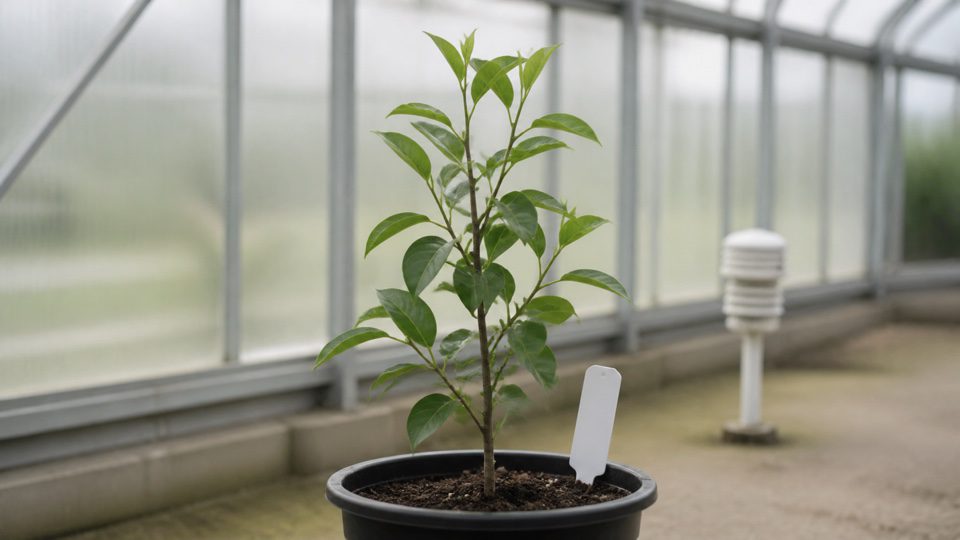
Some Aquilaria trees may be grown experimentally in suitable warm conditions, but “can grow” is not the same as “may be imported” or “will produce commercial agarwood.” Aquilaria malaccensis is native to tropical Asia, according to Kew’s Plants of the World Online. Outdoor survival therefore depends on the species, microclimate, soil, water, cold exposure and local conditions. Resin formation is a separate biological process and is not guaranteed by tree survival.
For U.S. growers, the first compliance question is usually the propagative material. USDA APHIS states that most plants and seeds for planting imported from another country require a PPQ 587 permit, and some material has special restrictions or is not authorized pending pest-risk analysis. Requirements vary by commodity and country of origin, so check the live APHIS ACIR database before ordering.
For wood or finished plant products, CITES, wildlife, customs and Lacey Act requirements may also be relevant. The U.S. Fish and Wildlife Service explains that exports and re-exports of CITES-listed timber require the applicable application and legal-acquisition documentation. APHIS separately explains that some imported plant products require a Lacey Act declaration. Follow the agarwood import and trade-document workflow for product-form, ACIR, port and record-matching checks.
Before purchasing seeds or seedlings, use the dedicated guide to verify agarwood seeds and seedlings. For resin biology, continue to how agarwood forms and how induction works.
Can Agarwood Grow in Africa?
“Africa” is too broad for a yes-or-no agronomy answer. Aquilaria malaccensis is native to tropical Asia, not Africa. A trial outside its native range must be evaluated at country and site level for climate, soil, water, plant-health import rules, invasive-species controls and cultivation permits. Evidence that a tree survives at one site does not prove commercial resin yield or legal market access.
A responsible trial begins with legal plant material, a locally appropriate species assessment, a small monitored planting and records for survival, growth, pest pressure and weather. Do not scale a plantation from a seller’s yield projection. The dedicated sustainable agarwood cultivation guide explains the wider management context; local agriculture and environmental authorities remain the source of current country-specific rules.
How Much Agarwood Can One Tree Produce?
There is no defensible universal yield per tree. A healthy Aquilaria tree does not automatically contain commercial resin. Outcomes vary with species and genetics, age and size, site conditions, induction method, treatment duration, tree response, harvest definition, processing method and grading standard.
Research can report a yield for one clone and one induction protocol, but that number should not be converted into a guaranteed farm forecast. A more useful record separates total harvested wood, visibly resinous wood, material retained after cleaning, oil or extract output, grade distribution and rejected material. See the agarwood price-per-kilo guide for a comparable quotation framework and the agarwood selling and investment-risk guide before modelling revenue.
Does Sandalwood Come From Agarwood?
No. Agarwood is resin-associated wood produced by trees mainly in the Aquilaria and Gyrinops genera. Sandalwood is fragrant wood from Santalum species. They are separate botanical groups, have different scent profiles and supply chains, and should not share a scientific name or trade document.
Who Buys Agarwood—and What Should a Seller Verify?
Potential buyers include processors and distillers, incense and fragrance manufacturers, specialist traders, workshops and collectors. A buyer category does not prove that a particular offer is legitimate. Verify identity, destination-country eligibility, specifications, sampling terms, payment method and document responsibilities before shipping. The full due-diligence workflow is in How to Sell Agarwood: Legal Steps, Valuation & Investment Risks.
What Documents Should an Agarwood Exporter Keep?
Keep a transaction file that connects the material to its legal source and to every border document used for the shipment. A useful file normally records the supplier and buyer, scientific name when known, country of harvest or cultivation, wild/cultivated source claim, product form, lot, weight or volume, invoice, transport records and the applicable CITES, wildlife, forestry, customs or plant-health documents.
For U.S. export or re-export of CITES-listed timber, the U.S. Fish and Wildlife Service asks applicants for legal-acquisition evidence. Re-export applications may also require copies of the cancelled foreign CITES documents used when the material entered the United States. Importers should separately check whether USDA APHIS requirements and a Lacey Act declaration apply to the commodity.
A permit is not a product-quality certificate. It does not by itself verify aroma, resin content, oil purity, grade or retail value. Keep regulatory compliance separate from the commercial evaluation methods in the agarwood quality and grading guide.
How Can Mislabeling or Fraud Affect an Agarwood Shipment?
Incorrect species, origin, source, quantity or product-form declarations can make documentation inconsistent and expose a shipment to delay, seizure or enforcement review. A luxury grade name such as “sinking,” “kinam” or “super” is not a substitute for the scientific and transaction information authorities request.
Before payment or dispatch, compare the invoice, packing list, permit and physical lot. Names, weights, units, source codes, countries and consignee details should not conflict. Consumer authenticity is a separate question: use the real vs. fake agarwood evidence guide to assess material claims without treating color, sinking behavior or scent as a universal legal test.
Legal Buying Checklist
| Check | Evidence to request | Red flag |
|---|---|---|
| Identity | Supplier name, address, invoice and contact details | Anonymous payment-only seller |
| Material | Scientific name when known, product form, weight and lot | Only a luxury grade name |
| Origin | Country, supplier trail and support for wild/cultivated claim | “Plantation” with no traceable source |
| Trade documents | Applicable CITES, wildlife, customs and plant-health documents | Claim that finished goods never need review |
| Destination | Written confirmation of import eligibility and consignee details | Shipping first and “fixing papers later” |
Frequently Asked Questions
Is owning agarwood illegal?
Not universally. Legality depends on the species, source, product form, jurisdiction and how the material was collected, transported or traded. Keep purchase and provenance records and check current rules before crossing a border.
Is plantation-grown agarwood automatically legal to export?
No. Cultivated origin may affect the applicable procedure, but it does not replace the need to identify the taxon, check the CITES annotation and comply with export, import, customs and domestic wildlife rules.
Is agarwood legal in the Philippines?
Authorized propagation and trade are possible, but they are regulated. Philippine law and DENR guidance cover legal sourcing, culture permits, local transport and import/export authorization.
Can I import agarwood seeds into the United States?
Do not order before checking. USDA APHIS says most plants and seeds for planting imported from another country require a PPQ 587 permit, with requirements varying by commodity and origin. CITES or other protected-plant controls may also apply.
Can agarwood trees grow in the United States or Africa?
Trials may be possible at suitable sites, but survival, legal import and commercial resin production are separate questions. Check climate and local rules, use legal propagative material and treat yield claims as unverified until measured.
Does sweat ruin an agarwood pendant or bracelet?
Brief contact does not prove that the wood is ruined, but repeated moisture, soaking and product residue can affect wood, finish or cord. Follow the dedicated agarwood bracelet and pendant care guide.
Primary Sources
- CITES: medicinal and aromatic plants, including agarwood-producing taxa
- CITES Technical Series No. 51: agarwood-producing genera
- U.S. Fish and Wildlife Service: wood, timber and other tree products
- USDA APHIS: importing plants and plant products
- USDA APHIS: buying plants and seeds online
- USDA APHIS: Lacey Act declaration requirements
- Philippines Republic Act No. 9147
- Philippine DENR news alert, December 2, 2021
- Kew Plants of the World Online: Aquilaria malaccensis
- Frontiers in Plant Science: Agarwood Induction—Current Developments and Future Perspectives
Editorial standard: Oudgo uses an organizational editorial byline. Statements in this guide are tied to named public authorities or research sources; they are not presented as personal legal or farming experience. Regulations change, so readers should verify the current position before acting.
