
Oud Oil & Perfumery
How to Store Oud Oil
Store oud oil upright, tightly closed, away from sunlight, heat and moisture. A stable cupboard and clean handling do more for a bottle than dramatic refrigeration or improvised additives. Keep the batch details with the bottle so that any future change can be compared responsibly.
Storage principle: protect the formulation from four avoidable stresses—light, heat, air exposure and contamination—then follow any product-specific instructions from its maker.
The four storage enemies: light, heat, air and contamination
Light and heat can alter aromatic materials over time. Air enters every time a cap is left open; the more empty headspace in a partly used bottle, the more oxygen sits above the liquid. Contamination can come from fingers, a used dropper, a rollerball or moisture. None of these factors proves that a bottle is ruined, but each is a reason to keep storage calm and consistent.
Do not treat a colour shift or a little sediment as automatic spoilage. Natural materials can vary, and a finished perfume can develop with age. Instead, compare an unexpected change in scent, clarity, texture, leakage and performance against the product’s batch information and its known storage history.
Choose the right bottle, cap and applicator
Keep the product in its original compatible bottle unless the maker specifically advises otherwise. Dark glass may reduce light exposure, but the cap seal and handling matter as much as bottle colour. Close the cap promptly after use; do not leave a stopper, rollerball or dropper on a dusty surface. Store the bottle upright so liquid does not sit against a closure for long periods.
When sampling, use a clean disposable strip or a clean dedicated tool. Do not touch a dropper to skin and return it to the bottle. Do not top up a bottle with water, alcohol or another oil to make it seem fuller; that creates an undocumented mixture and can change the formula.
Where to store oud oil at home
A stable drawer, cupboard or closed storage box away from a window is usually a sensible home location. Avoid a sunny shelf, bathroom, car, kitchen ledge, radiator and any place that swings between hot and cold. Keep the label readable and save the outer box or a note of purchase date, batch and maker instructions.
Refrigeration is not a universal solution. Sudden cold-to-warm cycles and condensation can introduce problems, and a formula may have its own storage requirements. Use it only when the manufacturer clearly recommends it. For broader fragrant-wood preservation context, see our Agarwood Storage Guide.
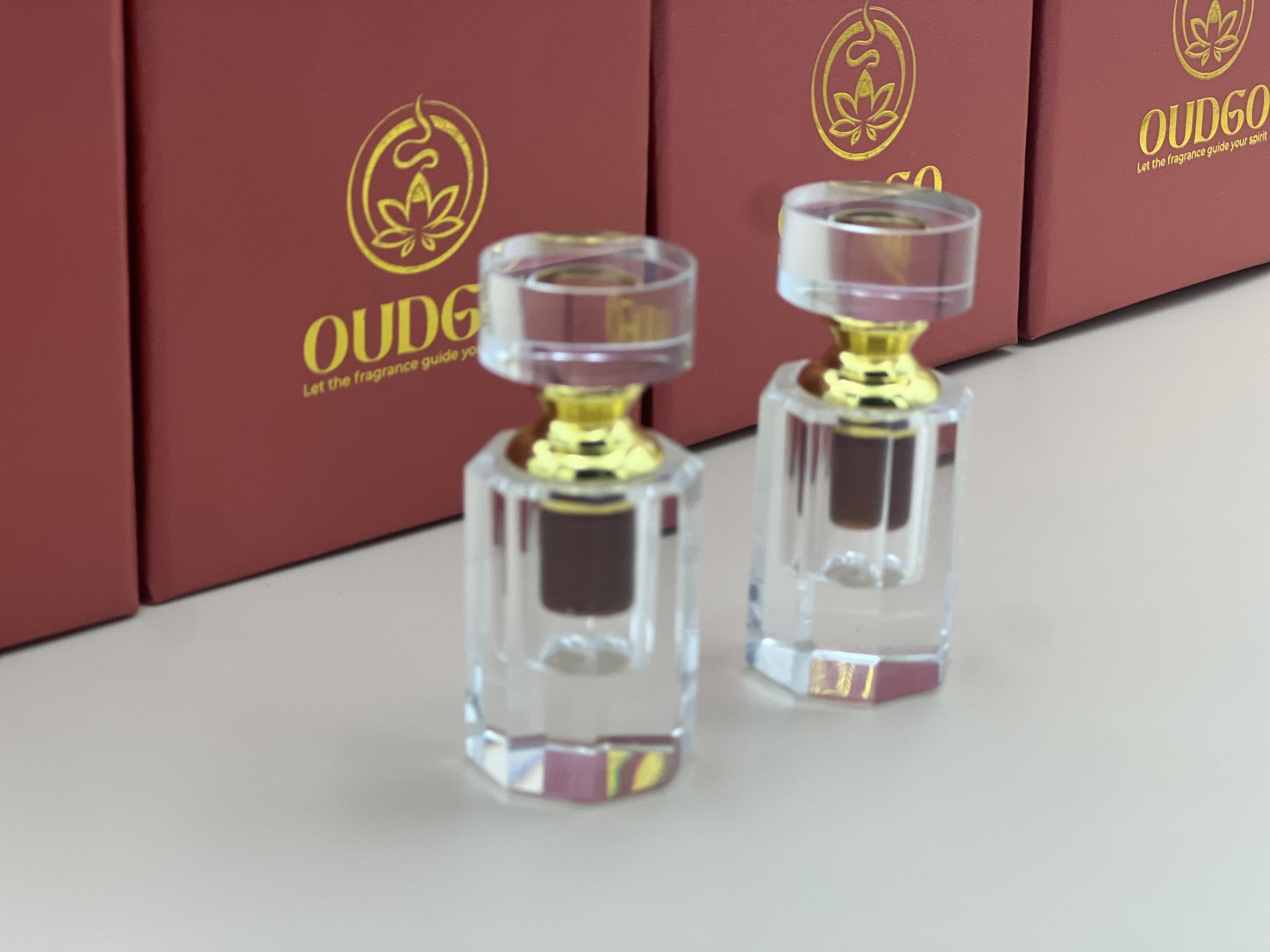
Upright, dark and stable storage protects both the closure and the product record.
Travel and shipping precautions
For travel, make sure the cap is fully closed, place the bottle upright in a small leak-resistant pouch, and cushion it so it cannot knock against hard objects. Avoid leaving fragrance oil in a hot vehicle or direct sun. If airline or shipping rules apply, follow them; do not rely on an improvised seal for transport.
After a long journey, let the bottle sit upright at room temperature before evaluating the aroma. A temporary shift after heat or cold exposure is not enough to make a quality claim. Record what happened, inspect the seal, and compare later in normal conditions.
Avoid cross-contamination during sampling
Sampling is where a well-stored bottle can be compromised. Use clean hands, a clean scent strip and a dedicated tool. Do not share applicators between oils, and do not pour used test liquid back into a bottle. If you need a small decant, label it with product, batch, date and route of use; then keep the main bottle closed.
Cross-contamination matters especially when several oils are compared in one session. A trace of a bright citrus, carrier, perfume base or skin residue can confuse a later assessment of an oud oil’s actual smell. Clean separation is part of honest comparison.

A clean, labelled sample keeps the main bottle protected and makes later comparisons clearer.
Recognize oxidation, leakage and evaporation
Pause and inspect if a bottle leaks, the closure no longer seals, the amount drops without normal use, a new sharp or sour note appears, or the liquid changes unexpectedly from your reference. Keep the label and batch details. Contact the maker before applying a substantially changed skin product or attempting a home repair.
Do not “restore” an oil with heat, flame, sunlight or extra ingredients. Those actions can accelerate change and remove the evidence needed to assess the original condition. If the question is purity rather than storage, continue to How to Identify Pure Oud Oil for the limits of sensory and label evidence.
A bottle-by-bottle storage checklist
| Check | Good practice |
|---|---|
| Location | Cool, dark, stable cupboard or box—not a window, bathroom or car. |
| Closure | Cap on promptly; bottle upright; no residue around the neck. |
| Sampling | Clean strip and dedicated tool; never return used liquid. |
| Record | Keep product name, batch, opening date and storage note. |
| Change | Pause on leakage, unexpected odour or unusual appearance; ask the maker. |
Review the checklist when you open the bottle and again before long-term storage. This small routine supports the useful life of the product and makes later comparisons far more reliable.
Keep a simple bottle record
Write the opening date on a removable label or in a notebook. Note whether the bottle is full, half full or nearly empty, because a partially used bottle has more air above the liquid. That fact alone does not predict failure, but it is useful context when comparing the scent later. Keep the record with the original product name and batch rather than relying on memory.
Once a month, inspect the cap and bottle neck for residue, looseness or slow leakage. Wipe only the outside with a clean dry cloth. If the closure is damaged, place the bottle upright in a protective pouch and ask the maker about a compatible replacement instead of transferring it into an unknown container. A clean record also makes it easier to separate shipping stress, a storage problem and ordinary formula variation.
When buying more than one oil, give every bottle its own upright place. Separate strong oils from paper records, fabrics and other bottles that might be stained by a leak. This small system takes little time and avoids the most common avoidable causes of confusion in a later comparison.
Before a long absence, check that each cap is closed, each bottle stands upright, and each label remains readable. This quick final check prevents the most avoidable storage surprises and preserves the information needed to evaluate the oil later.
For shared household storage, place a short note on the box explaining that the contents are fragrance materials, not food or medicine. Keeping the bottle, cap and label together avoids accidental misuse and preserves the product history when you revisit it months later.
Check the storage note before each use.
