
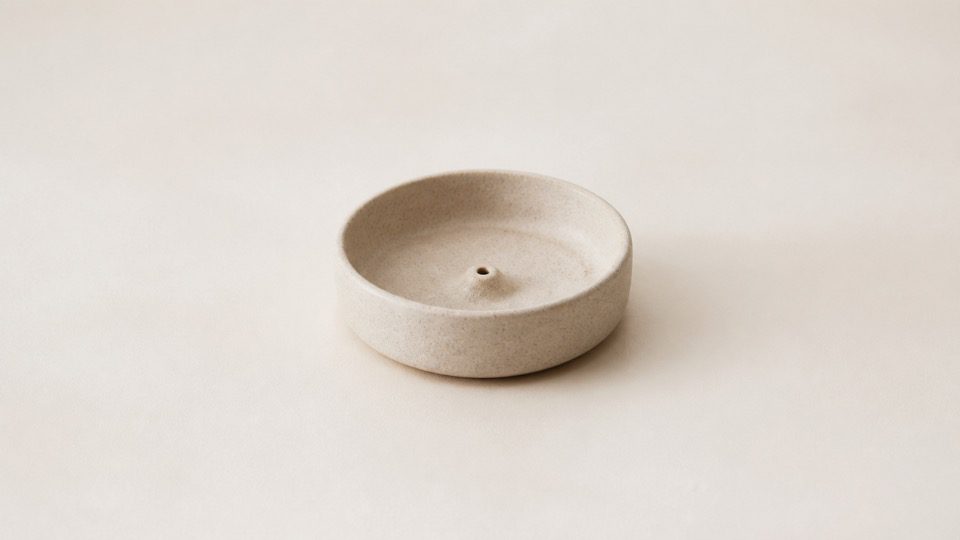
Agarwood incense is incense made with agarwood (oud) material—usually powder blended with a binder, and sometimes a bamboo core or added fragrance. The best format depends on how long you want it to burn, how much smoke you can tolerate and whether you want a convenient fragrance product or the more variable aroma of heated raw wood.
This guide explains sticks, coreless sticks, cones, coils, powder and raw chips; how to burn each format; what agarwood incense smells like; and how to use it with sensible fire and indoor-air precautions. If you are ready to compare available products, browse the Agarwood Incense collection.
What is agarwood incense?
Agarwood incense is a combustible aromatic product containing material from resin-bearing Aquilaria or Gyrinops wood, commonly called agarwood, aloeswood or oud. Incense may also contain a plant-based binder, supporting wood, charcoal, herbs or fragrance materials, so “agarwood incense” is a product category rather than a guarantee of one fixed recipe.
Agarwood forms when certain trees produce resinous wood in response to injury and biological processes. For the full tree-to-resin explanation, see how agarwood forms. CITES identifies Aquilaria and Gyrinops as agarwood-producing taxa and regulates international trade in listed specimens; its medicinal and aromatic plants program is a useful primary reference.
Raw agarwood chips are not the same thing as manufactured incense. A chip is a piece of resinous wood heated on an electric burner or charcoal. A stick or cone is a formulated product designed to smolder after ignition.
Which type of agarwood incense should you choose?
Choose by format, composition and room conditions—not by grand claims such as “temple grade” or “100% pure” without supporting details. The table below separates the principal formats and the equipment each one needs.
| Format | How it works | Best for | Equipment | Smoke/heat note |
|---|---|---|---|---|
| Bamboo-core stick | A combustible paste surrounds a thin bamboo support | Simple daily use and easy handling | Stick holder with ash-catching tray | The core also burns; composition and smoke vary by product |
| Coreless stick | Pressed incense material burns without a bamboo center | Comparing the incense blend with less supporting wood | Hole or clip sized for a coreless stick | Fragile; keep upright and away from drafts |
| Cone or tower | Compressed material smolders from the tip downward | Shorter, more concentrated sessions | Heat-resistant plate or cone burner | Heat concentrates at the base; allow the holder to cool |
| Coil | A long spiral smolders gradually | Extended sessions in suitable spaces | Coil stand or fireproof ash bed | Longer burn time can mean longer smoke exposure |
| Loose powder | Powder smolders on an ash trail or is warmed | Traditional preparation and dose control | Ash bed, appropriate tools and a fireproof burner | More setup; do not place directly on furniture |
| Raw agarwood chips | Wood is warmed electrically or heated over charcoal | Exploring origin, resin level and changing aroma | Temperature-controlled burner or charcoal setup | Charcoal adds combustion products; electric heat offers more control |

For shopping intent, compare the current agarwood incense sticks, coreless agarwood sticks, Vietnamese-origin cone incense and tower-shaped cones. “Vietnamese-origin” describes product origin; Oudgo does not target or sell to the Vietnam market.
What does agarwood incense smell like?
Agarwood incense usually smells woody and resinous, with possible sweet, balsamic, earthy, smoky, leathery or spice-like facets. There is no single universal oud smell: tree species, origin, resin concentration, incense formula, supporting wood, added aroma materials and burn temperature all affect what reaches your nose.
A coreless stick and a bamboo-core stick made from different formulas cannot be compared as if only the shape changed. Likewise, a cone may release aroma and smoke more intensely because more material smolders in a compact area. For a deeper vocabulary and a controlled smelling method, use the agarwood scent profile guide.
How can you judge ingredient and quality claims?
Look for specific, verifiable product information: ingredient disclosure, core type, piece count or net weight, dimensions, approximate burn time, origin wording and whether fragrance has been added. A dark color, strong cold scent or high price alone does not prove high agarwood content.
- Read the ingredient statement. “Made with agarwood” does not necessarily mean the product contains only agarwood.
- Separate origin from composition. “Vietnamese,” “Japanese style” or “Indian style” may describe origin or format, not resin percentage.
- Ask what the percentage measures. If a seller gives an agarwood percentage, confirm whether it refers to the dry aromatic mixture, the entire stick including the core, or a fragrance blend.
- Prefer batch-specific evidence. Packaging photos, dimensions, weight and lot information are more useful than unsupported superlatives.
- Treat therapeutic claims cautiously. Incense is a fragrance product, not a treatment for anxiety, insomnia, infection or other medical conditions.
Visual inspection can reveal poor construction, but it cannot verify botanical species or exact formula. Use the real vs fake agarwood evidence checks for wood-level identification limits and the agarwood grading guide for grading vocabulary.
How do you burn agarwood incense correctly?
Place the incense in the correct stable, heat-resistant holder; light only the intended tip; let a small flame establish; then extinguish the flame so the material smolders. Keep the setup on a clear, non-combustible surface and supervise it until fully extinguished.
How to burn a bamboo-core or coreless stick
- Use an incense holder that securely fits the stick and catches its full ash path.
- Place the holder on a level, heat-safe surface away from curtains, paper, shelves and moving air.
- Light the tip for several seconds, then gently blow out the flame. The tip should glow rather than hold an open flame.
- Allow some fresh-air exchange without directing a strong draft at the ember.
- To stop early, press the glowing end into sand or a fireproof ash bed until no ember remains. Confirm it is cold before disposal.
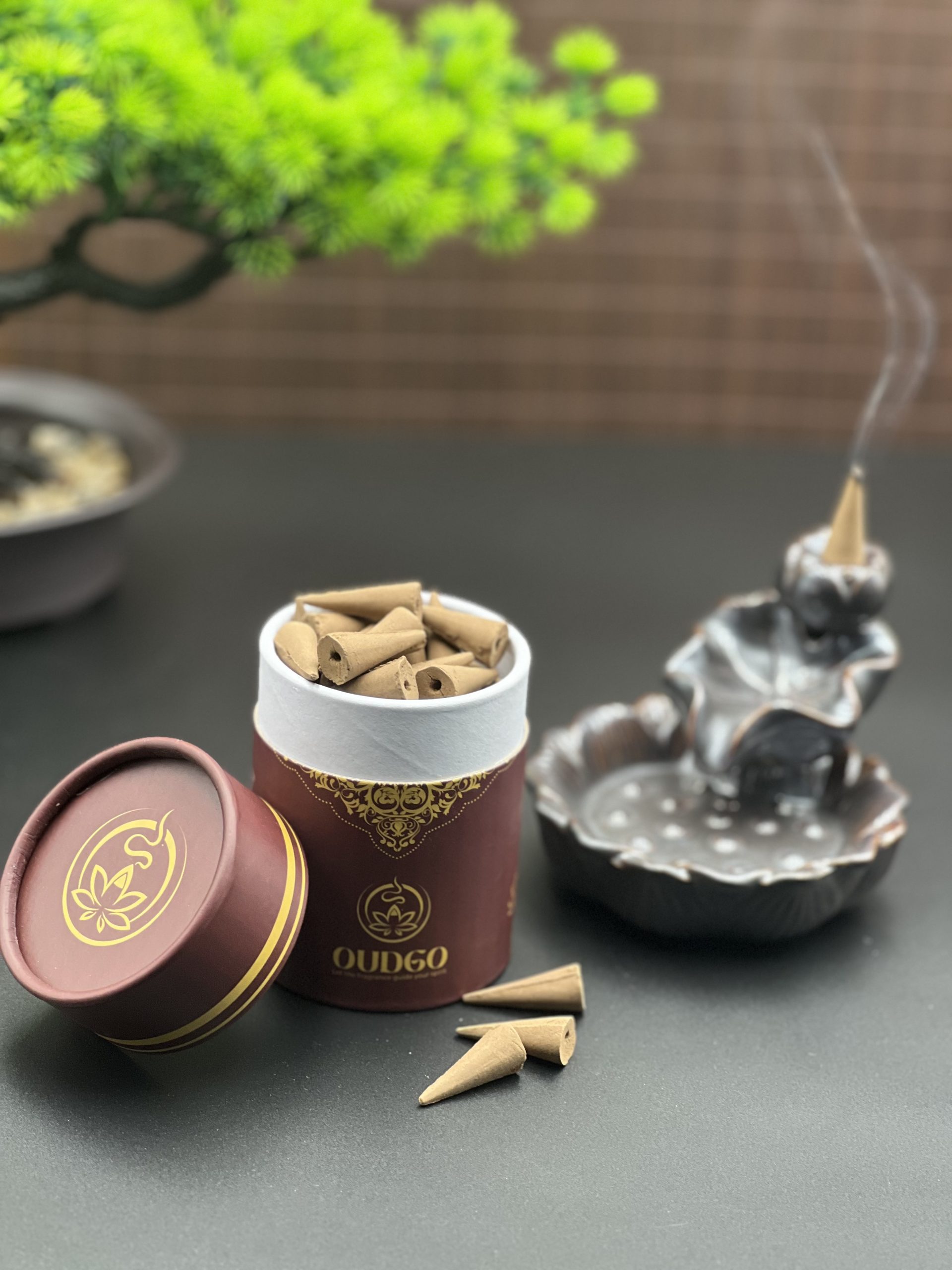
How to burn an agarwood cone
- Place the cone upright on a heat-resistant plate or in a compatible cone burner.
- Light the narrow tip, wait for it to catch, then extinguish the flame.
- Do not move the burner while hot. The base can retain heat even after visible smoke stops.
- Let ash cool completely before emptying the holder.
How to heat raw agarwood chips
For repeatable temperature control, an electric incense burner is easier to adjust than charcoal. Start at a low setting and increase gradually so you can observe how the aroma changes without immediately scorching the wood. If you use charcoal, use a purpose-built charcoal burner, tongs and an insulating ash bed; never handle live charcoal with bare hands.
What are the practical uses of agarwood incense?
Agarwood incense is used for fragrance, ritual, meditation cues and sensory appreciation. These are experiential or cultural uses—not proof that smoke treats a health condition or “purifies” indoor air.
- Fragrance: scenting a suitable room for a limited period.
- Ritual and tradition: supporting established religious or cultural practices.
- Meditation cue: associating a repeated aroma ritual with the beginning of a practice; the benefit may come from the routine and personal association.
- Material study: comparing stick, cone and raw-chip aroma while recording product, dose, room and heating conditions.
Oudgo does not present incense as a medical treatment. The earlier version of this page included claims about air purification, antimicrobial action, anxiety relief and sleep; those claims have been removed because burning performance and clinical outcomes were not supported by batch-specific testing.
Is agarwood incense smoke safe?
No burning incense is smoke-free, and “natural” does not mean emission-free. People with asthma, chronic respiratory disease, smoke sensitivity, young children or pets may need to avoid exposure or seek individualized professional advice.
In a primary study of 23 incense types, researchers measured PM2.5 emission rates of 7–202 mg/hour and found substantial variation among samples. The study did not test Oudgo products, so its figures should not be treated as a product specification; it establishes why ventilation, dose and exposure time matter. Read the incense-emissions study indexed by PubMed.
A 2024 residential study also found that benzene levels after burning commercial incense varied with product brand, number of sticks, burn duration and ventilation, and that a wood core was an important contributor in the products tested. Again, it did not test Oudgo products. See the residential VOC study.
- Burn the smallest amount that meets your purpose and limit session length.
- Provide fresh-air exchange; do not burn in a sealed room.
- Keep faces out of the direct smoke plume.
- Stop if smoke causes coughing, eye irritation, headache or breathing discomfort.
- Do not burn around supplemental oxygen or in locations where open flames are prohibited.
- Use a stable holder and never leave smoldering material unattended.
The U.S. Fire Administration’s household open-flame guidance recommends stable holders, at least 12 inches (30.5 cm) of clearance from anything that can burn, and extinguishing the flame before leaving the room or going to sleep. Apply the same conservative clearance and supervision to incense.
How should you store agarwood incense?
Store incense sealed, dry, shaded and away from strong competing odors. Heat and humidity can soften sticks or cones, while open storage can transfer fragrance between products and make comparisons unreliable.
- Keep each formula in its original box or a separately labeled container.
- Avoid bathrooms, kitchens, direct sun and hot vehicles.
- Handle coreless sticks near the base because they can be brittle.
- Record the purchase date and batch or lot code when available.
- Do not use incense that is damp, visibly moldy or contaminated.
How can you compare incense without making a fake “experience” claim?
Use a repeatable comparison log and report only what was actually observed. Record the product, batch, format, mass or stick count, room size, ventilation, holder, burn time, smoke level and aroma notes at fixed intervals. Compare one variable at a time.
Oudgo has not published a controlled cross-format burn test for every product on this page. Until that evidence exists, the comparisons above describe format mechanics and selection criteria rather than claiming a winner for purity, emissions or therapeutic effect.
Frequently asked questions
Is agarwood incense the same as oud incense?
Usually, yes. “Oud,” “agarwood” and “aloeswood” commonly refer to the same resin-bearing wood category, but the composition of finished incense varies. Check whether the product contains agarwood powder, a bamboo core, binders or added fragrance.
Are raw agarwood chips a type of incense?
They serve a similar aromatic purpose but are not a formulated stick, cone or coil. Raw chips are pieces of wood that need controlled heat from an electric burner or charcoal setup.
Which produces less supporting-wood aroma: coreless or bamboo-core sticks?
A coreless stick removes the bamboo center, so no bamboo core burns. That does not prove the overall product emits less smoke or contains more agarwood; the complete formula and burn conditions still matter.
Can agarwood incense purify the air?
Do not rely on burning incense as an air purifier. Combustion releases particles and gases, so ventilate the space and use mechanical air-cleaning or source-control methods designed for indoor air quality.
Can I burn agarwood incense every day?
Frequency is an exposure decision, not a quality signal. If you choose to burn it, use a small amount in a ventilated space, supervise the ember and stop if anyone experiences irritation. People with respiratory conditions should seek individualized medical guidance.
What holder should I use?
Match the holder to the format: a fitted hole or clip plus ash catcher for sticks, a heat-resistant plate for cones, a dedicated stand for coils, and a purpose-built burner for powder or chips. Compare the incense holder and incense burner guides if you are unsure.
Editorial method and sources
This guide was reviewed by the Oudgo Editorial Team, not attributed to a fictional individual. Product links and format descriptions were checked against Oudgo’s live catalog on August 12, 2026. Scientific statements are limited to the cited studies; those studies did not test Oudgo products. Cultural use is described as tradition, not clinical proof.
- CITES — Medicinal and aromatic plants; agarwood-producing taxa
- Jetter et al. — Characterization of emissions from burning incense
- Kim et al. — VOC changes after incense and scented-candle use in studio apartments
- U.S. Fire Administration — Candle and household open-flame safety
Last editorial review: August 12, 2026.
