
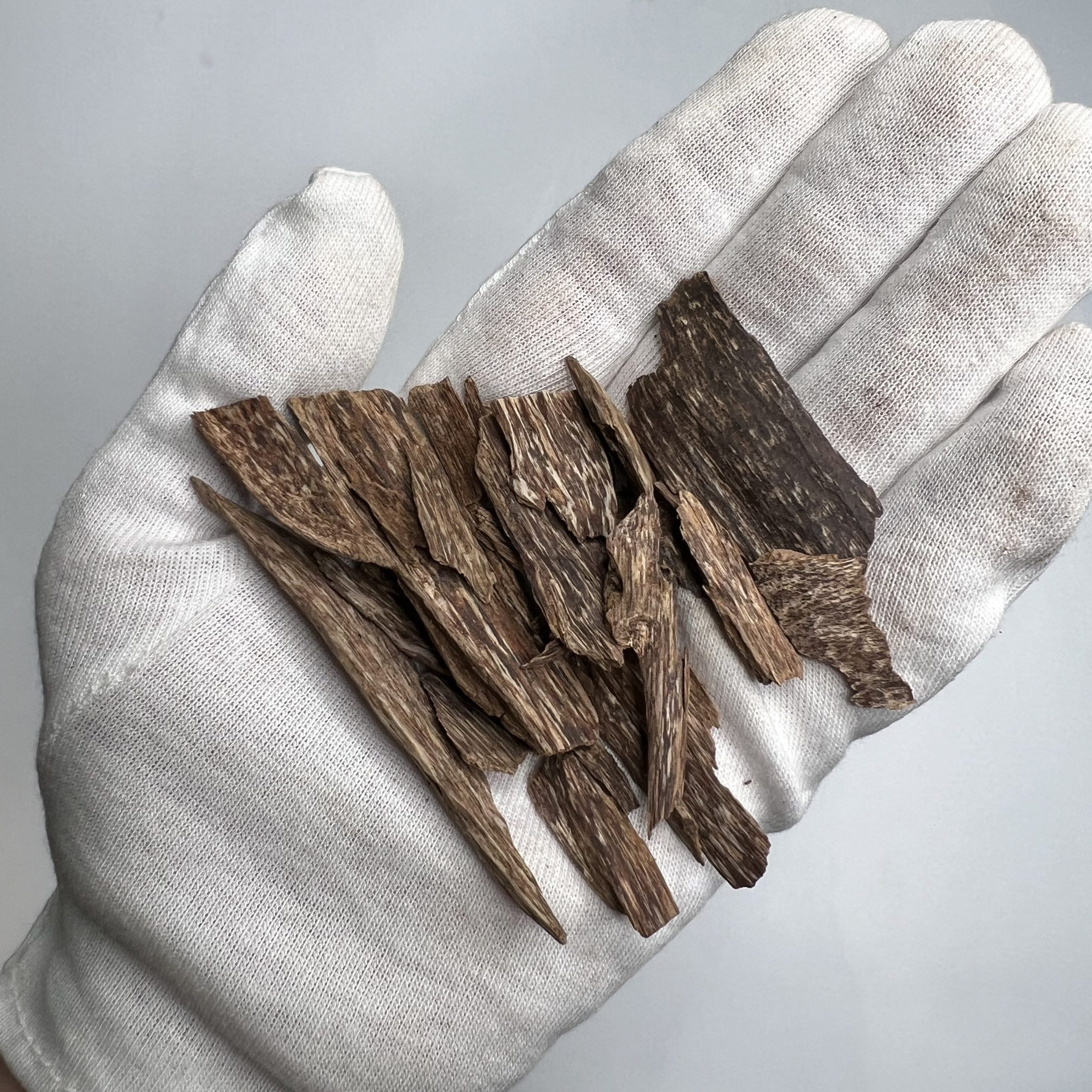
Kinam, Kynam and Ky Nam: Meaning, Evidence and Agarwood Context
Kinam, kynam and Ky Nam are names that appear often in conversations about exceptional agarwood. They can signal rarity, high value and a particular sensory reputation—but they are not a universal laboratory grade, nor do they establish authenticity by themselves. The same spelling may be used in different places for overlapping, aspirational or very different meanings.
This guide separates language from evidence. It explains how the names are used, what observations may be relevant, and what a careful buyer can reasonably ask a seller to document. The aim is not to dismiss a tradition of connoisseurship; it is to keep descriptive language tied to the specific piece of wood being offered.
Kinam, kynam and Ky Nam: a language map
Kinam, kynam and Ky Nam are transliterations rather than a single internationally standardized classification. Spelling changes with language, trade route and family practice. A listing may use one form because it reflects Vietnamese terminology, another because it follows English-language collector usage, and another because it is familiar to a regional market.
That means a word on its own cannot tell a buyer whether the wood is wild or cultivated, how it formed, how old it is, whether it has been altered after harvest, or whether it can be legally traded. It also cannot substitute for clear photographs and an honest account of uncertainty. For related vocabulary, compare the terms in the Oudgo agarwood glossary before treating two labels as different grades.
It is more useful to ask what the seller means by the word in this particular listing. Are they describing aroma, resin character, a regional trade category, an origin story, or a conclusion reached by an assessor? A seller who can separate those points gives you something you can evaluate; a single superlative does not.
How the terms developed across regions and markets
Agarwood moved through South and Southeast Asian religious, medicinal, artistic and luxury traditions long before modern retail descriptions. Local names travelled with it. As material entered new ports and collector communities, transliterations changed and some phrases gained a broader prestige meaning. Contemporary online listings can therefore place an old name beside modern claims about density, oil, origin or investment value.
That history helps explain why there is no short translation that settles every question. A name can preserve a tradition of smelling, carving or burning wood while still being used loosely in a commercial context. The responsible approach is to respect the name without treating it as a certification mark.
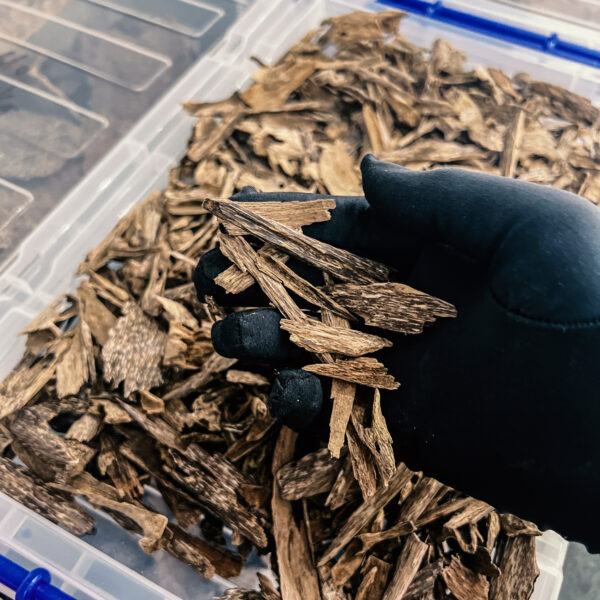
When a description makes a regional claim, request the region as precisely as the seller can support it. “Vietnamese” may refer to a shipping origin, a seller’s sourcing network, a species association or a provenance claim. Those are not interchangeable. Documentation is strongest when it follows the material rather than the marketing language.
Where kinam sits within the broader agarwood context
Agarwood is resin-associated wood formed in certain trees, commonly discussed in connection with Aquilaria and Gyrinops. Its appearance, density and fragrance can vary widely from one section of wood to another. Kinam-style labels sit within that wider world of species, source, formation and trade terminology; they do not sit above it.
For a buyer, this changes the order of questions. First establish what the piece is presented as: wood, chip, carving, bead or oil. Then ask about source and chain of custody. Only after that should you interpret the finer descriptive label. This keeps the conversation grounded in material facts that can be compared between listings.
A high-resin piece may be valuable for its aroma and workmanship without being proven “kinam.” Conversely, a prestigious label does not make an ordinary piece exceptional. A careful agarwood quality and grading framework looks across several factors instead of turning one name into a verdict.
Common sensory and physical claims
Descriptions of rare agarwood often mention a layered aroma, a cool or sweet opening, resin richness, darkness, softness, density, visible streaks or a distinctive feel when warmed. These are meaningful sensory observations for experienced users, especially when recorded carefully alongside the exact sample. They are not, however, a universal checklist.
Why not? Aroma changes with format, storage, temperature, heating method and the amount used. Colour can reflect natural variation, lighting, surface oxidation, finishing or treatment. Density can vary across a single piece. A sinking observation can be interesting, but it depends on shape, moisture and the specific test—not merely a name on a label.
Ask a seller to describe what they personally observed rather than simply repeating a claim. For example: How was the aroma assessed? Was the image taken in neutral light? Is the wood finished, oiled or coated? Is the sample representative of the batch? Clear answers are more valuable than extravagant adjectives.
What available evidence can and cannot verify
Evidence has levels. A clear product photograph, a consistent description and a dated purchase record provide more confidence than a bare assertion, but they do not establish every attribute. Batch records, provenance documents, transparent chain-of-custody information and an independent assessment may add useful support. Laboratory work can answer limited questions when the specimen, method and conclusion are all stated plainly.
No test should be advertised as proving more than it can. A chemical profile may help compare a sample within a defined method, yet it may not identify a trade name or reconstruct an entire history. An expert opinion can be valuable, but it should identify what was examined and which conclusions remain tentative. Home tests, social-media demonstrations and “it sinks” claims are especially poor substitutes for documentation when a premium is involved.
Use the authenticity evidence guide as a boundary-setting checklist: it helps distinguish useful observations from claims that require more support.
Why price, sinking and aroma do not authenticate kinam alone
High price can reflect scarcity, brand reputation, craftsmanship, speculative demand or a seller’s own confidence. It does not independently establish origin or grade. A low price can also be a warning, but it is not a diagnostic test. Compare like with like: format, weight, condition, evidence package, seller policy and the purpose for which you plan to use the material.
Sinking is similarly narrow. It may relate to density for a particular dry piece of a particular size, but it does not tell you whether that density came from the claimed source, and it does not exclude treatment or other variables. Aroma is central to the enjoyment of agarwood, but personal preference and preparation affect it enormously. A fragrant piece can be enjoyable without carrying a rare-name claim; a rare-name claim can never be authenticated by scent alone.

A claim ladder for evaluating listings
Use this ladder to slow down a high-value purchase. It is designed to make uncertainty visible, not to turn every transaction into a laboratory exercise.
| Claim level | What it can support | What to ask next |
|---|---|---|
| Descriptive | Colour, shape, aroma notes and current condition | Current photos, format and storage details |
| Seller history | Where and from whom the seller obtained it | Dated records and whether the story is first-hand |
| Batch provenance | Traceability tied to the offered material | Batch identifiers, import or source documents where relevant |
| Independent assessment | A qualified opinion on the examined specimen | Who examined it, when, and the limits of the opinion |
| Analytical evidence | A defined measurement under a stated method | Sample handling, method, result and what it does not prove |
For most buyers, the sensible outcome is a proportionate decision: enjoy a clearly described piece at a price that matches its evidence, and reserve stronger proof requirements for stronger claims. A trustworthy seller should be comfortable with that distinction.
Before you buy: a calm evidence checklist
Write down the exact claim, the material format, the price, the evidence supplied and the unanswered questions. Keep screenshots or invoices with the item. If the name is central to the value, do not rush because of a dramatic story or a short-lived offer. Ask whether returns are possible if the material is materially different from the description.
Keep a record that matches the exact item
For a chip, bead or carving, record the weight, dimensions and identifying marks as they were when purchased. For oil, record the bottle size, batch or lot reference, date received and the seller’s stated composition. This small habit matters because high-value names are easily detached from the individual object once it is moved, gifted, decanted or resold. A useful record does not prove every claim, but it prevents the ordinary facts from disappearing.
Photograph the item in neutral daylight before use and retain the original invoice. If the seller offers provenance documents, preserve them with the item rather than copying a phrase into a new listing. When documents belong to a broader shipment rather than the exact object, label that limitation honestly. Good records make later conversations simpler for both the buyer and a potential future owner.
Match the depth of verification to the decision
A small personal purchase may justify a simple, transparent description and a reasonable return policy. A rare-name premium, a large quantity, a gift of high value or an intended resale should trigger a more demanding review. That can mean requesting additional photographs, asking for a written clarification of the claim, seeking an independent opinion, or deciding that the available evidence is insufficient for the price.
There is no shame in choosing a beautifully aromatic piece described only as agarwood when that is all the evidence supports. In fact, this is often a better purchase than paying for certainty that has not been demonstrated. The goal is alignment: the name, price, documentation and your own expectations should all point in the same direction.
When to walk away
Pause if a seller refuses ordinary questions, changes the story from message to message, pressures you to rely on a private “test,” or uses an impressive name while providing no item-specific detail. Also be cautious when photographs are heavily filtered, when comparisons are impossible, or when a listing treats cultural terminology as a guaranteed investment return. Those conditions do not prove that an item is misrepresented; they simply mean that the evidence does not justify a confident conclusion.
Kinam, kynam and Ky Nam can be meaningful parts of agarwood culture. The most respectful way to approach them is with curiosity, sensory attention and careful evidence—not with a promise that one word, one test or one appearance can do all the work.
