
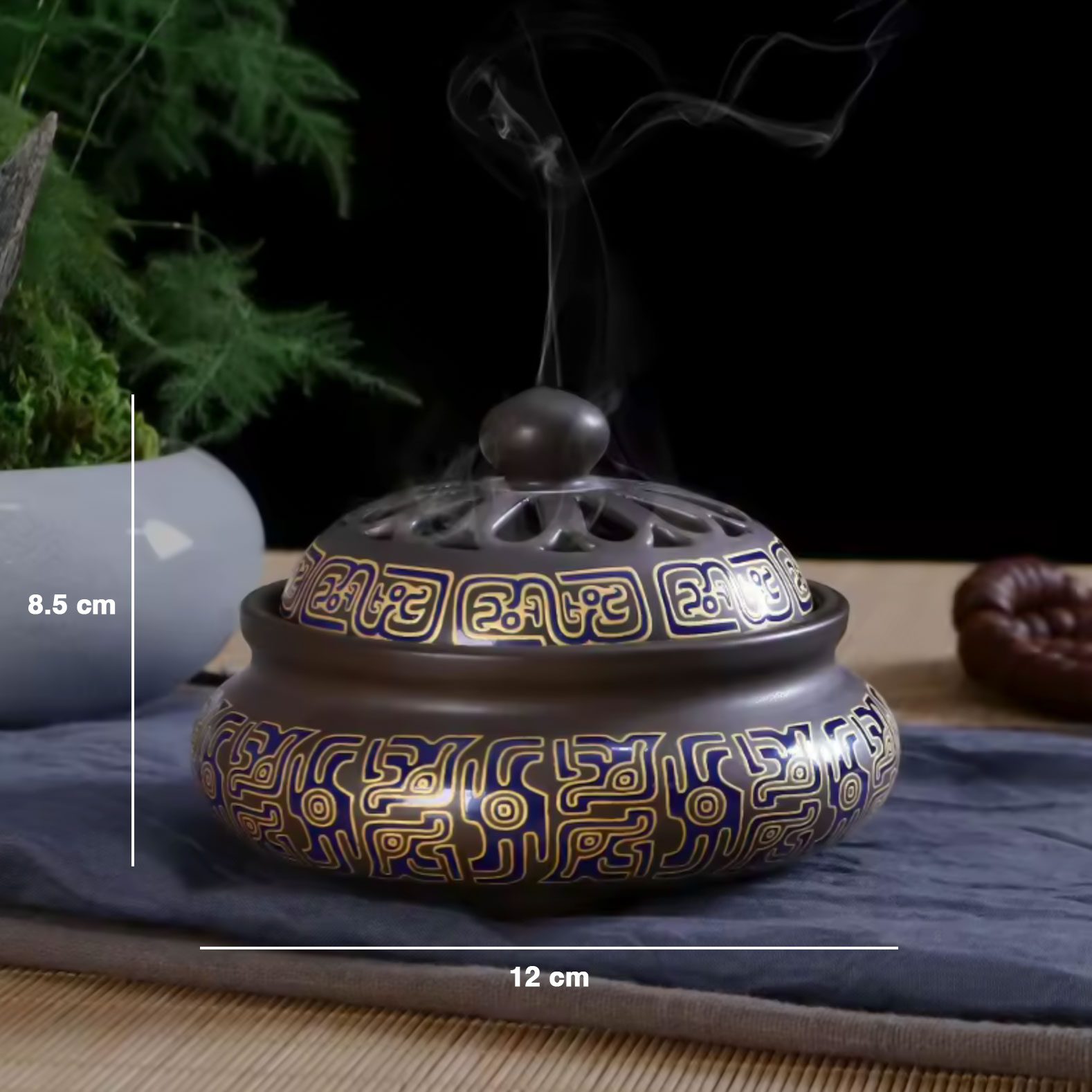
Incense, Smoke Alarms and Fire Safety
Incense can make a room feel calmer, but it is still a live ember in an indoor space. The safest approach is simple: use a stable holder, keep the area clear, stay with the burn, and treat a smoke alarm as a warning—not an inconvenience.
Never disable, cover or remove a smoke alarm to burn incense. If an alarm activates, stop the burn and change the setting or choose a non-burning alternative.
Incense is an ignition source: start with the fire-risk facts
A stick, cone, coil or charcoal burner is not merely fragrance. It is a source of heat, ash and, in some formats, an exposed ember. The risk rises when it is left alone, placed on a surface that cannot tolerate heat, or set close to fabrics and clutter. Most incense accidents begin with an ordinary-looking set-up that was never designed to contain the ash or heat for the full burn.
Before lighting anything, decide where the ember will sit, where its ash will land and who could disturb it. A solid ceramic, stone or metal surface with clear space around it is a much better starting point than a shelf, a soft furnishing or the edge of a table. If you cannot create that clear zone, save the incense for another time.
Why smoke alarms react and why they must not be disabled
Smoke alarms are designed to notice airborne particles from combustion. Incense produces those particles, so an alarm may react even if you do not see an emergency. That does not make the alarm defective, and it does not make it safe to silence it by removing batteries, covering it or moving it out of service.
Use the activation as information about the setting. The room may be too small, the incense too close to the alarm, the session too long, or the air too still. Extinguish the incense, let the room clear and keep the alarm active. If indoor burning repeatedly sets it off, the right solution is a different location, a shorter session, or no combustion in that space.
Placement hazards near curtains, shelves, pets and airflow
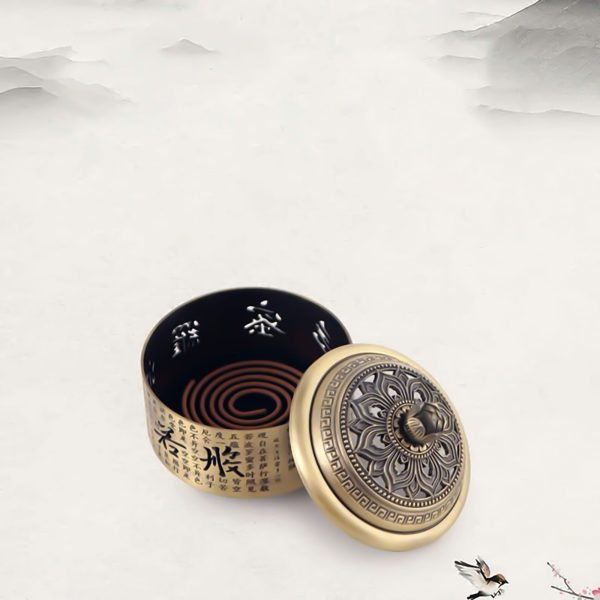
Give the burner more space than feels necessary. Keep it away from curtains, paper, dried flowers, aerosol products, shelves with overhangs and any surface where ash can roll or fall. Place it where a child or pet cannot brush against it, pull the stick free or investigate the scent at close range.
Airflow needs judgment. A strong fan or open draft can move ash and push a lit tip toward nearby materials; completely stagnant air lets smoke collect. Avoid placing incense directly under a ceiling fan, beside an open window with gusts, or beneath an air-conditioning outlet. Choose gentle air exchange and a location where the holder remains stable.
A safer indoor set-up and supervision protocol
- Use one small item at a time, in a holder made for that format.
- Check that the holder catches the full ash path and cannot tip.
- Keep a clear, non-combustible area around it; remove packaging and loose textiles.
- Keep smoke alarms working and make sure the route out of the room is unobstructed.
- Stay in the home and awake while incense is burning. If you need to leave the room for more than a moment, extinguish it first.
Do not try to solve a weak scent by burning several pieces at once. More material means more smoke, more ash and more supervision demand. A short session with one well-supported item is easier to manage than a room filled with several sources of heat.
How to extinguish sticks, cones, coils and charcoal
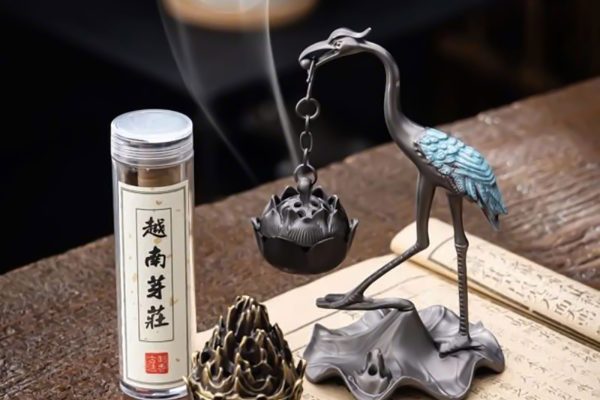
Extinguish incense before leaving the room, going to sleep or when the set-up no longer feels controlled. For a stick or cone, press the glowing end gently into a heat-safe bed of ash or sand until no glow remains. Allow it to cool in the holder; do not put a warm remnant into a bin or on tissue. Check the core as well as the visible coating, because it can retain heat.
For coils, let the holder cool before moving it and confirm that every ember has stopped glowing. Charcoal needs an even stricter boundary: use it only in a vessel and setting designed for its heat, never leave it unattended, and never dispose of it until it is completely cold. If you are unsure, leave it in a heat-safe container longer rather than testing it with your fingers.
What to do after an alarm activates
First, make sure there is no fire. Extinguish the incense if it is safe to do so, look for a burning surface or fallen ash, and leave the area if there is any doubt. Once you are confident there is no fire, ventilate only when outdoor conditions make that sensible, let the alarm remain in service, and identify what in the set-up put smoke near it.
Do not relight immediately to see whether the alarm reacts again. Change one condition at a time: use less material, move to a more suitable location, improve clearance, or switch to a non-burning way of enjoying the material. Repeated activation is a reason to stop using that indoor location for burning incense.
When outdoor use or a non-burning method is the only sensible choice
Some homes simply are not a good place for combustion. If the space is small, shared with people who are sensitive to smoke, occupied by pets or children, or difficult to ventilate safely, choose a non-burning ritual or fragrance option instead. That is not a compromise in care; it is good judgment about the environment you have.
For more help with matching a format to its holder, see our incense burner guide. For the separate question of smoke exposure, see our evidence-led incense safety guide.
Quick questions
Can I turn off the smoke alarm while burning incense?
No. Keep the alarm active. Change the incense set-up or choose a non-burning alternative instead.
Is it safe to leave incense burning while I am in another room?
No. An ember should be supervised. Extinguish it before you leave the room for more than a moment.
What should I do with cold incense ash?
Dispose of it only when every ember is fully cool. If you are uncertain, leave it in the heat-safe holder longer.
This article provides general fire-safety education, not a substitute for local emergency guidance. In an emergency or if you suspect a fire, contact local emergency services.
Use a stop rule before lighting
Before every use, pause if the holder is unstable, the surface can scorch, the room cannot be ventilated, people or animals could knock the incense over, or you cannot stay present until the ember is fully cold. Move the activity to a safer method or do not burn at all. A lower visible smoke level is not proof that an ember cannot ignite nearby material.
Keep the holder on a level, heat-resistant, non-combustible surface with clear space around it. Do not balance it on a shelf, fabric-covered table, window ledge, bookcase, balcony rail or area where a draft can carry ash. Use a holder designed to catch all ash and check it throughout the burn. Charcoal requires its own fire-safe vessel and should never be treated like a stick or cone.
If an alarm sounds, do not assume it is a nuisance alarm. Stop the burning source only if it is safe to do so, leave by the planned route and follow local emergency guidance. Do not remove batteries or disable the alarm. Once there is no emergency and the space is safe, use the alarm’s approved hush function or ventilation only as directed by the manufacturer; investigate why smoke reached the detector before trying incense again.
For a repeatable household rule, burn only when an alert adult is awake and in the same area, keep water or an appropriate extinguishing method available, and allow the ash and holder to cool completely before disposal. If this level of supervision is not practical, choose a non-burning fragrance method. Safety is the deciding factor, not the wish to finish a stick, cone or charcoal session.
Make alarm-safe choices part of the routine
Test smoke alarms according to the manufacturer’s instructions and make sure every person in the home knows what the alarm sounds like and where to meet outside. Incense does not change the need for a working alarm or an escape plan. If a location repeatedly triggers an alarm, do not solve the problem by silencing the device; reassess whether burning is appropriate there and consult building rules or a qualified local professional where needed.
Record the format, holder, surface and ventilation that produced a safe, supervised session. This turns vague caution into a practical household routine. The safest setup is the one that still works when the room is busy, the weather changes or your attention is interrupted—otherwise choose a non-burning option.
Never leave a burning item to answer a door, sleep, shower, cook, work in another room or run an errand. Extinguish it first, confirm the ember is cold, and only then leave the area.
Keep children and pets out of the immediate area, and do not rely on a scent session being brief. A small ember can remain hot after visible smoke has stopped.
Treat every ember as live until it is completely cool to the touch, and keep the safety routine unchanged even for a short session.
For the full stick set-up sequence, read How to Burn Incense Sticks Safely: Complete Beginner Guide. For cone lighting and safe extinguishing, read How to Use Incense Cones: Light, Burn and Extinguish.
