
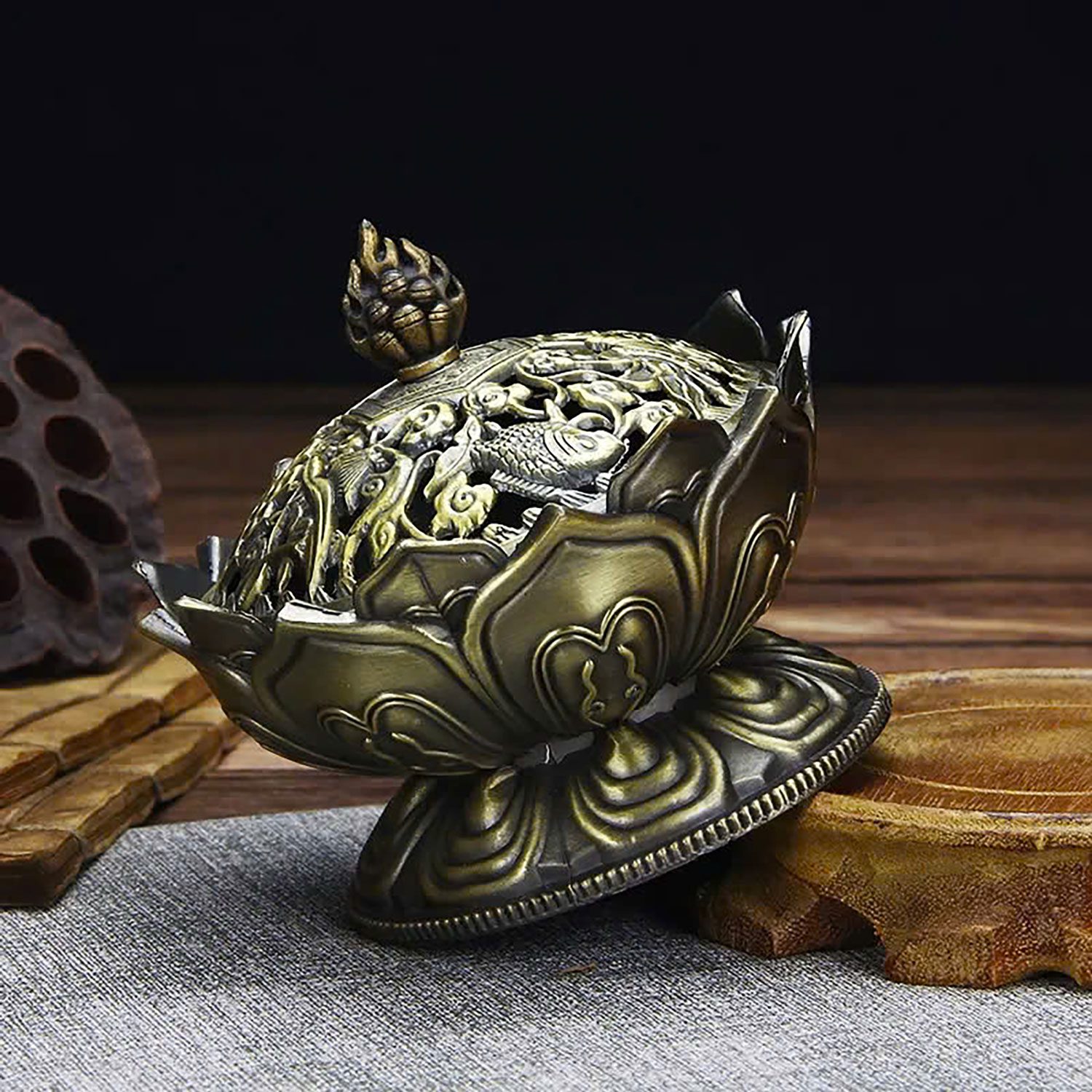
Incense Coils: Burn Time, Holders and Safety
Incense coils are made for a slow, extended burn. Their spiral shape lets a relatively small piece of incense last far longer than a short stick, but that convenience also changes the safety question. A coil needs support across its whole shape, enough clear space for ash, and active supervision for as long as an ember remains. The best setup is not the prettiest holder; it is the one that keeps the coil stable and its ash contained.
What incense coils are designed to do
A coil is designed to release fragrance gradually over a longer period. The burning tip travels along the spiral, leaving a delicate trail of ash behind it. This makes coils useful for a quiet, supervised session in a ventilated room, but it does not mean that every space or every schedule suits a long-burning format. The practical question is whether you can remain aware of the heat source until the coil is safely out.
Compared with a stick, a coil can need more horizontal space and may remain warm after the visible ember disappears. A proper holder gives the spiral a stable platform, keeps it away from curtains and paper, and catches ash without letting it roll toward furniture. Start with the use case, then choose the coil and holder that match it.
Small coils, hanging coils and long-duration coils compared
Small tabletop coils are generally easier to supervise because their holders are compact and their burn time is more manageable. Larger coils can scent a room for much longer, but their ash line is longer and their heat source stays active for more time. Hanging coils are a separate format: they require a purpose-built hanger with a catch tray below, not a hook improvised from household objects.
| Format | Best use | Main check |
|---|---|---|
| Small tabletop coil | Short, supervised sessions | Stable base and ash tray |
| Large coil | Longer sessions in a clear room | Time available to supervise |
| Hanging coil | Purpose-built suspended holder | Clear fall zone and catch tray |
A longer burn is not automatically stronger or better. It simply gives the room more exposure time. Choose the smallest format that fits the time you can actually stay nearby, rather than choosing a large coil and hoping the room will manage itself.
Choose a holder that supports the entire coil
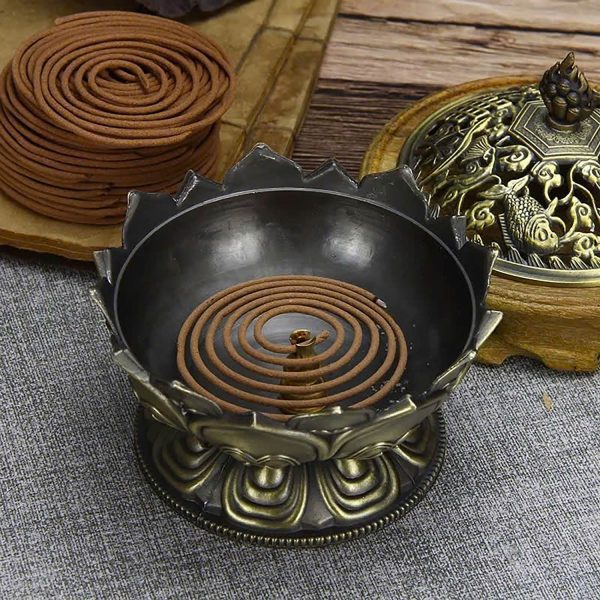
The holder should support the coil without pinching, bending, or forcing the spiral out of shape. A holder that is too narrow can let the outer edge sag; one that is too shallow can allow ash to spill. Look for a broad, heat-resistant tray and a center support designed for the coil’s opening. The coil should sit level and should not touch the rim, a wall, or any decoration.
Do not use a plate, a candle dish, or a bowl as a substitute unless it was specifically designed to hold burning incense. These items may lack a stable pin, sufficient clearance, or a non-combustible ash-catching surface. For a broader guide to matching format and holder, read how to choose the right incense burner.
Put the holder on a flat, heat-resistant surface. Keep it away from air-conditioning streams, open windows, children, pets, loose fabric, books, and dried flowers. A draft can move ash or make a thin coil burn unevenly. If the setup feels crowded before lighting, move it rather than making small compromises around an open ember.
How to light a coil without cracking it
Handle a coil gently and only by the thicker outer edge when possible. Hold a flame to the outer tip until it catches, then blow out the flame so that only a small ember remains. Do not wave the coil, press it into a holder while it is burning, or relight several points to speed up the fragrance. A coil should burn from one intended end unless the maker explicitly states otherwise.
Before you light it, inspect the spiral for cracks, moisture, or distortion. A damaged coil may break into pieces, fall into the tray, or burn unpredictably. If the coil has snapped, do not tape or glue it for burning. Set it aside rather than turning a simple fragrance session into a heat-management problem.
If the coil goes out
Let it cool completely before checking the holder. Reposition the coil only when there is no ember. A coil that repeatedly goes out may be damp, poorly supported, or exposed to moving air. Solve the condition instead of repeatedly applying a flame, because multiple ignition points make the ash and duration harder to predict.
Burn time, room size and ventilation limits
Burn time should fit the room and the people in it. A small, well-ventilated space can become uncomfortable if a large coil is allowed to burn for hours. Start with a shorter trial in a room where you can open a window or allow fresh air to circulate without creating a direct draft over the ember. If the scent feels heavy, extinguish the coil rather than waiting for the entire spiral to finish.
A simple way to plan a session is to ask how long you will be present, whether the room has fresh air, and whether anyone nearby is sensitive to smoke or fragrance. The long format is most useful when those answers are clear. For practical expectations about duration, compare the format with incense burn times and what affects them.
Never use a coil to fragrance a sleeping room, an empty office, or a space you are about to leave. An extended burn is still an active heat source. Ventilation reduces accumulated smoke; it does not make an unattended ember safe.
Fire and ash hazards unique to coils
Coils create a long, fragile ash trail. If the holder is undersized, ash can bridge the tray, fall onto a nearby surface, or land on a combustible item. The coil can also be disturbed by a draft, a pet, or a hand passing close to it. Keep the entire holder in a protected zone with clear space above and around it.
Do not leave a coil running while cooking, showering, taking a call in another room, or preparing to sleep. If you need to leave, extinguish it. A purpose-built snuffer or a small amount of clean sand can help stop the ember without scattering ash; let every part cool before disposal. For the full household checklist, see incense fire safety at home.
Who should choose a coil – and who should not
A coil is a good match for someone who wants a calm, supervised fragrance session and has a suitable holder, clear surface, and time to monitor it. It can work well in a room where fragrance is enjoyed gradually rather than quickly. It is less suitable for rushed routines, shared rooms with uncertain ventilation, or anyone who cannot stay close enough to respond if the ash or holder shifts.
People with respiratory sensitivity, households with young children or curious pets, and users who want only a brief scent may prefer a shorter format or no burning incense at all. The safe choice is the one that matches real household conditions, not the one with the longest listed burn time.
Store coils so they remain safe to use
Keep coils dry, flat, and protected from crushing in their original packaging or another rigid container. Do not store them in direct sun, beside a heater, or where strong fragrances can transfer between products. Before each use, check that the spiral is intact. Careful storage prevents waste and makes the next burn easier to assess.
Make duration fit the session
If you have limited supervised time, choose a smaller coil or a shorter incense format. A longer burn is useful only when the room, ventilation, and your availability support it. The goal is a calm, controlled experience, not finishing the entire coil at any cost.
Before you begin: a two-minute setup check
Clear the surface, place the holder level, check that the center support fits the coil, and make sure the ash tray is empty. Confirm that a window can provide gentle fresh air without blowing directly across the holder. Keep a safe method for extinguishing nearby, and tell anyone sharing the room that incense is burning. These small steps are more valuable than trying to correct a poor setup after the coil has warmed up.
During the burn, look at the holder occasionally rather than relying on the scent alone. The visible condition of the ash, the position of the coil, and the comfort of the room are the signals that tell you whether the session remains appropriate. If any one of them changes, stopping early is the responsible choice.
After the ember is out
Wait until the coil, support pin, and ash tray are completely cool before moving or emptying the holder. Ash can retain heat longer than expected, especially where it has gathered in a deep layer. Empty cooled ash into a non-combustible waste container and wipe the tray only after it is safe to handle. A tidy reset makes the next session safer as well.
