
Oud Oil & Perfumery
How to Identify Pure Oud Oil: Evidence and Test Limits
No home test can prove that an oud oil is pure. The strongest assessment combines a transparent producer record, batch-specific composition disclosure, and—when the claim matters—a laboratory result tied to the same batch. Scent, colour, viscosity, paper, freezer and longevity observations can help you ask better questions, but none establishes purity by itself.
Evidence before folklore: distinguish a documented agarwood distillate from an oil blend, a perfume composition, and an “oud-inspired” accord. These categories can all be legitimate products; the question is whether the label describes the bottle honestly.
What ‘pure oud oil’ should mean—and why labels vary
In a careful description, “pure oud oil” should identify what the liquid actually is: an agarwood-derived distillate or extract, from a named or at least traceable source, with no undisclosed carrier or fragrance formula. That is a composition claim. It is not a promise that every batch smells the same, that the oil is the darkest, or that it is suitable for every route of use.
Commercial language is less consistent. “Oud oil,” “agar oil,” “essential oil,” “attar,” “perfume oil,” and “oud fragrance” can describe different things. A seller may use one term accurately in a particular product line while another seller uses it as a scent category. Treat the exact product page, label and batch record as stronger evidence than the front-label term alone.
Transparency is not a demand for a trade secret. A buyer can reasonably ask whether the bottle is a natural distillate, a dilution in a carrier, a blend with other natural oils, or a composed fragrance. Our Oud Oil Pillar gives the production context needed to interpret those answers.
Evidence hierarchy: producer records, batch data and analysis
Start with the producer. Useful records include source or feedstock information, a distillation or extraction description, batch number, bottling date, formulation statement, and an invoice or product page that remains available. A coherent record does not independently prove every claim, but it creates traceability: the seller can say what the bottle is supposed to be and which batch it belongs to.
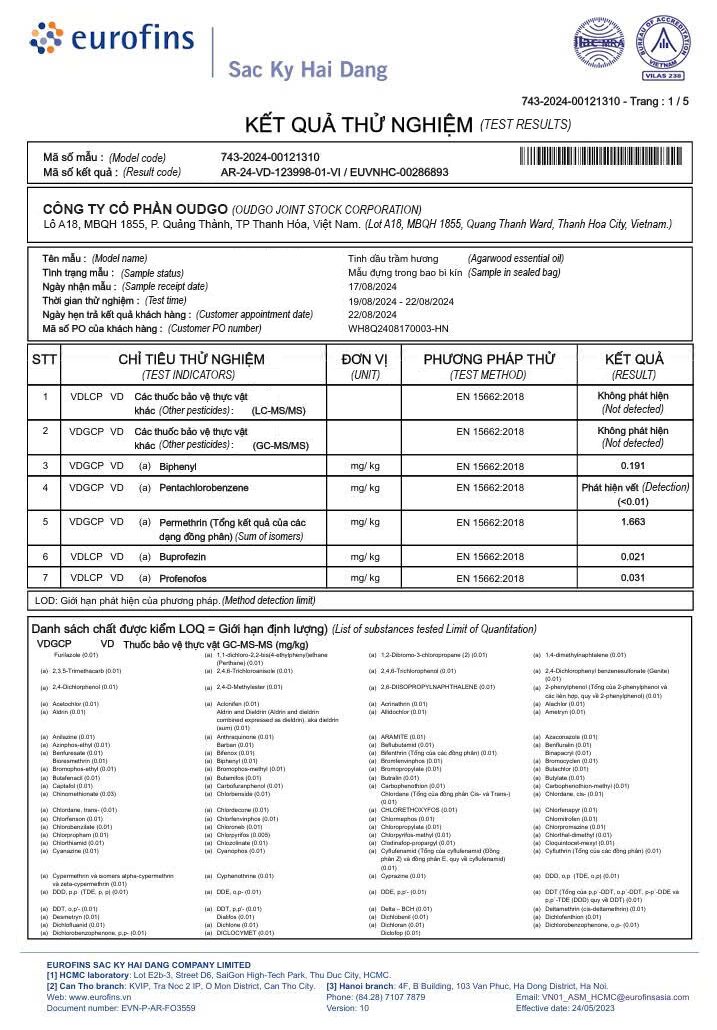
Next, ask whether any analysis is batch matched. A certificate of analysis, chromatogram or GC-MS report may be useful only if it identifies the relevant sample and method and can be connected to the bottle’s batch. A generic graph copied into a product listing is weaker evidence than a report tied to a named lot. Even an analytical report has limits: it describes the tested sample and method, not every bottle ever sold under a similar name.
Finally, compare the composition statement with the price, format and intended use. If a seller calls a product “pure” but also lists a carrier, parfum, fragrance, fixative or multiple oils, the honest description is a blend or finished formula. That is not automatically inferior—it is simply a different category.
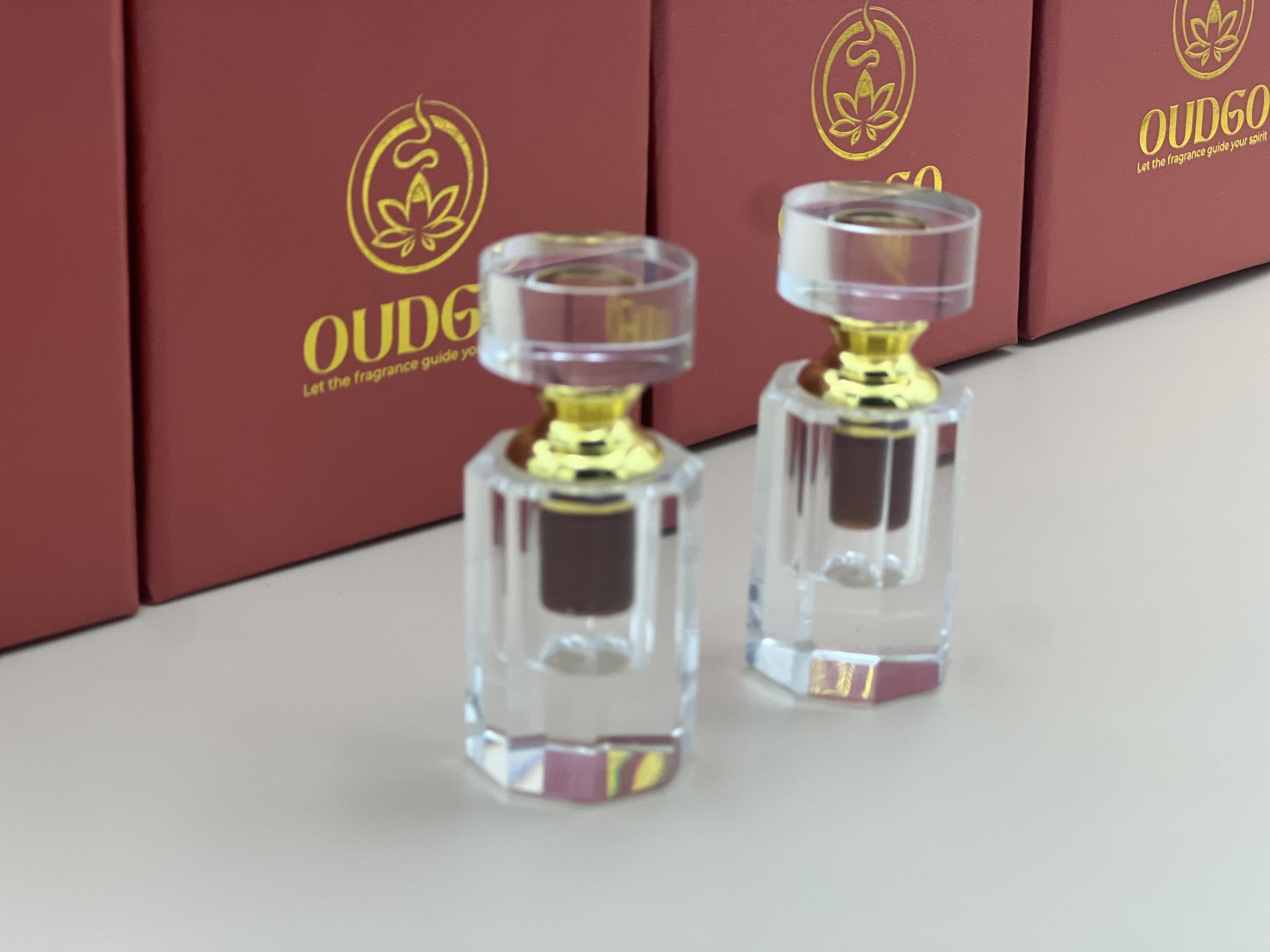
A label and batch record are starting evidence; they are more meaningful when they connect to the exact bottle.
What scent, color and viscosity can suggest but not prove
Scent can tell you whether an oil is pleasant, familiar, unusually sharp, flat, smoky, sweet, leathery or different from a previous sample. It cannot reliably identify species, origin, extraction method, percentage of agarwood material or absence of blending. An experienced evaluator may notice patterns, but sensory experience still needs a record and a comparison sample before it becomes a commercial claim.
Colour is similarly limited. Some oils are pale, amber, brown or deep; natural ageing, bottle glass, lighting, batch variation and formulation can all affect what you see. Viscosity can vary with temperature, carrier, age and composition. A thick oil is not automatically pure, and a fluid oil is not automatically diluted.
Use observations as prompts: “This smells unlike the documented sample,” “The bottle has changed after heat exposure,” or “The description is incomplete.” Do not turn them into proof. The same principle applies to resin images, ornate packaging and romantic origin stories.
Why freezer, paper and longevity tests are unreliable alone
Freezer tests, paper stains, evaporation speed, burn tests and “lasts all day” claims are popular because they appear simple. They are not controlled analyses. Temperature changes can affect many materials; paper absorbs oils differently; evaporation depends on dose, carrier and room conditions; and skin longevity depends on formula, application and perception. A result may be interesting, but it does not identify every constituent or rule out undisclosed blending.
Home tests can also damage a sample or create a false sense of certainty. Heating an oil, burning it, adding water, freezing it repeatedly or applying a large amount to skin is not a substitute for documentation. Keep a small observation note instead: date, bottle, conditions, what changed, and whether the product was stored as directed.
For wider evidence discipline, see our Agarwood Authenticity Evidence Guide. It explains why provenance and method matter more than a single dramatic test.
Synthetic accords, dilutions and undisclosed blending
A synthetic oud accord is a perfume construction designed to create an oud-like impression. It may be made with aroma materials, natural ingredients, or both. A dilution contains aromatic material in a carrier. A blend combines more than one aromatic ingredient. All three can be valid products when they are described clearly and used as directed.
The problem is not an accord or a blend. The problem is claiming that a finished fragrance is an unblended agarwood distillate when its composition says otherwise or is not disclosed at all. Ask for plain language: What is the base? Is there a carrier? Is the scent a natural distillate, a blend, an accord, or an unspecified fragrance? If the answer remains vague, describe the item cautiously.
For the perfume-side comparison, read Real Oud in Perfume vs Synthetic Oud Accords. It separates material identity from the aesthetic question of whether you enjoy a perfume.

A clean strip supports comparison of scent development, not a conclusion about purity.
Questions to ask a seller before buying
- Is this bottle a documented agarwood distillate, a dilution, a natural blend, or a fragrance composition?
- What source material and extraction method are claimed, and what is known versus not known?
- Is there a batch or lot number that connects to the bottle?
- Can you provide a batch-matched composition statement, certificate, or laboratory report where appropriate?
- What is the carrier, if any, and what is the intended route of use?
- Has the sample been stored or shipped under special conditions that should be disclosed?
A credible seller may not have every possible document, especially for a small batch. What matters is whether they answer clearly, keep claims proportionate to the evidence, and distinguish a producer statement from independent verification.
A practical authenticity evidence ladder
| Level | Evidence | What it supports | Limit |
|---|---|---|---|
| 1 | Front-label term, colour or scent | A starting description. | Cannot prove purity or origin. |
| 2 | Clear seller composition statement | Whether it is described as distillate, blend or fragrance. | Still a seller claim unless documented. |
| 3 | Batch and production record | Traceability to a named lot. | Needs consistency and retention. |
| 4 | Batch-matched analysis with method | Information about the tested sample’s composition. | Does not certify every bottle or every claim. |
| 5 | Converging records, analysis and transparent chain | The strongest practical purchase evidence. | Still requires honest interpretation of scope. |
This ladder is designed to reduce overclaiming. It lets you buy, collect or compare with more clarity while leaving room for natural variation and the limits of any single document.
Questions readers also ask
Can GC-MS prove an oud oil is pure?
It can provide useful information about a tested sample when the method and batch link are clear. It does not automatically prove origin, ethics, every bottle in a product line, or the absence of every possible issue.
Does an oil that lasts longer have to be more authentic?
No. Longevity depends on formula, carrier, dose, conditions and perception. It is not a stand-alone authenticity test.
Is synthetic oud fake?
A synthetic accord is a different fragrance-material category. It should be described honestly rather than presented as a pure natural distillate.
How to compare two seller claims fairly
Put the claims side by side before deciding that one is more credible. One seller may offer a carefully labelled natural blend and another may offer a vague “pure oud oil.” The first description can be more useful even if it is less dramatic. Record the product name, batch, price, size, claimed material, disclosure, documents supplied and intended use. This prevents a marketing phrase from carrying more weight than the actual evidence.
Ask whether a document answers the same question you are asking. A photograph of a laboratory instrument is not an analytical report. A certificate for a different lot does not describe your bottle. A generic statement that “all our oils are tested” is less informative than an identified result, the method used, sample date and a clear link to a batch. At the same time, do not overread a chromatogram: it is technical evidence with a defined scope, not a story about provenance, culture or value.
Consider the chain of custody too. If an oil passed through several resellers, retain receipts, labels and dates. A retailer may repeat a producer claim accurately, but the retailer is not automatically the producer and may not have direct batch records. When the intended purchase is expensive or the claim has material value, ask for the strongest record before buying rather than after a dispute arises.
Finally, separate an authenticity decision from a personal preference decision. You may prefer a modern perfume oil to a natural distillate, or prefer a gentle blend to a powerful raw material. Those are valid aesthetic choices. Clear terminology lets you make them without being asked to mistake a fragrance style for proof of purity.
A final practical safeguard is to preserve uncertainty honestly. If the available evidence only supports “seller-described agarwood oil,” use that wording. Do not upgrade it to a certainty because the bottle is expensive, attractive or familiar. Transparent limits protect buyers and also give responsible producers credit for the documentation they do provide.
When evidence is incomplete, pause, compare alternatives, or choose a product whose description is easier to verify. Careful uncertainty is a useful purchase result.
A well-supported decision is better than an impressive but unsupported certainty. Keep the record, compare claims carefully, and return to the evidence ladder whenever the label is unclear.
Document uncertainty, compare alternatives, and choose claims supported by records.
