
Oud Oil & Perfumery
How to Dilute Oud Oil Safely
A small dilution can make a concentrated oud easier to evaluate and wear, but dilution is a measured fragrance task, not a shortcut to safety. Before mixing, know what the starting material is, how it is intended to be used and whether its supplier provides composition and use information. If those facts are unclear, keep the material in its original form and ask the supplier rather than guessing.
Important boundary: a lower percentage does not make every material suitable for skin, ingestion, children, pregnancy, pets or diffusion. Use the intended-use information for the specific material and finished product; do not infer safety from a recipe alone.
First determine whether dilution is appropriate
Dilution can be appropriate when you have a fragrance material intended for that route of use and you want a smaller, more manageable test. It can help a powerful agarwood oil spread more evenly, make its drydown easier to observe or create a trial-strength perfume oil. It is not automatically appropriate for an unlabeled oil, a material with unknown additions, a product sold only for ambient scent, or an oil with supplier instructions that do not permit skin use.
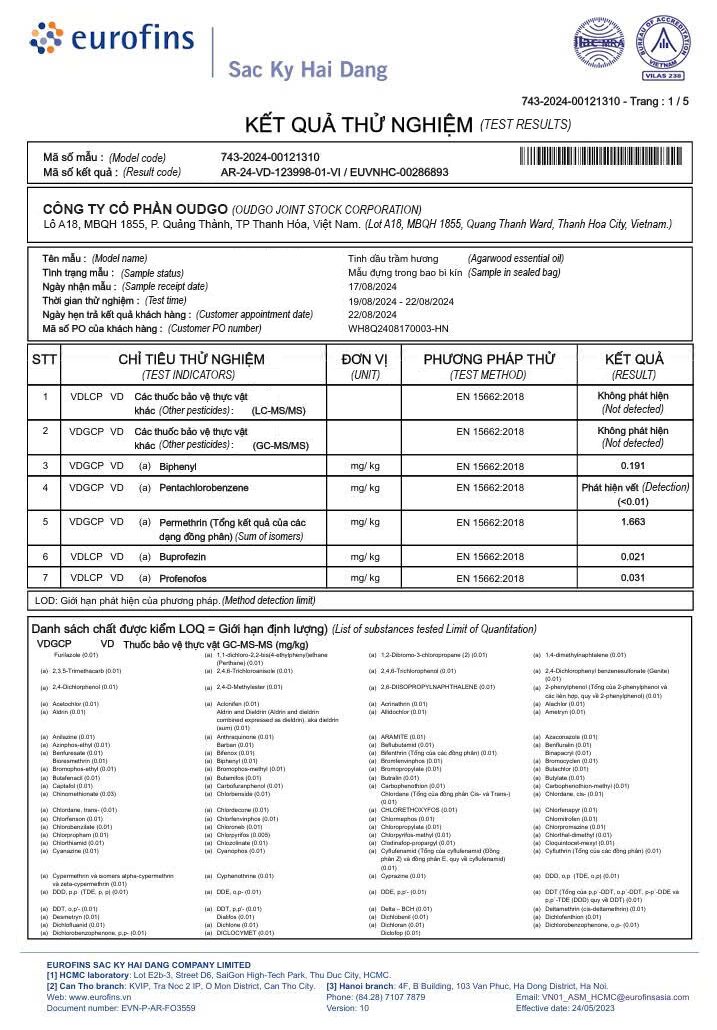
Read the label, safety documentation and supplier guidance before doing anything else. Distinguish a pure oil, a pre-diluted perfume oil and a finished fragrance composition; their starting concentrations are not interchangeable. For a practical overview of routes such as skin, blotter and diffusion, see How to Use Oud Oil on Skin, Strips and in Diffusion. If the identity or evidence behind the material is uncertain, start with How to Identify Pure Oud Oil rather than a dilution calculation.
Choose a compatible carrier and clean equipment
Choose the carrier for the intended format. A skin-use perfume oil commonly needs a skin-appropriate carrier chosen for that purpose; an alcohol perfume format requires materials and equipment designed for that system. Do not assume a kitchen oil, water or an unrelated cosmetic product is compatible. Some materials cloud, separate, change odour or become unstable when mixed with the wrong carrier. If you cannot confirm compatibility from the supplier, do not make the batch.
Use a clean, dry glass vial with a secure cap, disposable transfer pipettes or a clean syringe, labels and a small scale capable of measuring the amount you intend to make. Glass is usually easier to inspect and less likely to retain odour than an unknown plastic container. Keep all equipment dedicated to fragrance work, away from food preparation, and clean it according to the carrier and supplier instructions. Good records and unique labels are basic safeguards in fragrance handling.
Understand concentration percentages and measurement units
A percentage describes the proportion of concentrate in the finished blend. A 5% dilution contains 5 parts concentrate in every 100 parts total finished mixture; the remaining 95 parts are carrier. The denominator is the finished total, not the amount of carrier alone. This distinction prevents a common calculation error.
For small batches, weigh ingredients whenever possible. Drops vary with the pipette, liquid viscosity, temperature and technique, so they are useful for a rough personal trial but are not a universal measurement unit. Use grams for a repeatable record. If a supplier gives limits in a different unit or for a particular product category, follow that documentation and do not convert casually. Industry safety limits may be tied to a finished consumer product and its route of use, not merely the fragrance mixture in a vial.
| Target concentration | For a 10 g finished trial | Concentrate | Carrier |
|---|---|---|---|
| 1% | 10 g total | 0.10 g | 9.90 g |
| 3% | 10 g total | 0.30 g | 9.70 g |
| 5% | 10 g total | 0.50 g | 9.50 g |
These examples show arithmetic only. They are not recommended use levels for every oud product or formula. The permissible level depends on the actual material, its constituents and the intended application.
Calculate a small test dilution
Make the first batch deliberately small. Select a target percentage only after reviewing supplier information for the intended route. Decide the finished weight, multiply it by the percentage expressed as a decimal to find the concentrate weight, then subtract that amount from the finished weight to find the carrier weight. For example, a 10 g finished trial at 3% uses 0.30 g concentrate and 9.70 g carrier. Write the calculation before opening the bottle.
Check the scale’s resolution against the amount you need to measure. If your scale cannot reliably measure a very small quantity, increase the finished batch only if the supplier information supports the calculation and you have a real reason to make more; otherwise use appropriately precise equipment or do not proceed. Avoid “eyeballing” a tiny amount. The goal is not to create a large supply but to obtain a labelled, repeatable sample you can evaluate responsibly.

Mix, label and rest the sample
Place the labelled vial on the scale, tare it if appropriate, add the carrier and then the measured concentrate, or follow the order recommended for your particular materials. Cap the vial and roll or invert it gently until the mixture appears uniform; avoid vigorous shaking if it introduces bubbles or makes visual inspection difficult. Observe the sample for cloudiness, separation, sediment or a changed smell. Those signs are reasons to pause and consult the supplier, not to keep adjusting blindly.
Label the vial before it leaves your work area: material name, supplier or batch reference, carrier, target percentage, measured weights, date, intended use and any restrictions supplied. Allow the sample to rest as appropriate for the format, protected from heat and light. Resting does not convert an unsuitable mixture into a safe one, but it gives the blend time to settle so its scent and appearance can be evaluated more consistently.
Patch-test and adjust without guessing
Only consider a patch test when the specific material and carrier are both intended for that skin use and you have no reason to avoid fragrance products. Use a very small amount on a limited area, follow the product guidance and stop if there is irritation or any unexpected reaction. A personal patch test is not a substitute for product safety assessment, and it does not prove that a mixture is suitable for everyone.
Evaluate scent separately from safety. Smell the diluted sample on a blotter first, then—where the route is appropriate—observe it at several points during wear. If the scent is too strong, do not add random extra carrier into an unrecorded bottle. Make a new measured batch at a lower documented target, label it separately and compare the two. If the scent is weak, do not assume that raising the concentration is permitted; return to the supplier guidance and the intended product category first.
Safety boundaries and when not to DIY
Do not DIY when the material identity, intended use, allergen information, solvent compatibility or applicable safety data is missing. Do not prepare ingestion products, products for babies or children, medical uses, pet products or commercial goods from a generic online formula. Do not use dilution to work around a warning label or to make an unknown oil “safe.” Seek qualified technical or regulatory guidance if you intend to formulate a product for sale.
Use a stop rule: pause the project if the material clouds, separates, irritates, has an unclear label, lacks supplier documentation or creates a use question you cannot answer. A good small-batch record is valuable; a guess is not.
The broader Oud Oil guide explains why origin, processing and composition matter before a bottle reaches a formulation table. Measured equipment, cautious records and the correct route of use make a simple trial more useful than a larger, undocumented blend.
Keep the record with the vial
A finished dilution is only as useful as the information that travels with it. Keep the original product label or a photograph of it, the batch number where available, your calculation, carrier name, date, intended route and your observation notes together. These details allow you to reproduce a successful evaluation, trace a question back to its source and avoid accidentally applying one material’s guidance to another.
When in doubt, return to the source documentation rather than internet shortcuts. Safe fragrance use depends on the complete finished product and its intended use, so a small labelled sample is a tool for careful evaluation—not a universal recipe.
Verify the sample before every later use
Recheck the label and the sample’s appearance each time you return to it. A small vial with an unclear date, an unidentified carrier or a missing calculation should be treated as unknown rather than reused from memory. Compare the recorded concentration with the original source information before changing the route of use, giving the sample to another person or making a fresh batch. Fragrance materials can have restrictions that are specific to the finished product category, and a personal test does not transfer automatically to a different format.
Keep the objective narrow: assess the scent at a documented concentration, using the supplier’s intended use and your own cautious observations. If you notice separation, a new odour, visible contamination or a skin concern, stop using the mixture and seek appropriate advice. The most valuable outcome is a clear record of what was tested and why—not a larger collection of unverified blends.
