
How to Burn Incense Sticks Safely: Complete Beginner Guide
Burning an incense stick is simple, but a good first session depends on a few decisions made before the match is lit. Choose an intact stick, a holder that catches ash, a clear heat-safe surface, and a room with gentle fresh air. Once the flame is blown out, the small ember should smolder steadily; that is normal. The process remains supervised from start to finish.
Choose the stick, holder and location before lighting
Choose a stick that is dry, intact, and appropriate for the session length you have available. A very long or thick stick may burn longer than a short one, so do not choose solely by fragrance. Inspect it for cracks, dampness, or loose coating. Do not try to burn a stick that has been crushed, soaked, or altered with glue or tape.
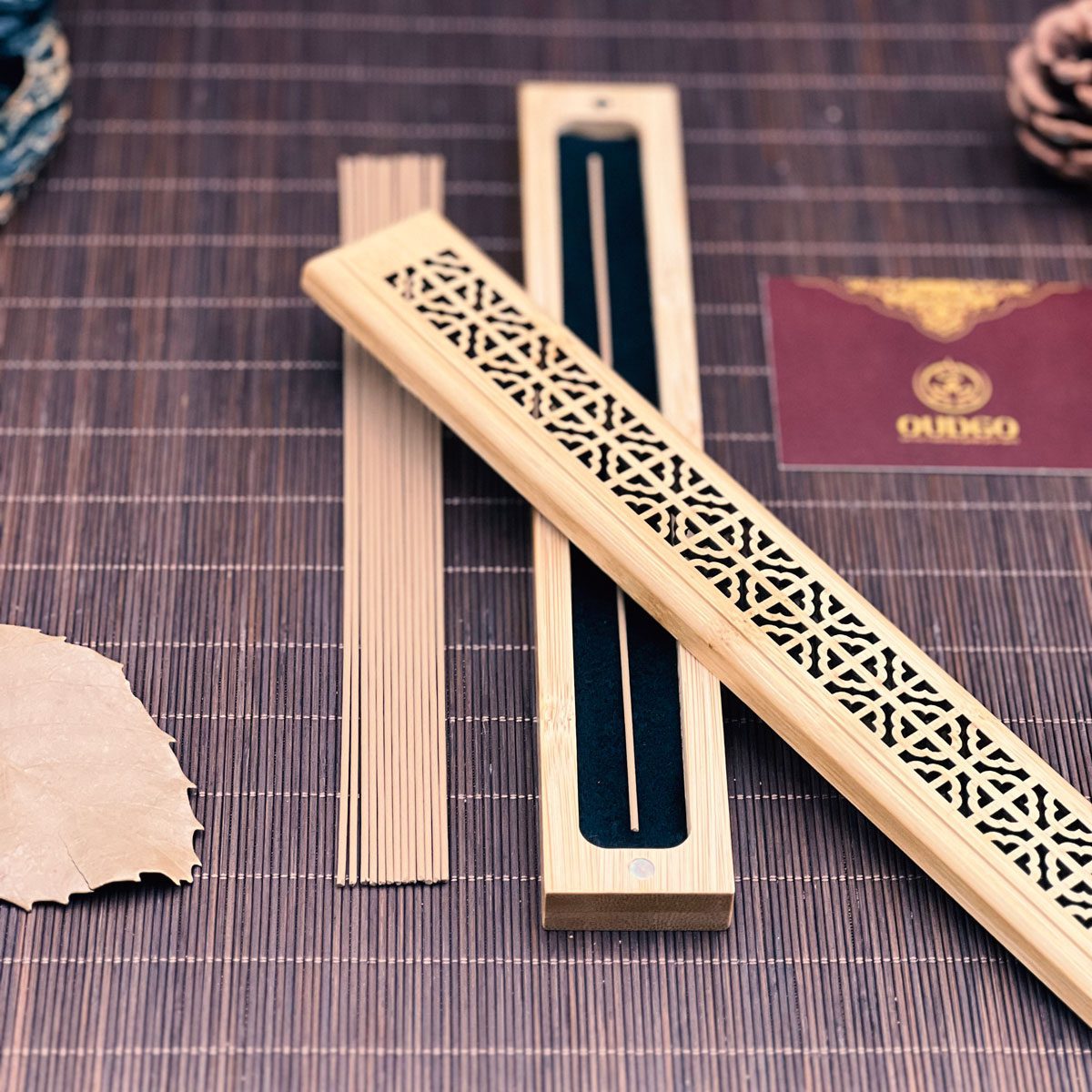
Use a holder that keeps the stick steady and catches the full ash path. A small upright hole can work for a bamboo-cored stick only if the base is stable and the tray extends well beyond where ash will fall. Put the holder on a level heat-resistant surface, away from paper, curtains, plants, pets, and children.
For help matching the holder to the actual stick and ash footprint, see how to choose an incense holder for sticks, cones, and coils. A compatible holder is a better solution than trying to improvise with a cup, bottle, or decorative object.
How to light an incense stick step by step
Place the stick securely in the holder before lighting it. Hold a flame to the coated tip until it catches. Let the flame establish briefly, then gently blow it out. A small glowing ember should remain and a thin stream of smoke should begin. The goal is a smoldering tip, not an open flame.
| Step | Do | Avoid |
|---|---|---|
| Place | Secure the stick in a stable holder | Holding it in your hand while it burns |
| Ignite | Light only the intended tip | Lighting several points at once |
| Establish ember | Blow out the flame gently | Leaving an open flame burning |
| Observe | Watch ash and smoke in the first minutes | Leaving the room immediately |
If the tip does not stay lit, do not keep applying flame. Let it cool, then check for moisture, damage, an unsuitable holder, or a direct draft. Repeated ignition points make the burn and ash harder to predict.
How to burn incense sticks indoors without trapping smoke
Use incense in a room with enough fresh air to keep the experience comfortable. Opening a window slightly can help when it does not create a direct stream over the ember. Avoid small enclosed spaces, sleeping rooms, and places where smoke will gather near people who are sensitive to fragrance or respiratory irritation.
One stick is usually enough for a small indoor session. More sticks do not create a better aroma; they create more emissions and more active embers to manage. If the scent becomes heavy, extinguish the stick and ventilate the room rather than waiting for it to finish. The format and materials used in agarwood incense are described in this guide to agarwood incense.

Safer options when you do not have an incense holder
The safest option is to wait until you have a proper holder. If you must use incense before then, do not balance a stick on a plate edge, push it into a houseplant, or place it in a bottle filled with unknown material. A shallow household dish is often too small to contain ash and may not provide reliable support.
A temporary setup is only suitable when it uses a stable, non-combustible container with a deep layer of clean sand or ash that can hold the unlit stick upright and catch falling ash. The container must be wide enough, stable on a heat-safe surface, and used only while you remain present. This is a temporary risk-control measure, not a replacement for a purpose-built holder.
What a stable ember and normal ash should look like
A stable ember is small, glowing, and progresses gradually. The stick should not have a tall active flame after you establish the ember. Ash will usually form a narrow fragile column or flakes that fall into the tray. Ash color and shape are not reliable proof of purity, wood species, or product quality; they mainly help you see whether the holder is catching the material safely.
Stop and reset if the ash repeatedly lands outside the tray, the stick leans, the holder rocks, or a draft is bending the smoke strongly across the room. Move only after the stick has cooled. Do not reach across the active tip to reposition the holder or decorate the setup.
How to extinguish and dispose of the stick safely
If you need to end the session before the stick finishes, use a purpose-built snuffer, gently press the glowing tip into clean sand in a suitable container, or otherwise restrict oxygen without scattering ash. Do not drop the stick into a wastebasket, pour water onto a hot holder, or carry a burning stick through the room.
Wait until the ember, ash, and holder are fully cool before emptying them. Dispose of cooled ash in a suitable non-combustible waste container. If your home has smoke alarms or a shared ventilation system, follow the extra precautions in incense, smoke alarms, and fire safety.
Fixes for a stick that will not stay lit
If a stick goes out, inspect it after cooling. Damp storage, a damaged coating, too little air around the tip, or a strong draft can all interfere with a stable ember. Store unused sticks dry, fit them into a compatible holder, and try again with one normal lighting attempt. Do not carve the tip, add flammable liquid, or light multiple sections to force a result.
Some sticks may burn more slowly or leave more ash because of their formula and size. That is not automatically a defect. The practical question is whether the stick stays stable, the room remains comfortable, and the holder contains ash. If not, choose a different format, adjust the location, or stop the session.
A simple first-session checklist
One intact stick, one stable holder, a clear surface, gentle ventilation, and time to remain nearby are enough. If any item is missing, postpone the session until the setup is ready.
When not to burn incense indoors
Skip the session when the room cannot be ventilated, when anyone nearby is uncomfortable with smoke or fragrance, or when household activity makes supervision unlikely. Choosing not to burn is a valid safety decision.
How to make the setup easier for everyone at home
Tell anyone sharing the room that incense is burning, especially before leaving a space briefly. Keep the holder in a location where it cannot be bumped by a door, a pet, or a passing bag. Avoid placing it on a high shelf where you cannot see the ember clearly, or on the floor where it may be stepped on. Good placement makes supervision simple rather than demanding constant movement.
If you use incense regularly, keep the holder, snuffer or clean sand, and a small ash container together. A prepared kit reduces the temptation to improvise while a stick is lit. It also makes it easier to keep the ash tray clean and to notice when a holder is cracked, warped, or no longer catching ash.
How to adjust for a small room
In a compact room, start with a shorter stick or use only part of the available session while you remain present. Keep a window or door open enough for gentle fresh air, provided it does not create a direct draft. Do not burn several sticks to overcome a fading scent. If the fragrance feels heavy, the right adjustment is less incense and more ventilation, not more heat.
People with respiratory sensitivity, young children, and pets may need a lower-exposure environment or no burning incense in the shared space. Individual comfort is a real part of choosing how and where to use a product.
Store sticks for a more reliable next burn
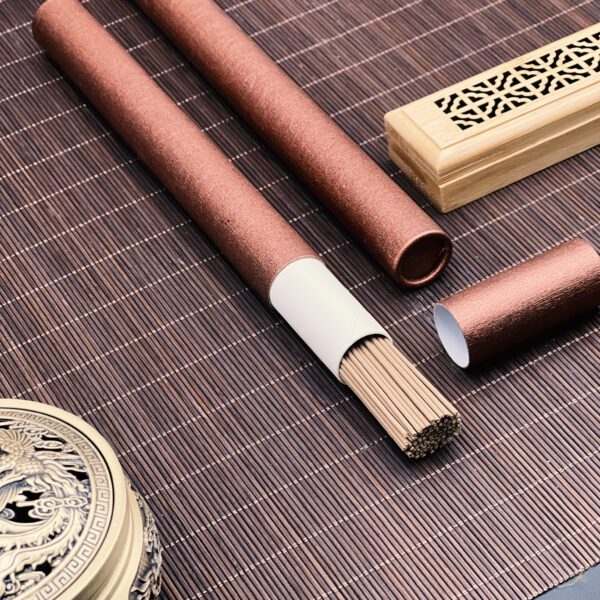
Keep unused sticks dry and protected from crushing in their original sleeve or another closed container. Damp sticks are more likely to go out, while cracked coatings can fall unexpectedly into the holder. Label open packages if you keep several scents so they do not transfer aromas to one another. Storage does not guarantee identical performance, but it reduces avoidable changes before the next session.
Once the basics are in place, burning a stick becomes a simple repeatable routine: prepare, light one tip, establish the ember, observe, extinguish if needed, and cool completely.
