

Agarwood Resin: Formation, Distribution and Quality Signals
Agarwood is often described as if it were a solid pocket of pure resin hidden inside a tree. That image is too simple. The material associated with agarwood formation is uneven, localized and variable. Its appearance and aroma depend on the individual tree, the position in the wood, the formation history, time, processing and the way the sample is handled.
Resin-related observations can be useful, but they need clear limits. Darker colour, density and aroma may be relevant signals; they are not direct measurements of a universal grade. This guide explains what those signals can suggest, what they cannot establish and how buyers can connect a quality observation to the actual item offered.
How resin forms inside Aquilaria wood
Agarwood formation is associated with a tree response. In Aquilaria and related contexts, injury, environmental conditions, biological interactions and managed induction may be part of the story. The response can involve localized chemical and tissue changes, rather than a uniform process affecting every part of the tree in the same way.
This is why a product’s history matters. A chip, carving or bead represents only a portion of a tree and a later selection process. The broader How Agarwood Forms guide explains why formation cannot be reduced to a simple infection story or a fixed timeline.
Why resin distribution is uneven
Distribution can differ from branch to branch, through the trunk and within a small section of wood. One surface may be darker or more aromatic than another. Cutting, sanding, storage and lighting can change what a buyer sees. A single photograph or a small fragment cannot necessarily represent an entire lot.
Uneven distribution also explains why bulk descriptions should be read carefully. A seller may have selected a particularly attractive piece for a photograph while the offered quantity is mixed. Ask whether images show the actual item, whether a listed weight refers to the exact piece and whether the material is sorted by an identified method.
Color, density and aroma as indirect quality signals
Colour can be an appealing visual observation, but it may reflect natural variation, surface oxidation, finishing, light or treatment. Density can be related to the tested object’s mass and volume, but moisture, shape and trapped air influence it. Aroma is central to enjoyment, yet it changes with storage, heat and method. These signals are useful when recorded carefully; none is a universal shortcut.
For example, a dark dense chip may be interesting, but it does not automatically prove a named source or high grade. A lighter piece may still be enjoyable for burning. The relevant question is what the signal means for the intended use and what other evidence supports the price.
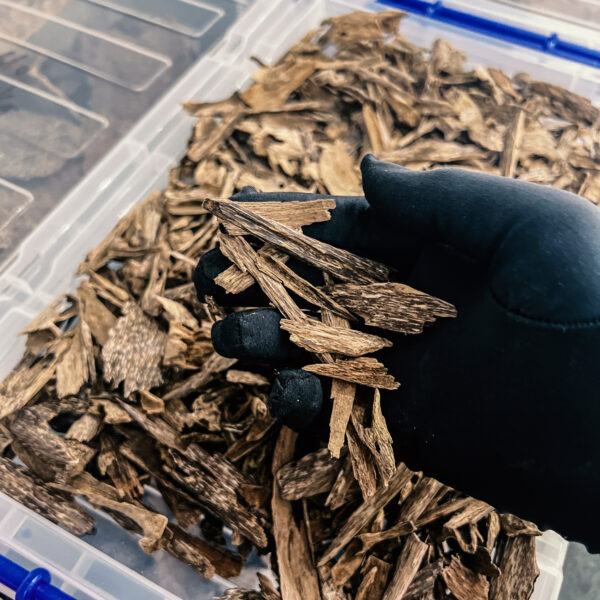
Cross-section patterns and what they may indicate
A cut surface may show zones of different colour and texture. These patterns can be useful for describing the material, especially if the image is current and taken in neutral light. They may suggest uneven resin-associated change or differences in wood structure. They do not tell a buyer the exact chemical composition, age, species or origin without further evidence.
When a seller presents a cross-section, ask how representative it is. Is it taken from the exact item? Has the surface been treated? Is the image filtered? Is the material being sold as a single object or a mixed lot? These questions prevent a visual feature from being made to carry more meaning than it can.
Formation evidence versus seller interpretation
Formation evidence can include a grower report, supplier record, batch notes, a documented induction history or a qualified study of defined material. Seller interpretation begins when those facts are converted into a product claim: rare, old, wild, highest grade or unusually resinous. An interpretation may be reasonable, but it should be identified as interpretation rather than presented as a measured fact.
Buyers can ask what the seller personally observed, which information came from a supplier and what document supports it. A seller who separates these layers gives a buyer something they can evaluate. A single superlative provides very little.
How resin content interacts with grade and intended use
Quality depends on intended use. A chip for gentle heating may be judged by aroma, clean condition and the way it performs in a burner. A display piece may be valued for grain and craftsmanship. A bracelet needs comfort, durability and finishing as well as material appearance. Resin-associated features can be relevant in each case, but they do not carry the same weight.
Use the Agarwood Quality and Grading framework to place resin beside provenance, condition, treatment, documentation and market context. For density limits, see Sinking Agarwood: What Density Can and Cannot Prove.
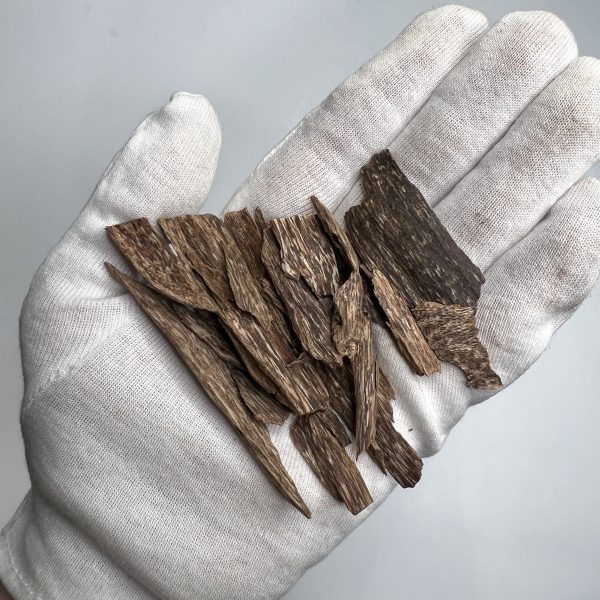
A quality-signal table with inference limits
| Signal | What it may support | What it cannot prove alone |
|---|---|---|
| Darker areas | Visible variation in the presented material | Exact resin content, source or grade |
| Dense feel or sinking | A density-related observation under stated conditions | Species, authenticity or wild origin |
| Aroma under heat | Personal sensory assessment using a stated method | Age, treatment status or universal quality |
| Cross-section pattern | Wood structure and visible distribution | Laboratory composition or full batch history |
| Batch record | Source or processing statement within its scope | Every quality attribute of every item |
The table gives a buyer a practical next step: keep the signal, name its limit, then ask for the evidence that answers the larger claim. This produces a fairer comparison and a clearer description of the material.
How to read a resin-related claim
Start by translating an adjective into a question. If a seller calls a piece highly resinous, ask whether this is a visual description, a density observation, a sensory assessment or a measured analysis. Ask which part of the item was observed and whether the claim applies to the exact piece. This does not require a seller to produce a laboratory report for every chip; it simply prevents an attractive phrase from becoming a false precision.
Then compare the claim with the product form. A small chip selected for burning can be described through current appearance, net weight and a carefully stated aroma observation. A large collector piece priced for an exceptional resin claim needs a stronger evidence trail. A bracelet should not be described solely by an imagined resin level when its condition, finishing and comfort also affect the buyer’s decision.
Why samples can mislead
A sample may be taken from a visually striking portion of a lot, while the rest of the material is less dense or differently coloured. This is not automatically misleading if the seller explains that the photograph is illustrative or offers the exact item shown. It becomes a problem when a sample is presented as proof of a whole batch without a stated sorting method.
Buyers can reduce this risk by asking whether the image is the actual item, whether weights are individual or averaged, and whether a purchase contains mixed pieces. In a larger order, ask for batch photographs or a representative sample policy. These questions make the resin story specific enough to compare.
Storage and handling change the observation
Wood stored in humid conditions may absorb moisture. A surface may darken with age, heat or finishing. Dust, oil and residue can alter the appearance and feel of a chip. These changes do not necessarily mean that a seller is being inaccurate, but they make it important to describe present condition rather than relying on a single old photograph or a general rule about what agarwood should look like.
For oil and incense products, composition adds another layer. A scented blend or manufactured incense cannot be evaluated by applying a raw-wood rule. The product should be named for what it is, with ingredients or composition disclosed to the extent appropriate for the claim.
From visible signal to fair price
Price should reflect the complete picture: item form, usable amount, condition, workmanship, source statement, documents, sensory character and return terms. A darker or denser-looking area may justify further attention, but it should not be the only reason for a premium. The buyer should be able to see how the seller moved from observation to price.
This is a helpful standard for sellers as well. It allows them to describe a beautiful piece accurately without claiming a universal grade. It also lets them explain why a well-documented batch, careful sorting or special craftsmanship changes value beyond the wood’s immediate visual appearance.
A buyer checklist for resin claims
Record the material form and net weight. Save current photographs. Ask whether the item shown is the item sold. Request the seller’s source and processing statement. Note any treatment, coating or finishing. If aroma is part of the decision, ask how it was assessed. Then decide whether the evidence is sufficient for the price and intended use.
For a modest personal purchase, this process may take only a few minutes. For a rare-name piece, a large lot or a future resale, it should lead to a stronger record and perhaps independent advice. The aim is not to make every buyer a laboratory analyst. It is to make the limits of an ordinary observation visible before money changes hands.
Keep the record with the material
Once purchased, retain the invoice, seller description, photographs and any batch documentation. Note the item’s initial condition and the exact language used for resin, source or grade. If you later gift or resell the material, pass those facts forward with their limits. Do not turn a seller’s appearance-based description into a measured claim that was never made.
Clear records are especially useful for material that changes with handling, storage and time. They let a future owner distinguish what was actually observed from what was inferred later. This protects both the material’s value and the credibility of responsible sellers.
A sensible conclusion
Resin-associated features make agarwood fascinating, but they are not a shortcut to certainty. Look at the exact item, describe what can be observed, preserve the evidence, and match the level of verification to the claim and price. This approach leaves room to enjoy the material while keeping quality language honest.
The best resin claim is therefore a specific one: it identifies the item, names the observation, states the evidence and acknowledges what remains unknown. That level of clarity gives buyers a grounded way to compare agarwood without treating colour, density or aroma as a universal answer.
It is the right basis for a careful purchase.
