
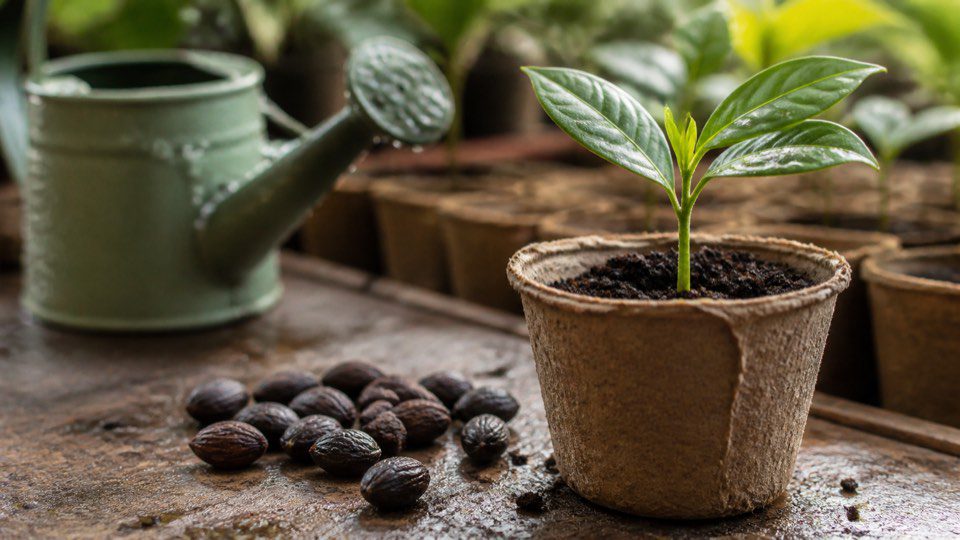
To grow agarwood from seed, start with a recently collected, correctly identified Aquilaria lot; sow it in a clean, free-draining medium; keep it evenly moist rather than waterlogged; provide warm, protected nursery conditions; and record emergence by lot. Move seedlings only after they have established true leaves and roots, then harden them gradually before field planting.
There is no single germination percentage, temperature, depth, or chemical treatment that is valid for every Aquilaria species and seed lot. Freshness, parent stock, storage, transport, medium, moisture, light, pathogens, and measurement method can all change the result.
Last reviewed: August 12, 2026. Scope: an evidence-led nursery workflow for documented Aquilaria seeds. It is not a guaranteed protocol, a farm-income forecast, or permission to import or plant a protected species.
How Do You Grow Agarwood from Seed Step by Step?
Use a small, labeled trial before committing the full lot. This separates seed quality from nursery conditions and makes failure diagnosable.
- Confirm the lot. Record the accepted scientific name, seller or nursery, parent-stock source if supplied, country and locality, collection date, dispatch date, arrival date, lot code, quantity, and storage history. If those fields are missing, germination cannot confirm identity.
- Inspect without destructive “tests.” Remove visibly crushed, leaking, badly molded, or insect-damaged material. Do not assume that a float test proves viability or species; density can vary with moisture and development.
- Prepare a clean, draining medium. Use containers with drainage and a propagation medium that retains moisture without staying saturated. Label every tray or pot with the same lot code. Keep an untreated control if testing a pre-sowing method.
- Sow promptly and lightly cover. Follow a species- and source-specific nursery protocol when one is available. Avoid deep burial. Record the sowing date, depth, orientation, medium, and any treatment so the result can be repeated.
- Manage moisture, warmth, light, and airflow. Keep the medium evenly moist, protect the tray from heavy rain and harsh direct sun, and allow enough ventilation to limit persistent condensation. Measure conditions instead of describing them only as “warm” or “humid.”
- Count emergence consistently. Check on a fixed schedule. Record the first emergence date, new seedlings at each count, mold, damping-off, abnormal seedlings, and removals. Do not report a germination rate until the observation window and denominator are stated.
- Pot on and harden gradually. Transplant when seedlings have established true leaves and a root system that holds the medium together. Minimize root disturbance, maintain temporary protection, then increase light and exposure in stages before field planting.
If you have not yet sourced a documented lot, use the agarwood seed and seedling verification guide first. For U.S. imports, check USDA APHIS requirements for the exact taxon and country of origin before the seller ships.
How Should an Agarwood Germination Trial Be Set Up?
A useful trial changes one factor at a time and keeps a control. A tray treated with an unrecorded mixture of fungicide, insecticide, and growth regulator cannot show which treatment helped, harmed, or had no effect.
| Field | What to record | Why it matters |
|---|---|---|
| Seed identity | Scientific name, source, lot code, collection and arrival dates | Separates traceability from visual assumption |
| Trial size | Seeds started in each treatment and control | Makes the percentage denominator explicit |
| Medium/container | Components, drainage, container depth, sanitation method | Water and pathogen behavior depend on the setup |
| Sowing | Date, depth, orientation, spacing, pre-treatment | Allows a repeatable comparison |
| Environment | Measured temperature range, light or shade method, watering, ventilation | “Warm and humid” is not reproducible |
| Outcome | First emergence, count by date, normal seedlings, mortality, mold | Emergence alone is not final seedling success |
Calculate only after defining the observation period:
Emergence percentage = normal seedlings emerged ÷ seeds sown × 100
Establishment percentage = seedlings alive after the stated hardening period ÷ seeds sown × 100
These are not interchangeable. A seed can emerge and later die; a seller’s test may also use different dates, conditions, and criteria from yours. Report both the numerator and denominator, not just a percentage.
How Fresh Do Agarwood Seeds Need to Be?
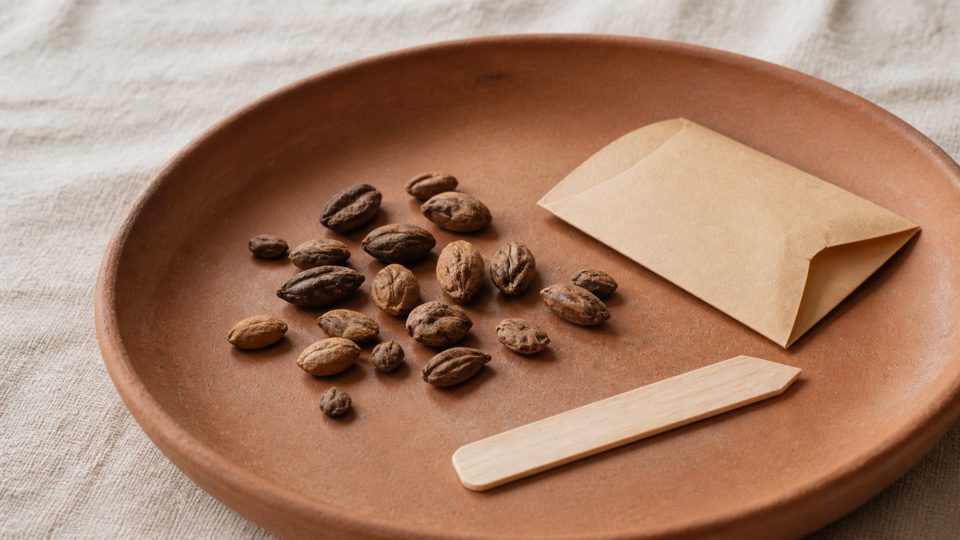
Treat collection, storage, and transit time as critical batch variables and sow promptly. Research on Aquilaria seed biology reports sensitivity to storage and moisture, but the rate of decline depends on species, maturity, storage conditions, and test method. Do not convert one study into a universal “viable for X days” claim.
Before purchase, require an actual collection date rather than “fresh season.” On arrival, record packaging condition, temperature exposure if known, odor, visible fungal growth, and damaged seeds. If the lot is large enough, reserve a labeled sample so a disputed result can be reviewed.
A delayed parcel can be inexpensive per seed and still be expensive per established plant. Compare:
Established-plant cost = acquisition, import, propagation, and loss costs ÷ seedlings alive after the defined hardening period
What Temperature, Light, and Moisture Do Agarwood Seedlings Need?
Young Aquilaria seedlings need a protected, monitored nursery environment, but there is no evidence-based universal percentage of shade or one temperature number for all species and sites. Published experiments show that microclimate and light availability affect survival and growth, and that a condition producing faster height growth may not produce the best survival or stem quality.
- Moisture: keep the root zone moist but aerated. Standing water, blocked drainage, and permanently wet covers raise disease risk.
- Light: protect newly emerged seedlings from abrupt high radiation. Increase exposure gradually and judge leaf condition, stem strength, and growth—not height alone.
- Temperature: record the actual minimum and maximum near the tray. Avoid assuming that room temperature in one climate matches a tropical nursery.
- Airflow: humidity retention must be balanced with ventilation. A sealed cover that drips continuously onto the medium is a warning sign.
- Density: avoid crowding. It makes disease observation difficult and can alter light, moisture, and competition.
A 2012 study of Aquilaria malaccensis in northeast India found different survival and growth patterns among greenhouse, homegarden, and canopy conditions. An earlier Indonesian field and nursery study also found that light availability affected growth while seedlings could survive under low-light treatment. These findings support monitoring and gradual acclimation; they do not justify copying one shade setting to every location.
When Should Agarwood Seedlings Be Transplanted?
Transplant based on root establishment, true-leaf development, plant condition, container limits, and destination conditions—not a universal height or age. Water the medium beforehand, lift the root ball rather than the stem, avoid bending or tearing roots, and return the seedling to protected conditions immediately after potting on.
Before field planting, harden seedlings by changing one stress at a time: light, wind exposure, watering interval, and then field conditions. Record losses during hardening separately from germination losses. A tall, soft, shaded seedling may be less field-ready than a shorter plant with a balanced root system and sturdy stem.
Legal establishment matters too. Check land, species, nursery, transport, planting, and future harvest rules in the relevant jurisdiction. The agarwood legality guide explains why permission to own a seed does not automatically authorize every later activity.
Why Are Agarwood Seeds Not Sprouting?
| Observation | Possible causes to investigate | Low-risk next step |
|---|---|---|
| No emergence | Old or immature lot, storage damage, incorrect taxon, deep sowing, unsuitable moisture or temperature | Review lot dates and records; compare with the labeled control before adding treatments |
| Surface mold | Contaminated material, saturated medium, low airflow, excessive organic debris | Isolate affected containers, improve drainage/airflow, document losses; obtain qualified plant-health advice |
| Seedlings collapse at soil line | Damping-off complex, crowding, persistent wetness, contaminated tools or medium | Remove affected plants, separate trays, correct environmental causes; avoid indiscriminate chemical mixing |
| Pale, elongated growth | Insufficient light, crowding, nutrient or root problem | Measure light, inspect roots and medium, adjust gradually rather than moving directly into harsh sun |
| Wilting after transplant | Root injury, abrupt light/wind change, dry root ball, poor drainage | Restore temporary protection, check moisture and roots, slow the hardening schedule |
Do not diagnose only from a photograph. If losses are material, contact a local nursery specialist, extension service, or plant pathologist who can inspect the plants and advise on treatments permitted in your jurisdiction.
Which Common Agarwood Growing Tips Should Be Avoided?
- “Floating seeds are dead.” A float test is not a validated identity test and may not reliably classify every lot’s viability.
- “Soak every seed in a fungicide, insecticide, and hormone cocktail.” Products, concentrations, legality, phytotoxicity, and species response differ. Use only a justified, labeled treatment and keep a control.
- “Seal the tray until every seed sprouts.” Covers can retain moisture but persistent condensation and poor airflow increase disease risk.
- “A fixed temperature, humidity, depth, and shade works everywhere.” Species, climate, facilities, and measurement methods differ.
- “Fast height growth proves a strong seedling.” Evaluate roots, stem diameter, leaves, health, and hardening response.
- “Growing an Aquilaria tree guarantees agarwood.” Agarwood is resin-enriched wood formed later in response to complex biological and physical processes; planting alone does not guarantee resin quality or value.
For the later biological process, see how agarwood forms and how inoculation evidence should be interpreted. Do not injure or inoculate young seedlings.
Frequently Asked Questions
How long does agarwood take to germinate?
There is no universal time for every Aquilaria species and seed lot. Report the scientific name, collection and sowing dates, storage history, conditions, first emergence, and end of the observation window. Freshness and nursery conditions can materially change the result.
Should agarwood seeds be soaked before planting?
Do not apply a universal soaking treatment. Follow a source-specific protocol when it is documented, and test it against an untreated control. Record water or product, concentration, duration, temperature, lot size, and outcome. Unlabeled chemical mixtures may damage seeds or violate local rules.
Can a float test identify viable agarwood seeds?
A float test alone cannot prove species or viability for every lot. Seed density can vary with maturity, moisture, damage, and anatomy. Use traceable lot records and a documented germination test; for important disputes, seek qualified seed-testing or taxonomic support.
Does agarwood need full sun?
New seedlings should not be moved abruptly from protected nursery conditions into harsh full sun. Research shows that light affects growth and survival, but the best regime varies by species and site. Measure conditions and harden seedlings gradually while monitoring leaves, stems, roots, and survival.
When can agarwood seedlings be planted outside?
Use root establishment, true leaves, health, container limits, hardening response, weather, and site preparation rather than a universal age or height. Confirm that the species can legally be planted and that future transport and harvest activities are understood.
Will every agarwood tree produce valuable resin?
No. Growing an Aquilaria tree does not guarantee agarwood formation, yield, grade, aroma, or selling price. Genetics, health, age, environment, injury or induction, microorganisms, processing, evidence, legality, and buyer grading all influence the eventual outcome.
Sources and Editorial Limitations
- Saikia & Khan — seedling survival and growth of Aquilaria malaccensis under different microclimates
- Journal of Tropical Forest Science — factors influencing survival and growth of A. malaccensis seedlings
- CITES Tree Species Programme — guidelines for Aquilaria malaccensis arboretum establishment
- Royal Botanic Gardens, Kew — accepted name and distribution of Aquilaria malaccensis
- USDA APHIS — buying and importing plants and seeds online
Editorial limitation: Oudgo did not run a controlled germination trial on the reader’s seed lot. The page distinguishes published evidence from practical record-keeping and avoids presenting one study’s conditions as a universal recipe. Pesticide, fungicide, fertilizer, import, and planting decisions require local professional and regulatory guidance. The page is maintained by Oudgo Editorial Team under the public Editorial Policy.
