
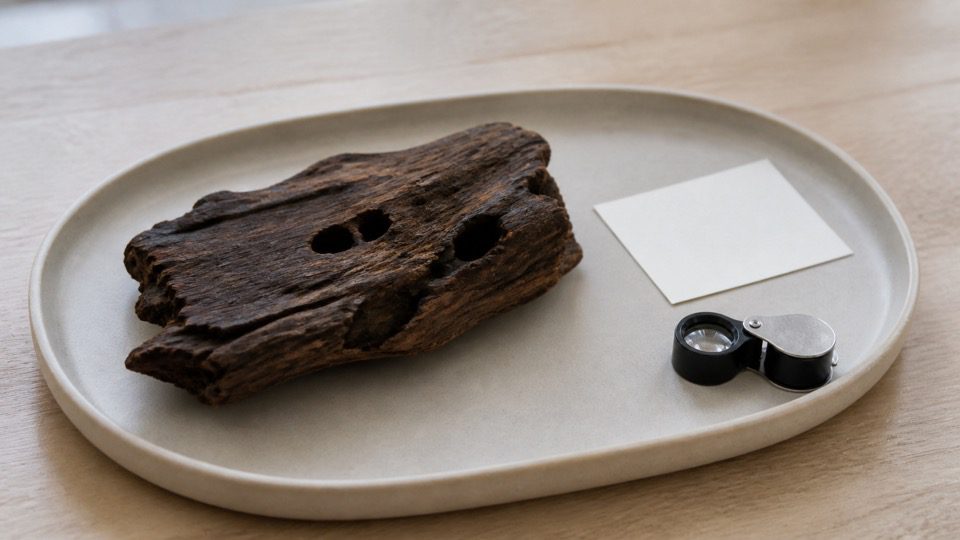
“Ant nest agarwood” is a trade description, not a globally standardized species or quality grade. Sellers generally use it for resinous wood with tunnels, cavities or irregular patterns associated with insect activity, but the label alone cannot prove which insect was present, how the resin formed, the tree species, country, age, grade or legal source.
If you are buying a bracelet or wood piece under this name, evaluate the exact item and its records. For general checks, use our agarwood authenticity evidence guide and grading guide.
What can the “ant nest” label tell you?
| Claim | What you may observe | What still needs evidence |
|---|---|---|
| Ant nest pattern | Tunnels, holes, cavities and irregular resin-darkened zones | Cause, insect, formation history and whether the pattern was altered |
| Agarwood | Wood structure, resin distribution, aroma and density | Species, treatment and authentication appropriate to the claim |
| Vietnamese origin | Seller label and product-page statement | Invoice, supplier record, lot trace and relevant trade documents |
| Grade or value | Dimensions, weight, resin pattern, condition and aroma under stated conditions | The grading system, comparator lot, test method and current market evidence |
Bottom line: the pattern can be a useful descriptive feature. It is not a shortcut around provenance, product specifications or appropriate identification.
Do ants create agarwood?
Agarwood formation is associated with a tree’s response to injury and complex biological processes. Insects can create wounds or galleries, but “ants made the agarwood” is too simple as a universal explanation. Research on agarwood induction covers physical wounding, biological inoculation and chemical or combined methods, and results vary by tree, method, location and time.
Do not infer a natural ant process merely from a drilled-looking hole. Some cultivated agarwood is intentionally wounded or inoculated. CITES materials also recognize that resinous wood may be induced through natural or artificial stress factors. The formation method should therefore be disclosed as a separate claim.
How should a buyer inspect an ant nest piece?
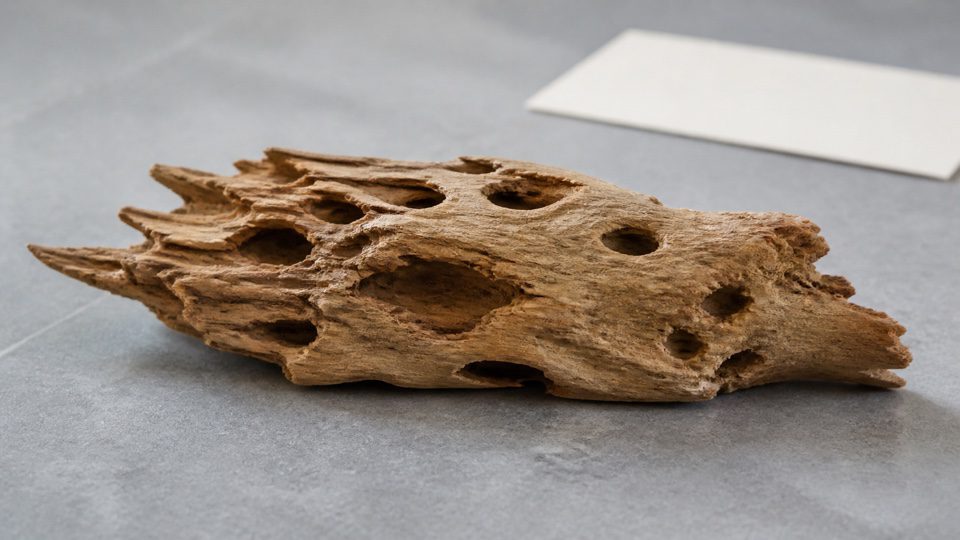
- Match the listing: save the exact title, option, dimensions, weight, photos and stated origin.
- Inspect the pattern: compare visible tunnels, cavities and resin-darkened areas with the listing photos.
- Check structural condition: cavities may make a piece lighter or more fragile; inspect for cracks, loose beads or weak cord.
- Separate observations from conclusions: darkness, weight, aroma and a water test cannot establish every authenticity or provenance claim.
- Ask for records: request the species/source wording, formation disclosure and batch-linked documents that support claims material to the purchase.
Microscopic and chemical methods can add evidence in specialist settings. A recent anatomical study used resinous included phloem and other wood structures across authenticated, laboratory-treated and market samples; that is different from a quick home visual test and should not be reduced to one color or sink rule.
How does ant nest material affect jewelry?
Visible voids and irregular grain can create a distinctive appearance, but they can also reduce the amount of continuous wood in a bead or carving. Judge craftsmanship separately from the trade label: look for balanced drilling, intact bead walls, smooth surfaces, stable spacers and cord suited to the piece.
For a current example, see the specifications on our Vietnamese raw ant nest agarwood bracelet. The live product page and order option—not this general guide—control the dimensions, stock, price and evidence supplied for that item.
How should you store and use it?
Keep raw pieces and jewelry dry, protected from direct heat and sunlight, and separated from cosmetics and strong household odors. Do not soak, sand, oil or burn a finished bracelet as an authenticity test. Check cavities for trapped debris and inspect elastic or cord before wearing.
If the item is sold as burnable wood, follow the exact product instructions and use a suitable burner on a stable noncombustible surface. Do not assume a carved object or bracelet is intended for burning.
Does ant nest agarwood treat stress or make a good investment?
We do not make those claims. A person may enjoy the aroma or ritual, but that does not establish treatment of anxiety, stress, sleep or another health condition. Scarcity language and a high asking price also do not guarantee resale demand, future value or investment return.
The U.S. FDA treats intended therapeutic use as a regulatory boundary for fragrance and aromatherapy products. The FTC also requires objective health claims to be truthful, non-misleading and supported by relevant evidence. Product-specific clinical or investment evidence has not been established by the “ant nest” name.
Frequently asked questions
Is ant nest agarwood a species?
No. It is a trade description. Species should be stated separately and supported at the level appropriate to the claim.
Do holes prove the wood formed naturally?
No. Holes can have different causes, including insect activity and deliberate wounding or inoculation. Ask for the formation disclosure.
Is every dark tunnel resin-rich agarwood?
No. Appearance is one observation. Treatment, lighting, contamination and non-resin material can affect color.
Does a CITES document certify quality?
No. It supports regulated trade information within its scope; it is not automatically a grade or quality certificate.
Should I use a sink test?
Not as a universal verdict. Density may relate to resin distribution in some samples, but a home sink result cannot establish species, origin, treatment, grade or legal source by itself.
Sources and editorial method
- CITES PC27: agarwood definitions, cultivation and trade context
- Agarwood induction: current developments and future perspectives
- Study of anatomical evidence in authentic, treated and market agarwood samples
- U.S. FDA: aromatherapy and intended use
- U.S. FTC: health-claim substantiation
Updated by the Oudgo Editorial Team on 15 August 2026. We treat “ant nest” as a descriptive trade term, not a standardized species, grade, medical result or investment class. Exact product and batch records take precedence.
