
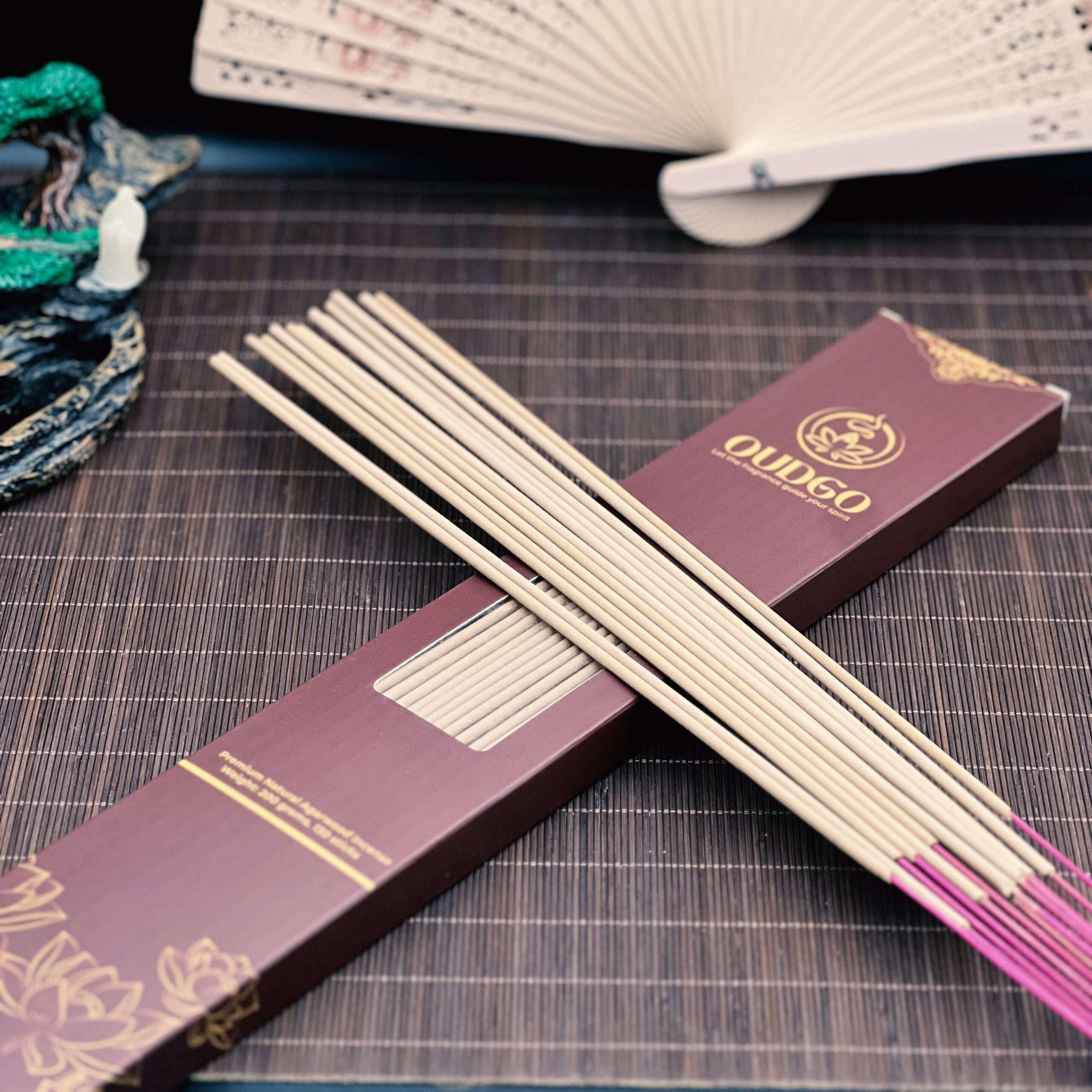
How to Choose Agarwood Incense Sticks
Agarwood incense sticks are easy to buy and easy to misunderstand. The name may refer to real agarwood material, an oil or fragrance in a blend, or simply a scent direction. A better purchase starts with the experience you want, then checks the material claim, construction and instructions behind it.
Buy the smallest quantity first. A clear label and a controlled trial tell you more than a dramatic name, a luxury box or a very strong first impression.
Define the scent and smoke experience you want
Begin with the setting. Do you want a brief, gentle scent in a private room, or a more noticeable aroma for a larger, well-ventilated space? Incense always involves combustion, so the goal should not be to make the room as smoky as possible. Choose a stick length and session size that you can supervise comfortably.
Agarwood profiles are often woody, resinous, sweet, earthy or slightly bitter, but the result varies with the formula and burn. If you are new to the material, start with one stick at a time and avoid mixing it with candles, cooking smoke or other fragrances. That gives you a fairer sense of how it actually smells.
Check whether agarwood is the base, an ingredient or a fragrance claim
Read the listing literally. A stick made with agarwood powder is different from a stick scented with agarwood oil, and both are different from a blend that uses an oud-style fragrance. None of these descriptions is automatically bad; they simply answer different questions about material and price.
Look for useful specifics: the format, whether a bamboo core is used, any named woods or resins, and whether the aroma comes from a blend. A label that only says “premium oud” gives you a mood, not a material description. If the distinction matters to you, ask the seller before ordering.
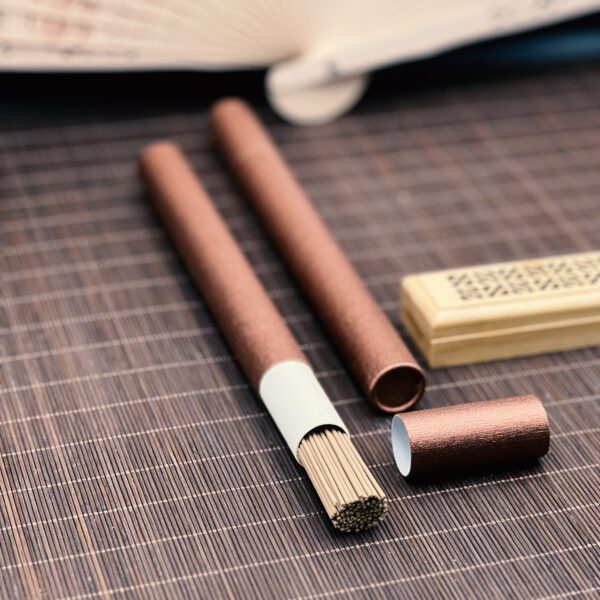
Compare cored and coreless agarwood sticks
Cored sticks have a central support, often bamboo, with aromatic material around it. Coreless sticks are formed from the incense mixture itself. The two styles can burn differently, but neither is a universal quality ranking. A core can affect ash length and burn rhythm; a coreless stick may feel more compact or fragile.
For either type, the holder must support the stick securely and catch its ash. Do not force a thick stick into a narrow hole or balance a coreless stick on an improvised surface. Construction becomes a practical choice when it helps the stick burn safely and predictably in your actual holder.
Read ingredient, origin and concentration statements
Ingredient language has different levels of certainty. A named component is more helpful than a vague promise, but a seller’s statement is still not independent proof of species or origin. Treat origin, handcraft and concentration claims as information to check against the detail supplied, rather than as a reason to infer everything about the product.
| Listing language | A useful follow-up question |
|---|---|
| “Agarwood incense” | Is agarwood raw material, powder, oil or a fragrance reference? |
| “Vietnamese oud” | Does this describe manufacture, material origin or the scent style? |
| “Natural” | Which ingredients are named, and what is the intended use? |
Evaluate burn quality without equating more smoke with better quality
A stick should sit securely, establish a small ember and drop ash into its holder. Heavy, harsh smoke, repeated extinguishing or ash falling onto the table are reasons to pause and inspect the set-up. They are not a cue to add more flame or burn several sticks at once.
Storage, humidity, airflow and the holder all influence performance. Burn one stick in a suitable location and observe it for the first minute. If it does not behave safely, extinguish it and correct the condition rather than trying to force it through the session.

Price and packaging signals that deserve questions
Price can reflect material, labor, packaging, shipping, market positioning or a combination of them. It is not a certificate of authenticity. A presentation box may be attractive, but it cannot establish origin, ingredient concentration or suitability for a particular use.
Be cautious when a seller relies only on superlatives, offers health promises, or cannot tell you what form the incense takes. Prefer product information that is modest and concrete: material description, intended burn method, safety directions and a way to ask follow-up questions.
A final buyer checklist before ordering
- Does the listing name the form and intended use?
- Do you understand whether agarwood is material, ingredient or scent profile?
- Will your holder support the stick and catch all ash?
- Can you use it in a supervised, ventilated setting?
- Are you buying a small first quantity to learn the scent?
For a broader comparison of forms, read oud chips, sticks and cones. For an overview of ingredients, continue to what incense sticks are made of.
Questions readers ask
Does a higher price prove that an incense stick contains more agarwood?
No. Price alone cannot prove a material claim. Look for a specific description and buy a small quantity first.
Should incense smoke be thick?
No. More smoke is not a quality test. Use the smallest amount that works for the setting and stop if smoke is harsh or accumulating.
Can I burn a stick without a proper holder?
A purpose-made holder is the safer choice because it supports the stick and catches the full ash path.
Turn claims into questions you can answer
Start with the session you actually want: a light daily stick, a quiet close-range aroma, a longer ritual session or a gift for someone who has never burned incense. Then ask whether the listing explains the construction. Agarwood may be the main aromatic material, one component in a blend or simply the scent direction. A clear answer tells you more than a large “natural” or “premium” label. It also helps avoid an unfair comparison between a coreless powder-based stick and a bamboo-cored fragrance blend.
Coreless and cored formats have different practical tradeoffs. A bamboo core provides structure and can influence burn path; a coreless stick may have a different ash footprint and material ratio. Neither is a universal quality grade. Choose the format that fits the holder, the room and the desired session, then evaluate it in that setting. A stick should sit securely, keep ash contained and remain supervised from lighting until the ember is cold.
Use burn quality as a safety and usability check
More smoke is not better quality. Heavy smoke can be uncomfortable in a small room, may overwhelm the scent and can make an otherwise good product unsuitable for a particular household. Test one stick at a time in a ventilated setting, using the correct holder. Observe whether it lights evenly, stays stable, produces manageable ash and leaves a scent you enjoy after the burn. If it repeatedly goes out, burns erratically or produces harsh smoke, check storage, airflow and the holder before making conclusions about the ingredients.
Record enough information to compare products honestly: form, stated ingredients, seller, batch or lot if available, burn time, room size and your late-stage scent notes. This record protects against prestige-driven buying. It shows whether a higher price is matched by clearer material information, better packaging, a safer format or simply a different brand position.
Read packaging and price with proportion
Packaging should protect sticks from crushing, moisture and unwanted scent transfer, while leaving the buyer able to identify the product. Look for a meaningful product name, quantity, storage advice, intended use and ingredients or material description where provided. Origin claims should be specific enough to understand, but do not expect every small maker to publish a secret formula. The useful threshold is consistency: the product name, ingredients, price and story should not contradict one another.
Before ordering, compare a small sample or pack, confirm the seller’s return and safety information, and avoid treating a photograph as proof of a material percentage. For the broader category framework, read Agarwood Incense: Materials, Forms, Scent and Buying Guide. For binder and base-material context, see What Are Incense Sticks Made Of? Binders, Bases and Fragrance. For seller-verification questions, see Where to Buy Agarwood.
Keep the final choice practical
A buyer checklist is valuable only when it changes the decision. Before ordering, confirm the stick format, holder compatibility, number of sticks, material description, storage expectations and the room where it will be used. Decide in advance what would make the product unsuitable: unclear ingredients, packaging that cannot protect the sticks, missing safety guidance, a claim that the seller cannot explain or a smoke level that the intended room cannot tolerate. This prevents a purchase from being driven only by a dramatic name or a picture of resinous wood.
After a first session, write a short review for yourself rather than repeating the listing. Did the product fit the holder? Was the scent balanced at normal distance? Did the ash remain contained? Did the product remain comfortable through the full burn and did the description match the experience? These questions give more useful evidence for a second purchase than a broad claim of luxury or authenticity. They also make gifts easier to choose because you can match the next stick to a real setting and preference.
When a product offers only a fragrance claim, it may still be enjoyable if that is disclosed honestly. When a product makes stronger claims about agarwood material, origin or concentration, ask for information proportionate to those claims. Clear buying does not require suspicion; it requires keeping scent preference, ingredient evidence, safety and price in their proper places.
Use a repeatable sample test
Test a new stick on two separate occasions in the same holder and room before deciding it belongs in a regular rotation. Changes in humidity, airflow and your own scent fatigue can affect a first impression. The second session should confirm whether the product is stable, the smoke is manageable and the scent remains enjoyable after the ember is out.
Keep the product label with the notes. That simple habit makes later comparisons fair, helps you identify a preferred construction or maker, and stops a memorable package from becoming the only reason to reorder.
Compare the two sessions by keeping the same holder, quantity and placement. If the result changes sharply, pause before assuming the material is inconsistent: ventilation, nearby scents and storage conditions often explain the difference more usefully than a dramatic quality claim. That patience helps the final choice remain practical.
Choose the product that meets those practical checks, not the one that makes the loudest claim.
That is the clearest route to a safe, satisfying and repeatable incense purchase.
Keep the record for future orders.
Review every future purchase with the same calm checklist.
Use it consistently every time.
